
The supplement enters a much larger energy system
Total daily energy expenditure includes resting needs, the thermic effect of food, exercise, and non-exercise activity. Resting expenditure is usually the largest component. A capsule's acute contribution, if real, enters this full system rather than replacing it.
Body size, composition, age, health, temperature, food, movement, and adaptation affect expenditure. A small laboratory increase may be outweighed by sitting more after poor sleep, reducing training quality, or eating more because stimulation wears off.
Energy balance remains dynamic: intake and expenditure can respond to the intervention and to each other.
How researchers measure expenditure
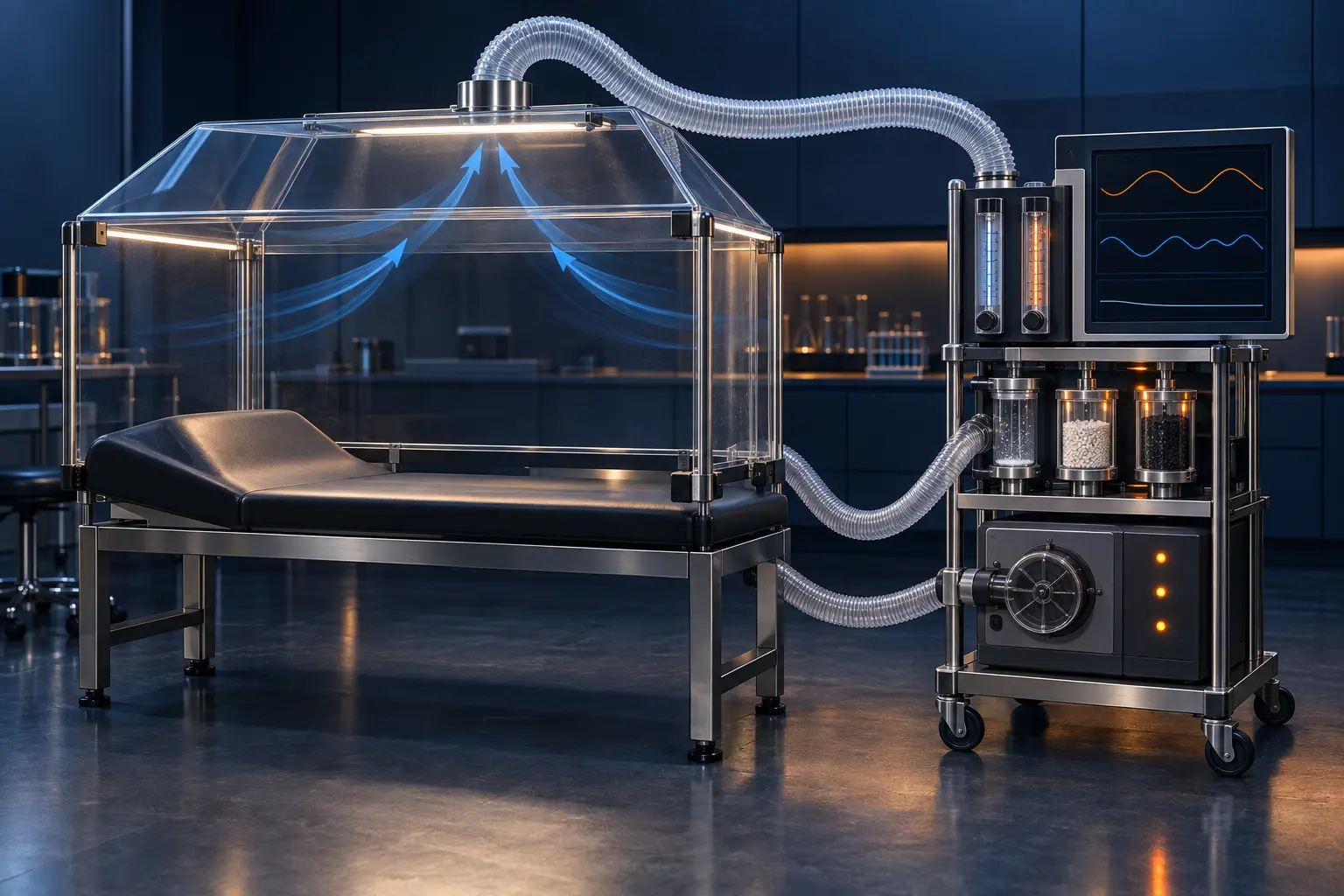
Indirect calorimetry estimates energy use from oxygen consumption and carbon dioxide production. Metabolic chambers can observe longer controlled periods. Doubly labeled water estimates free-living expenditure over days or weeks but cannot easily isolate a small supplement effect. Watches and exercise machines are not substitutes for these methods.
Study design matters: fasted or fed state, room temperature, caffeine habits, recent exercise, measurement length, and whether the comparator is placebo. A two-hour rise should not be multiplied across 24 hours unless the data justify it.
Report kilocalories or kilojoules with uncertainty, not only percentages.
Which ingredients are commonly cited
Acute expenditure is not the net daily effect
Suppose a study detects a small increase for several hours. The buyer still needs to know whether it repeats with daily use, whether tolerance reduces it, and whether behavior compensates. Later fatigue, poorer sleep, appetite rebound, or reduced ordinary movement can shrink or reverse the practical advantage.
Even without compensation, a small effect may be too small to produce a visible difference within normal measurement noise. Weight-loss models show why fixed calorie arithmetic becomes less accurate over time as body size and behavior change.
The relevant outcome is the difference between groups after sustained use, not the theoretical sum of acute measurements.
Applying the standard to Fat Burn Active
Without exact Fat Burn Active doses and finished-product trials, an acute ingredient effect cannot be converted into a reliable daily calorie number or predicted fat-loss result.
Fat Burn Active is optional and is not required for fat loss. Public ingredient information may suggest possible mechanisms, but ingredient presence does not establish dose relevance or prove that the complete product changes body fat. Where exact amounts or independent finished-product trials are unavailable, the honest conclusion remains uncertain.
Fat Burn Active is relevant here because its official listing identifies standardized plant extracts, caffeine sources, vitamins, and zinc in one formula. First read our independent review. If the formula, stimulant profile, evidence limits, and warnings fit your situation, check the current Fat Burn Active price on the official website. We may receive a commission at no additional cost.
Frequently asked questions
How many calories do fat burners add?
There is no reliable category-wide number. Effects depend on ingredient, dose, tolerance, formula, person, and measurement period.
Can a wearable detect the effect?
Usually not reliably. Wearable calorie estimates are too uncertain to isolate a small supplement effect.
Does more caffeine mean more fat loss?
No. Higher exposure raises side-effect risk and does not guarantee a useful long-term outcome.
Sources
- NIH ODS: Dietary Supplements for Weight Loss
- Review of caffeine and energy balance
- Dynamic model of adult body-weight change
- FDA: Spilling the Beans on Caffeine
Sources reviewed September 8, 2026. This article is general educational information, not medical advice, diagnosis, or treatment.