Start with body outcomes, not warmth
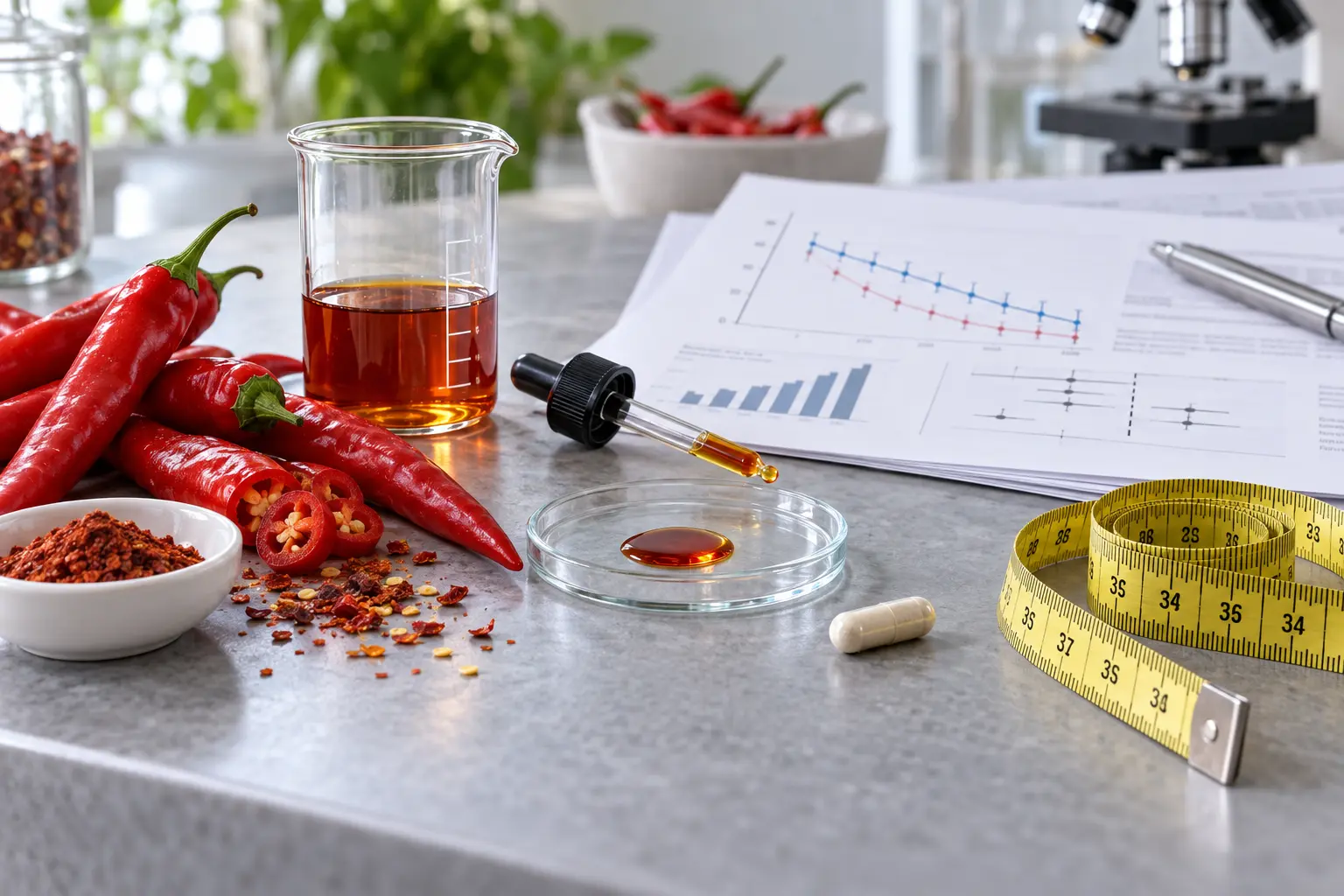
A trial that reports a post-meal rise in expenditure answers a mechanism question. A weight-management claim needs repeated body-weight, waist, or fat-mass measurements over enough time for a detectable difference. Meta-analysis can pool small trials, but a pooled result inherits differences in formulation, dose, population, diet, and duration.
Ask for the absolute difference, confidence interval, and comparison group. A statistically detectable mean can still be smaller than ordinary water or measurement variation for one person.
Capsaicin, capsiate, and chili are not equivalent
Capsaicin is a pungent capsaicinoid. Capsiate and related capsinoids are structurally related and often less pungent. Chili foods, powders, oleoresins, standardized extracts, and purified compounds deliver different mixtures and exposures. A trial on one cannot automatically validate another.
Habitual spicy-food intake may also affect response and tolerability. A label must disclose the active capsaicinoid amount, not merely a large milligram number for pepper material.
Tolerability can erase a small benefit
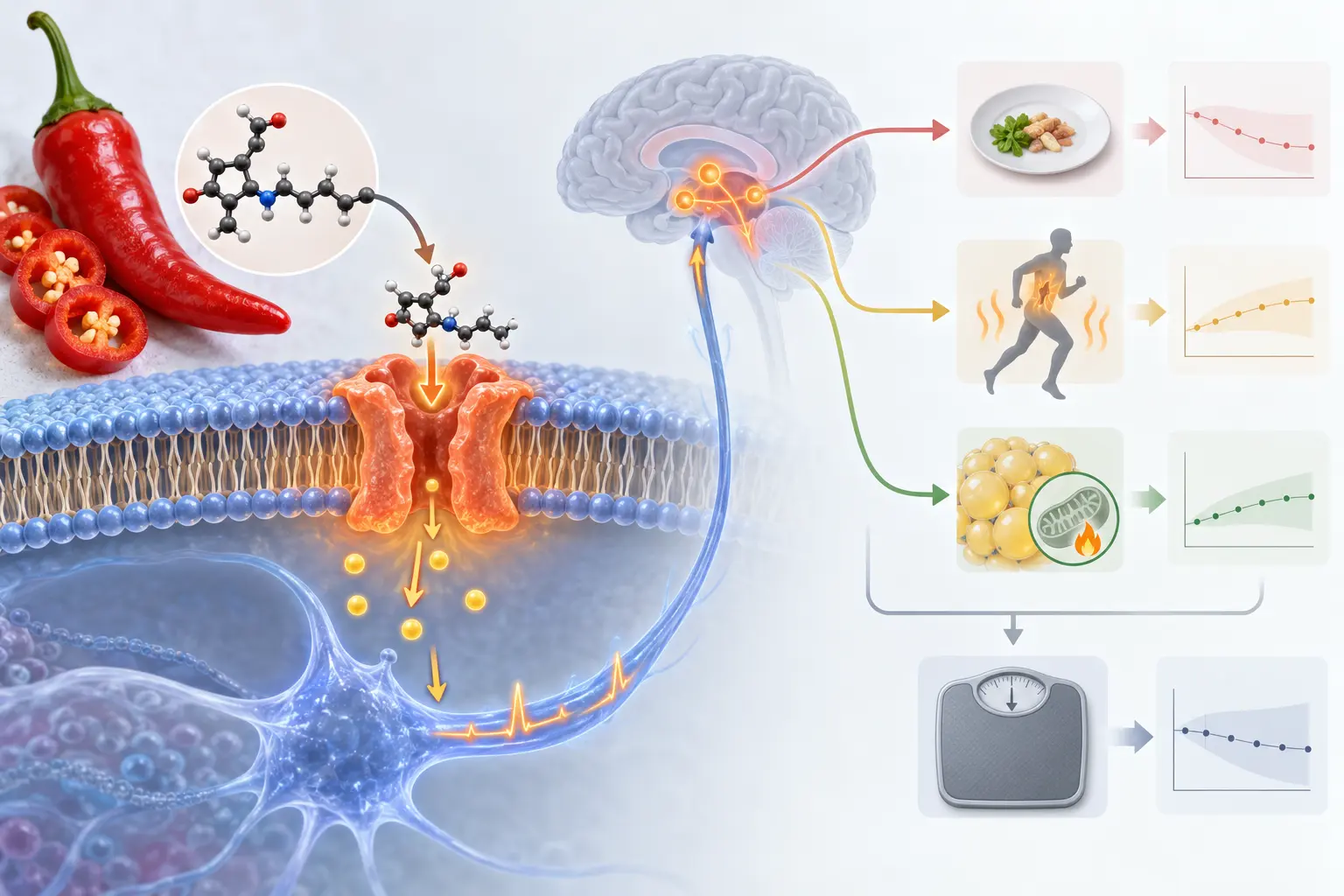
Burning, reflux, nausea, abdominal pain, or bowel discomfort can make a theoretically active dose unusable. Eating less because a capsule causes nausea is an adverse effect, not healthy appetite regulation. Discomfort that disrupts meals, sleep, training, or adherence changes the net value.
There is no reason to increase a dose because warmth fades. Sensory adaptation does not prove the body-composition effect improved or disappeared.
Example: a promising meta-analysis meets an unclear label
A product lists 500 mg capsicum blend but no capsaicinoid percentage. The buyer finds a meta-analysis of trials using defined capsaicin doses and assumes 500 mg is stronger. The numbers are not comparable because total plant material is not active capsaicin.
The correct conclusion is “dose relevance unknown.” Request the specification or reject the match. Even a disclosed dose would support only the ingredient-level expectation, not the complete formula.
Chili in food versus capsules
Adding chili to meals provides small amounts of capsaicin along with flavor, which can make lower-calorie meals more satisfying. Capsules deliver larger, consistent amounts but also more stomach side effects. Neither has been shown to produce large weight loss on its own.
Who should be careful
People with reflux, ulcers, irritable bowel syndrome or inflammatory bowel disease, and those taking blood thinners, should be cautious with concentrated capsaicin supplements.
Where Fat Burn Active fits
If a current Fat Burn Active label contains a pepper-derived ingredient, its exact identity and capsaicinoid dose must match the research. Presence alone cannot validate the formula.
Fat Burn Active is optional and not required for fat loss. Ingredient plausibility cannot substitute for finished-product evidence, a complete dose match, or a sustainable calorie deficit. Sensation, sweating, appetite suppression, and short-term water change do not prove meaningful fat loss.
Fat Burn Active is relevant here because its official listing identifies standardized plant extracts, caffeine sources, vitamins, and zinc in one formula. First read our independent review. If the formula, stimulant profile, evidence limits, and warnings fit your situation, check the current Fat Burn Active price on the official website. We may receive a commission at no additional cost.
Frequently asked questions
Does capsaicin burn body fat?
It may modestly affect energy balance, but it does not directly guarantee meaningful stored-fat loss.
Is hotter better?
No. Pungency and warmth do not measure weight-loss effectiveness.
Can chili food replace a capsule?
Use chili as food if tolerated, but food and concentrated trial exposures are not dose-equivalent.
Sources
- NIH ODS: Dietary Supplements for Weight Loss
- Capsaicin weight-loss meta-analysis
- Capsaicinoids weight-management meta-analysis
- Capsaicin and capsiate energy-balance review
Sources reviewed September 14, 2026. This article is general educational information, not medical advice, diagnosis, or treatment.