EGCG, catechins, and extract are three different labels
Epigallocatechin gallate is one catechin. Total catechins include EGCG plus related compounds, and green tea extract also contains other constituents and may contain caffeine. A paper testing 300 mg of EGCG is not automatically evidence for 300 mg of green tea extract; the reverse is also false.
If a label lists 400 mg of extract standardized to 40% EGCG, the calculated EGCG is 160 mg. If it lists only “40% EGCG” inside an undisclosed blend, the percentage cannot be converted into a dose.
What human trials can answer
Human studies often combine catechins with caffeine, making attribution difficult. Some show small changes in weight, waist, or fat oxidation; others show no meaningful difference. Results in one population or under a controlled diet may not reproduce in habitual users living normally.
Prioritize trials reporting body composition, adherence, adverse events, and confidence intervals. A statistically detectable change that is smaller than ordinary measurement variation may have little practical value. An acute rise in oxidation after a dose answers a biochemical question, not whether months of use change fat mass.
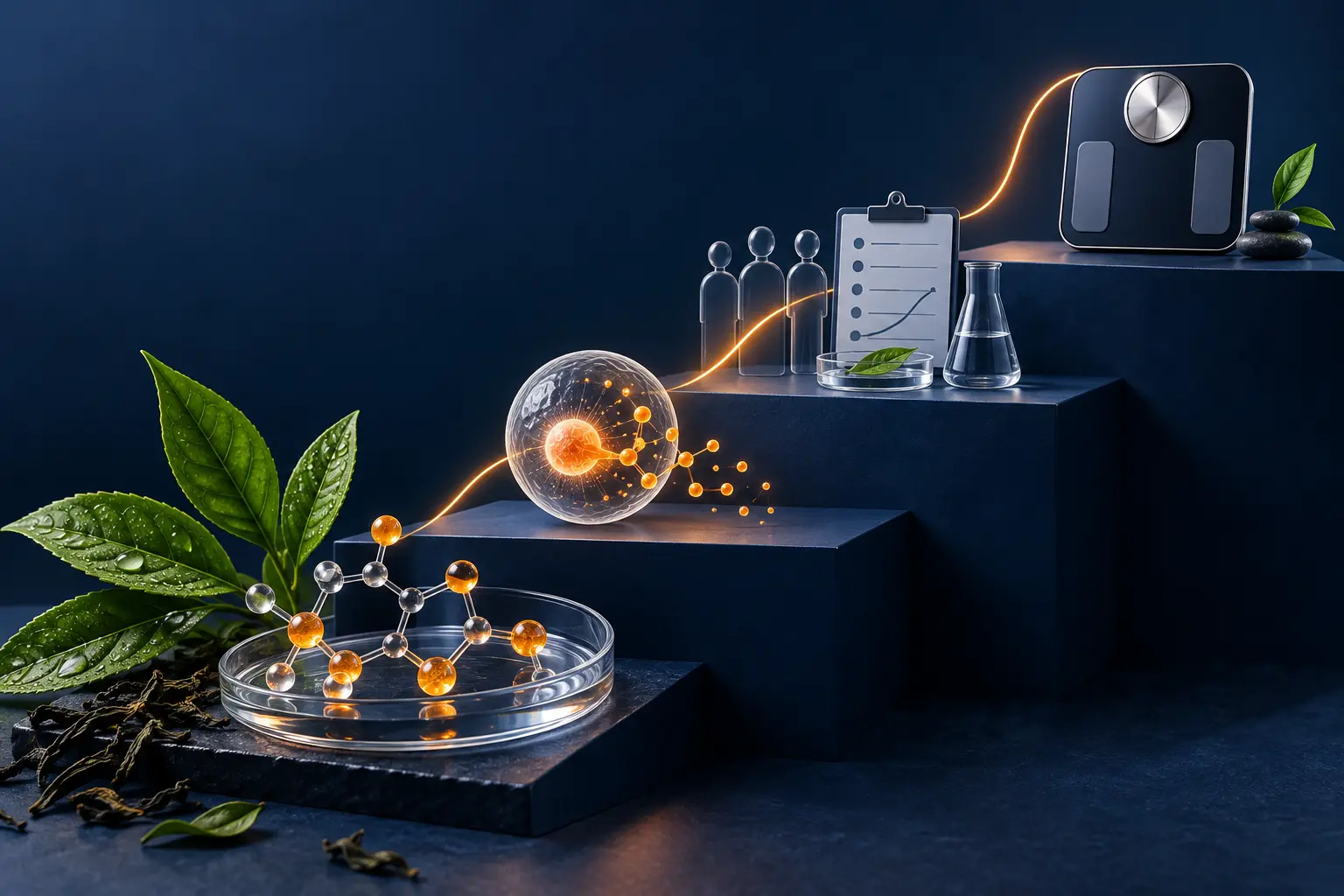
Caffeine can confound the EGCG story
Caffeine has its own effects on alertness, performance, expenditure, sleep, and appetite. When both are supplied, the comparison cannot tell you what EGCG alone did unless the design isolates it. Habitual caffeine intake can also influence response and withdrawal.
For a product decision, create separate lines for EGCG and total caffeine. A decaffeinated extract may help isolate the catechin question, but it still requires a verified composition and does not remove concentrated-extract safety considerations.
A result-to-claim translation test
This translation prevents “activates fat burning” from becoming an unsupported number on the scale.
Liver safety
Concentrated green tea extracts have been linked to rare cases of liver injury, particularly at high doses taken on an empty stomach. The European Food Safety Authority concluded that intakes of 800 mg of EGCG a day or more from supplements were associated with increased liver enzymes. Taking extracts with food and staying well below that level reduces risk, and anyone with liver disease should avoid them.
Tea versus extract
A cup of brewed green tea contains roughly 50–100 mg of EGCG, with no known liver risk at normal drinking levels. Extracts concentrate much larger amounts into capsules, which changes the safety picture.
How this applies to Fat Burn Active
Fat Burn Active names a green tea extract standardized to 40% EGCG. Without the extract amount, the EGCG dose cannot be calculated or matched to human research.
The official Fat Burn Active page lists a multi-ingredient thermogenic formula, but the buying decision should follow the evidence check above. Compare our independent review, then, if the product remains a reasonable fit, check the current price and label on the official site. We may receive a commission at no additional cost.
Frequently asked questions
Is EGCG a stimulant?
EGCG is a catechin, not caffeine, though products may contain both.
Does EGCG increase fat oxidation?
Some short studies examine oxidation, but that does not establish meaningful fat-mass loss.
Is a higher percentage always better?
No. Actual dose, evidence, tolerability, and extract safety matter more than a headline percentage.
Sources
- NCCIH: Green Tea—Usefulness and Safety
- Cochrane Review: Green Tea for Weight Loss
- NIH LiverTox: Green Tea
- EFSA: Safety Assessment of Green Tea Catechins
Sources reviewed September 8, 2026. This article is general educational information, not medical advice, diagnosis, or treatment.