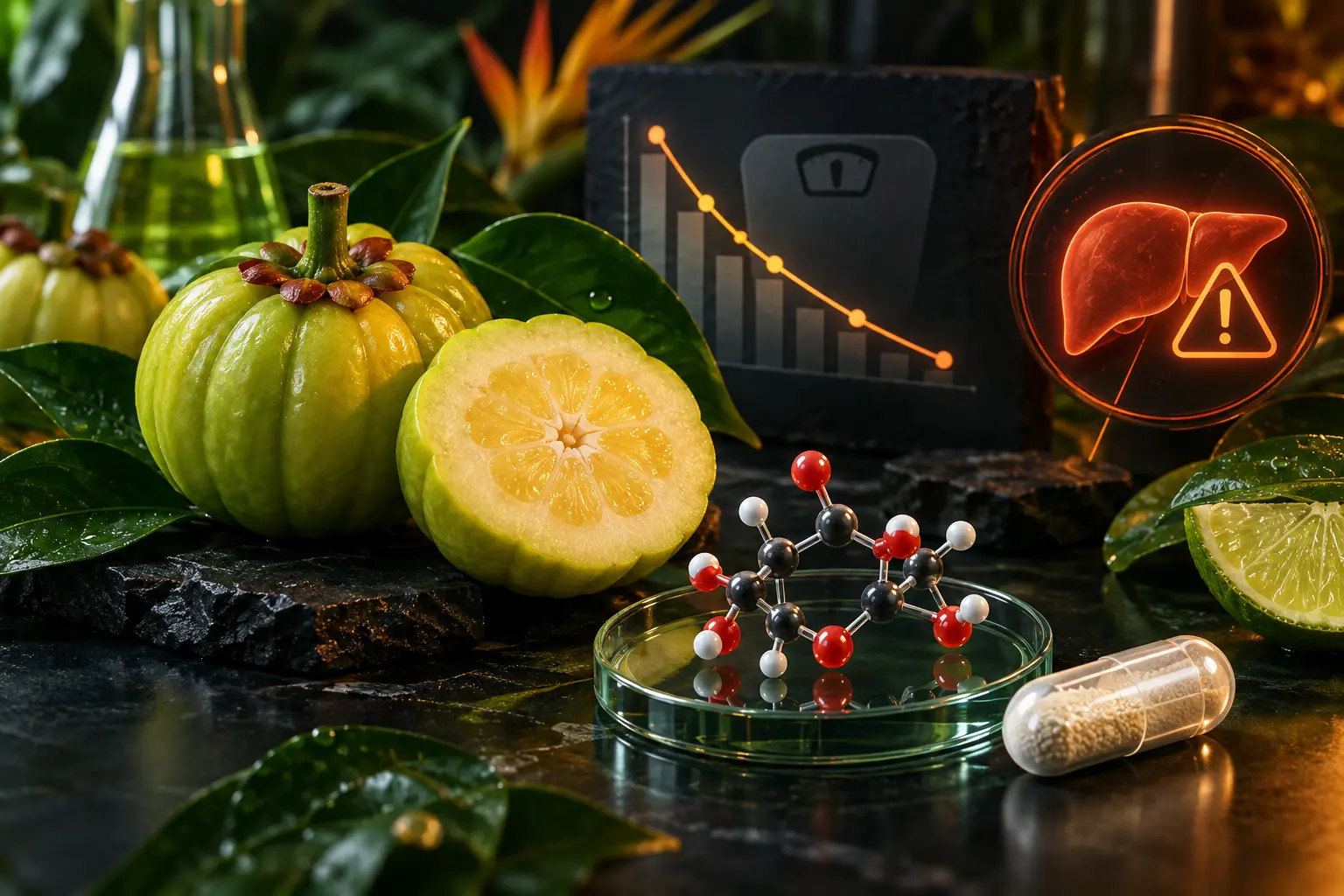
Garcinia, HCA, and extract dose
Garcinia gummi-gutta fruit rind contains hydroxycitric acid. Supplements vary in extract mass, HCA percentage, salt form, co-ingredients, and serving schedule. If 1,000 mg of extract is standardized to 60% HCA, the calculated amount is 600 mg—provided the label and testing are accurate.
Studies using one HCA preparation do not validate every garcinia product. Proprietary blends prevent dose matching, while multi-ingredient products make both benefit and harm difficult to attribute.
How to interpret mixed meta-analyses
Some pooled analyses report statistically significant reductions in weight, BMI, waist, or fat percentage. Earlier reviews characterize the effect as small, short term, heterogeneous, and of uncertain clinical relevance. Different inclusion decisions and study quality can change the pooled estimate.
Do not select only the favorable number. Check whether trials were adequately blinded, whether the diet was matched, how many participants withdrew, and whether the confidence interval included a trivial effect. There is no convincing evidence of a large or durable transformation.
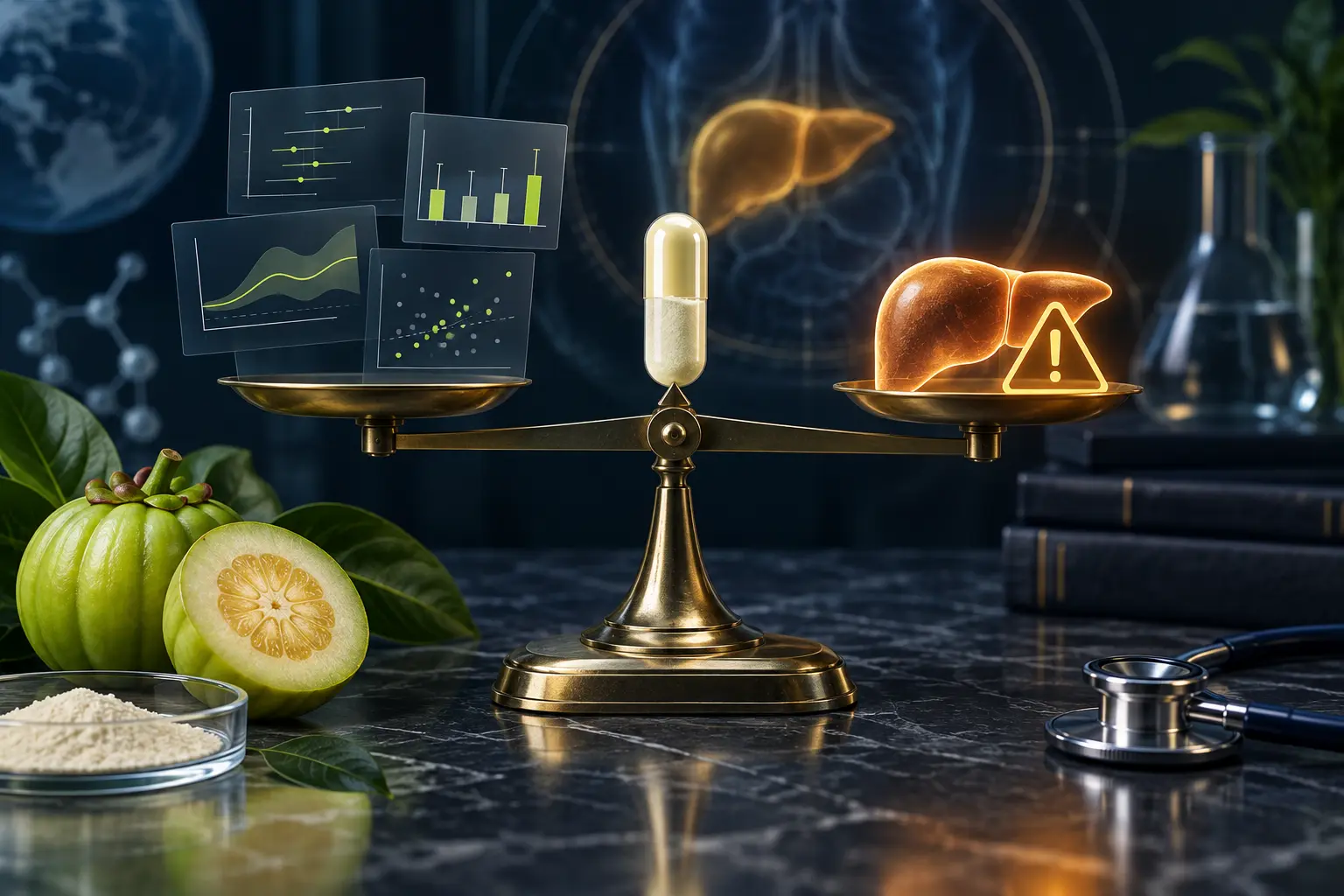
Liver injury changes the threshold for benefit
Case reports and safety reviews associate garcinia-containing products with liver injury, including severe cases. Reports often involve combinations, so they do not calculate the risk of a particular single-ingredient product; they still create a safety signal that cannot be dismissed when expected weight benefit is small.
Stop use and seek prompt medical care for yellow eyes or skin, dark urine, pale stools, itching, persistent nausea, unusual fatigue, or right-upper abdominal pain. Do not restart after suspected supplement-related liver injury without specialist advice.
Review serotonin, glucose, mood, and combinations
Garcinia may interact with medicines affecting serotonin, and reports of serotonin syndrome or mania make antidepressants and psychiatric history important to review. Glucose-lowering treatment may require monitoring. Liver disease, pregnancy, breastfeeding, and use of multiple weight-loss supplements argue against self-experimentation.
Headache and digestive symptoms are not evidence that HCA is active. A third-party quality mark can improve confidence in identity or contaminants, but it does not prove weight-loss efficacy or eliminate interaction risk.
How this applies to Fat Burn Active
Garcinia cambogia is not listed on the current public Fat Burn Active formula. Its HCA research cannot validate a different thermogenic product, and combining weight-loss supplements would add uncertainty.
Fat Burn Active is relevant here because its official listing identifies standardized plant extracts, caffeine sources, vitamins, and zinc in one formula. First read our independent review. If the formula, stimulant profile, evidence limits, and warnings fit your situation, check the current Fat Burn Active price on the official website. We may receive a commission at no additional cost.
Frequently asked questions
Does garcinia block fat production?
A proposed enzyme mechanism does not establish meaningful human fat loss.
How much weight does it cause?
Pooled estimates are small, short term, heterogeneous, and not a reliable personal forecast.
Can garcinia harm the liver?
Liver-injury reports create a meaningful safety signal, including rare severe cases.
Sources
- NIH ODS: Weight-Loss Supplements
- Meta-analysis: Garcinia and Obesity Indices
- Review of Risks Associated With Garcinia
- NCCIH: Weight-Loss Supplements
Sources reviewed September 8, 2026. This article is general educational information, not medical advice, diagnosis, or treatment.