
The strain is part of the intervention
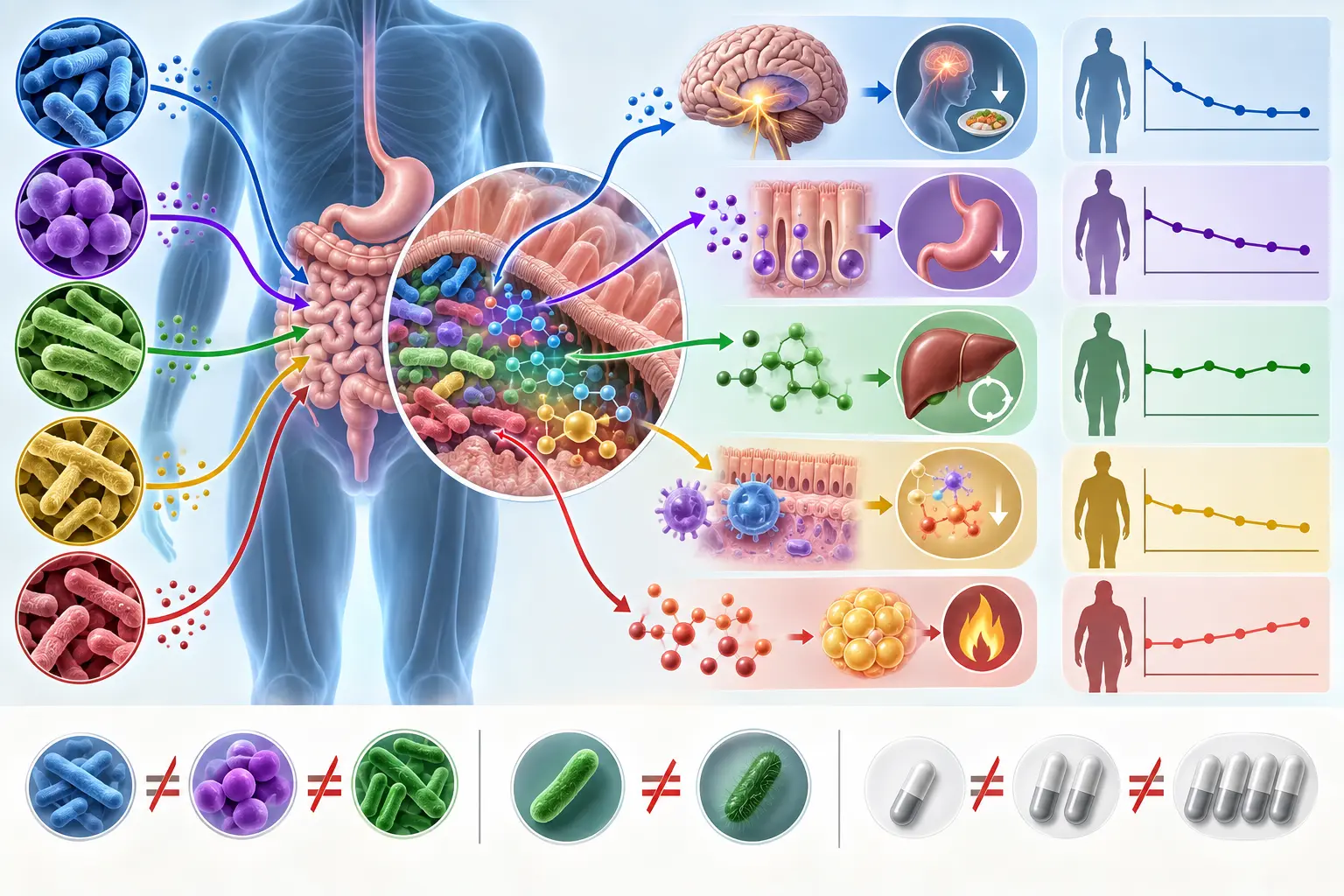
A useful label identifies genus, species, and strain—for example, three levels rather than “Lactobacillus blend.” Closely related strains can differ in survival, metabolic products, host interaction, and clinical evidence. Multi-strain products add another layer because component effects and viability may differ.
Colony-forming units describe viable organisms under stated conditions, not weight-loss potency. More CFU is not automatically better. Check whether the count is guaranteed through expiry or only at manufacture, and follow storage requirements.
A pooled average hides different products
Reviews combine trials using fermented foods, capsules, single strains, combinations, and sometimes synbiotics with prebiotic substrates. Small pooled changes may be statistically detectable while remaining inconsistent across subgroups. Weight, BMI, waist, and fat mass are separate outcomes.
Match the exact strain, dose, duration, population, and outcome before using a paper to judge a bottle. When a meta-analysis reports subgroup differences, treat them as clues needing confirmation rather than a shopping list of “best strains.”
Mechanism is not a personal diagnosis
Researchers study gut-barrier function, fermentation products, bile acids, inflammation, appetite signaling, and energy harvest. These pathways are complex and do not mean a commercial microbiome test can identify a weight-loss probiotic for an individual.
Diet pattern, fiber, medicines, illness, sleep, and baseline microbiota can affect response. For most healthy people, mild gas or bloating may occur, but safety evidence is less certain in severely ill or immunocompromised people; professional guidance matters.
Food sources versus capsules
Yogurt, kefir, sauerkraut, kimchi and other fermented foods contain live microbes, along with protein or fiber. Diets rich in fiber feed beneficial gut bacteria regardless of probiotic use. For weight management, these foods fit a healthy diet; capsules add cost without clear extra benefit for most people.
Safety
Probiotics are generally safe for healthy people, though they can cause temporary gas or bloating. People who are severely ill, immunocompromised, have central lines or are premature infants have developed serious infections in rare cases, so they should use probiotics only under medical supervision.
Where a supplement fits
Probiotics are not part of Fat Burn Active, and probiotic research cannot be transferred to it.
No named probiotic strain or viable count is identified in the currently available Fat Burn Active information. Probiotic research cannot be transferred to it.
The official Fat Burn Active page lists a multi-ingredient thermogenic formula, but the buying decision should follow the evidence check above. Compare our independent review, then, if the product remains a reasonable fit, check the current price and label on the official site. We may receive a commission at no additional cost.
Frequently asked questions
Which probiotic is best for weight loss?
No universal best strain has been established; evidence is strain- and population-specific.
Does a higher CFU count work better?
No. CFU count alone does not measure clinical effectiveness.
Is fermented food the same as a trial capsule?
No. Organisms, dose, matrix, and viability can differ.
Sources
- NIH ODS: Probiotics fact sheet
- NCCIH: Probiotics usefulness and safety
- Probiotics and weight-loss meta-analysis
- Probiotics and body composition meta-analysis
Sources reviewed September 14, 2026. This article is general educational information, not medical advice, diagnosis, or treatment.