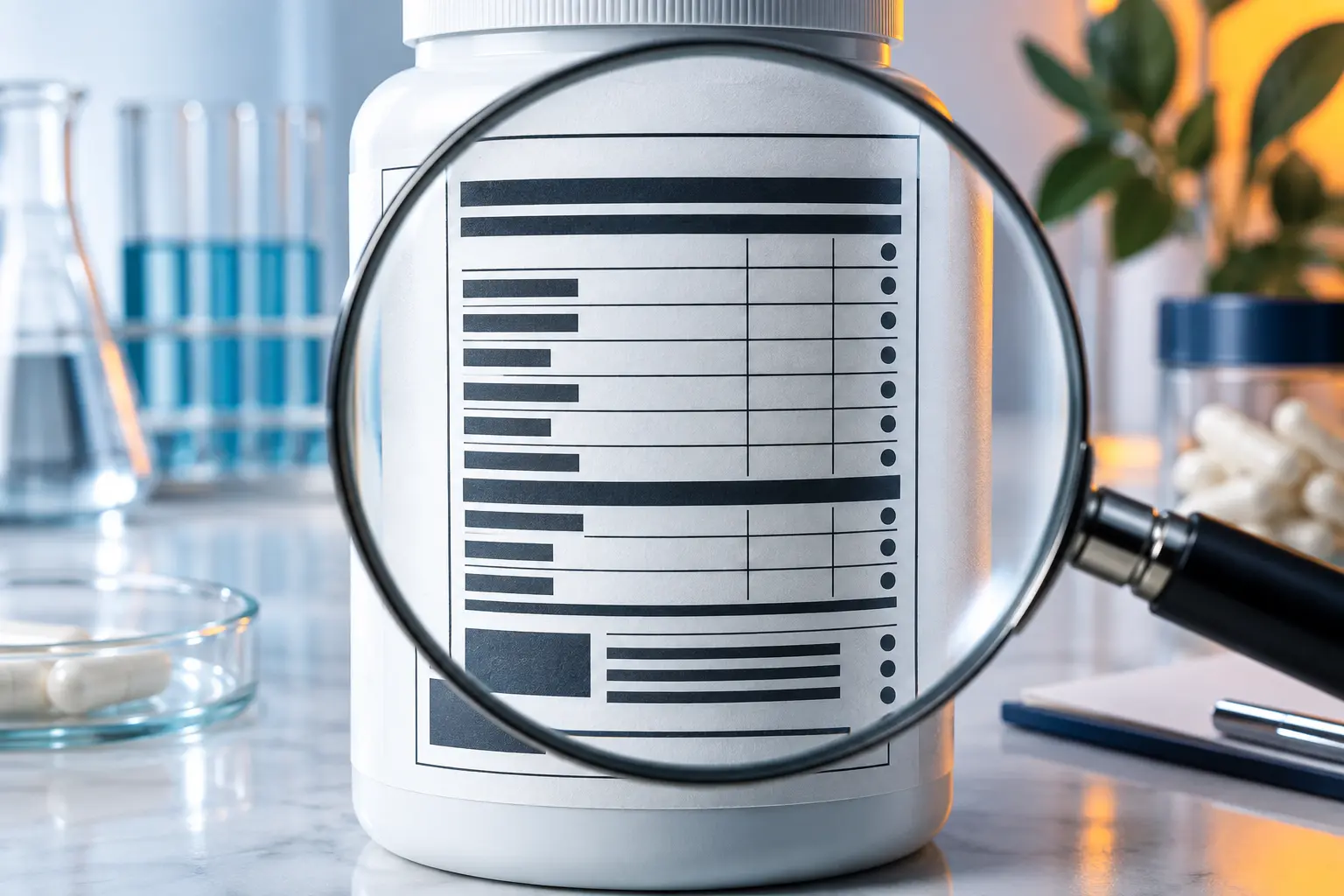
Start with serving size—not the ingredient list
Serving size tells you the amount used for the quantities in the panel. It may be one capsule, several capsules, a scoop, or a liquid volume. Compare that with the directions: if the label recommends two servings daily, multiply every ingredient and the cost accordingly. “Thirty servings” is not necessarily a thirty-day supply.
Check whether directions offer a range such as one to three servings. That range can triple exposure and makes a single front-label claim misleading. Never assume that taking more recreates a study or improves the outcome. Maximum directions are a safety boundary, not a performance target.
Read every amount and unit
Milligrams, micrograms, grams, international units, and percentages are not interchangeable. Confirm the amount beside each active ingredient and whether the Daily Value applies. A missing Daily Value does not mean the ingredient is ineffective or dangerous; it means an official Daily Value has not been established for that entry.
Names can hide meaningful differences. Magnesium citrate is not the same form as magnesium oxide; green tea beverage evidence is not automatically evidence for a concentrated extract. Botanical entries should ideally identify common and Latin name, plant part, extract ratio or preparation, and standardization when the claimed compound depends on it.
Treat proprietary blends as an evidence limit
A proprietary blend lists a total blend weight while withholding the amount of each component. Ingredients generally appear in descending order by weight within the blend, but that does not reveal exact doses. You cannot reliably determine whether a studied amount is present, calculate the exposure of a risk-relevant ingredient, or compare value ingredient by ingredient.
Do not estimate doses by dividing the blend total equally. Do not assume the first ingredient is present at a clinically relevant amount. For stimulant blends, hidden amounts are especially important because several botanical names may contribute caffeine or related compounds.
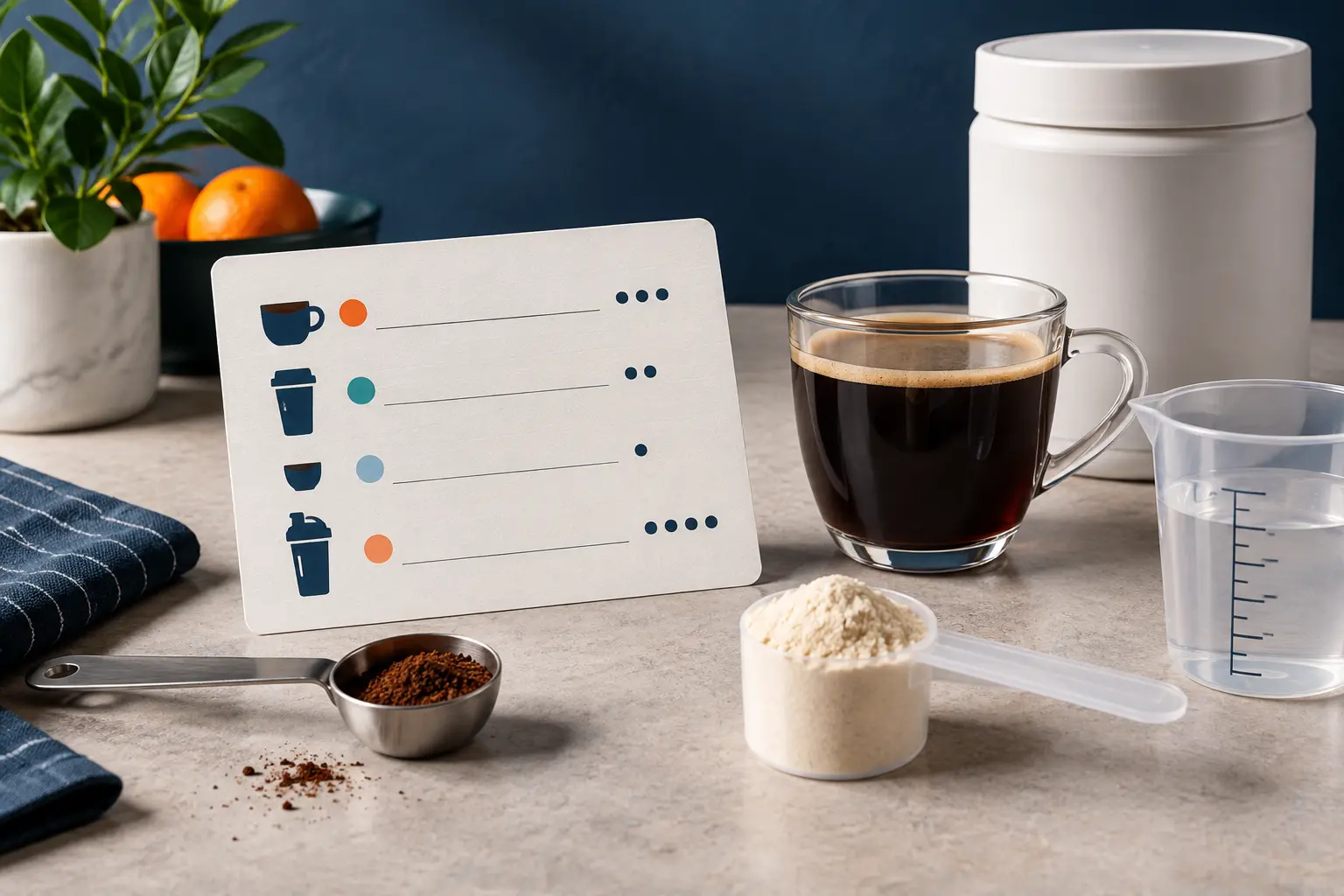
Build a complete stimulant ledger
“Caffeine from natural sources” remains caffeine. A label that declares only a botanical amount without caffeine content may not support a precise total. Individual sensitivity, pregnancy, medicines, cardiovascular conditions, and timing can make a population reference inappropriate for one person.
Do not skip Other Ingredients
The Other Ingredients list may contain capsule materials, colors, sweeteners, flavors, binders, flow agents, oils, or allergens. These ingredients are not the product’s marketed actives, but they can matter for allergies, dietary restrictions, gastrointestinal tolerance, and personal preferences. Powders and gummies may also add carbohydrate, sugar alcohols, or sweeteners that affect tolerance.
Check allergen statements and whether the facility language matters to you. “Free from” claims should be read precisely. If a reaction history is serious, do not rely on front-label icons; contact the responsible company and involve an allergist or clinician when appropriate.
Translate front-label claims into testable questions
“Supports metabolism” does not specify the size, duration, or clinical relevance of an effect. “Clinically studied” should prompt: which ingredient or finished product, what dose, which population, what comparator, how long, and what outcome? “Doctor formulated,” “patented,” and “science backed” describe marketing or provenance unless the supporting evidence is provided and relevant.
Dietary supplements cannot lawfully claim to diagnose, treat, cure, or prevent disease in the United States. A structure/function disclaimer does not validate the claim above it. Testimonials, before-and-after images, and star ratings cannot establish causation or typical results.
Read directions and warnings as part of the formula
Timing, food instructions, duration, storage, age limits, pregnancy warnings, and medicine cautions affect exposure. A product taken twice daily is a different practical decision from one taken once. Directions that interfere with sleep or overlap with other stimulants may undermine the behaviour the supplement is supposed to support.
Stop and seek appropriate help for chest pain, fainting, severe palpitations, difficulty breathing, confusion, seizure, jaundice, or severe allergic symptoms. Less urgent adverse effects still matter: insomnia, anxiety, tremor, persistent gastrointestinal symptoms, headache, or increased blood pressure can make a product unsuitable.
Use a one-page label worksheet
- Photograph the full current label and record the date and seller.
- Write the serving size and maximum servings per day.
- Calculate the daily amount of every active ingredient.
- Record form, plant part, extract ratio, and standardization.
- Total caffeine and other stimulants from all daily sources.
- List medicines, health conditions, allergies, and relevant warnings.
- Mark each claim as mechanism, ingredient, formula, or finished-product evidence.
- Record unknowns; do not convert them into favorable assumptions.
The worksheet turns a label into an auditable decision. If a later formulation changes, repeat the check rather than carrying the old conclusion forward.
Frequently asked questions
Does order show the exact amount?
No. Order may show relative weight in some lists, but only disclosed quantities permit dose assessment.
Is “natural caffeine” different?
Its source differs, but caffeine exposure and stimulant effects still count toward the daily total.
Can the label prove effectiveness?
No. It establishes what is declared in the product; relevant research is still required.
Sources
- FDA: Dietary Supplement Labeling Guide
- FDA: Questions and Answers on Dietary Supplements
- NIH ODS: Dietary Supplements for Weight Loss
- FDA: Spilling the Beans—Caffeine
Evidence reviewed September 9, 2026. Educational information only; not medical advice.