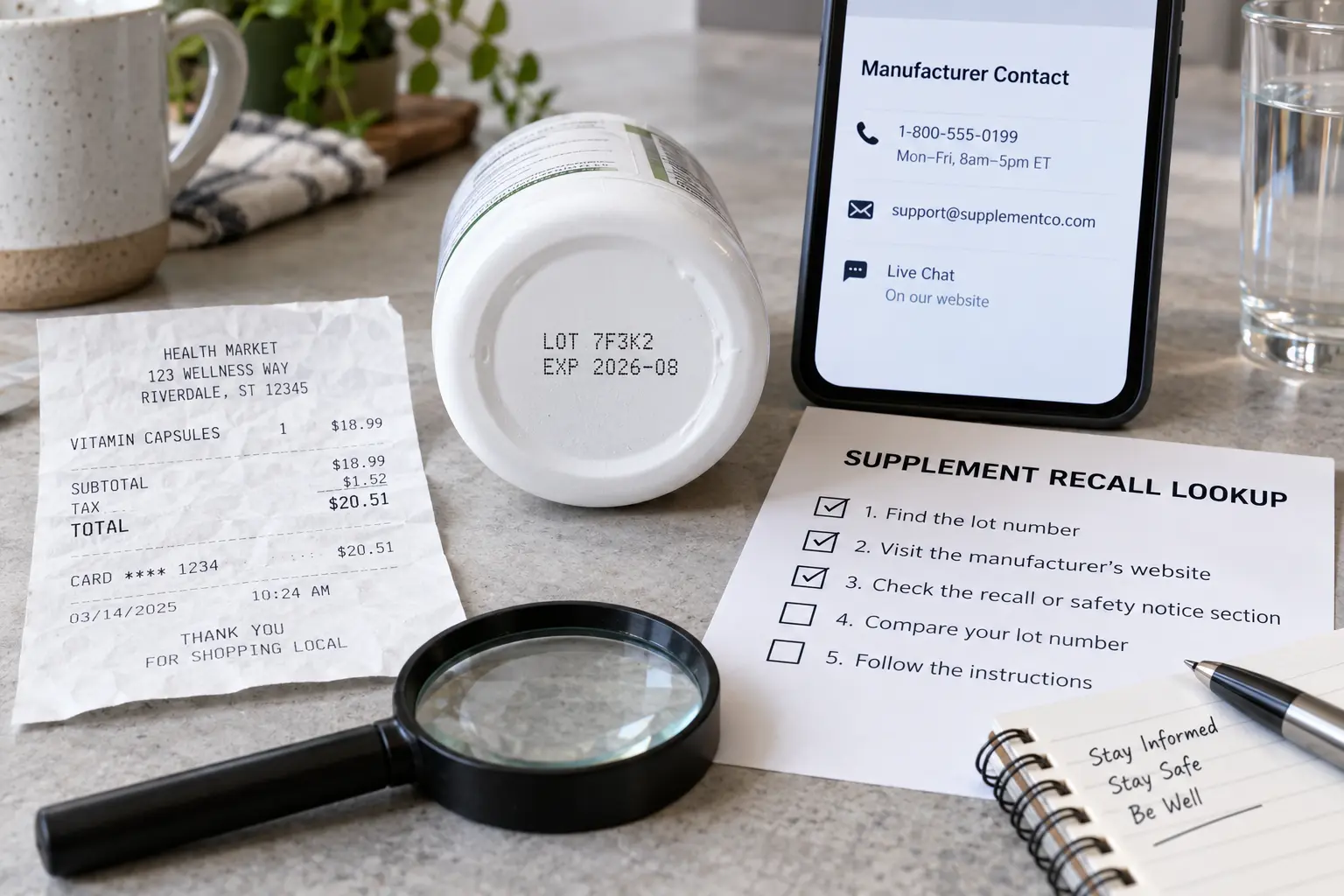
Where to find the code
Check the bottle base, shoulder, label seam, cap, carton flap, blister edge, sachet seal, or ink-jetted area near the expiry. The code may contain letters, numbers, punctuation, and a manufacturing line or date convention. Do not assume the UPC, SKU, order number, or expiration date is the lot.
Use angled light and several photographs before the ink rubs off. Record capitalization and ambiguous characters such as zero versus O. Keep the outer carton and receipt until the product is finished, especially when the bottle carries only part of the information.
What a lot number should connect
A lot or batch identifier should allow the responsible firm to retrieve production and control history for a defined quantity. That can include component lots, dates, equipment, in-process checks, packaging and label records, release decision, laboratory results, distribution, complaints, returns, and recall actions.
The public usually cannot access the entire record. The practical test is whether the company recognizes the code and can provide specific, consistent information. A customer-service answer that merely repeats the expiry date does not demonstrate a lot-linked search.
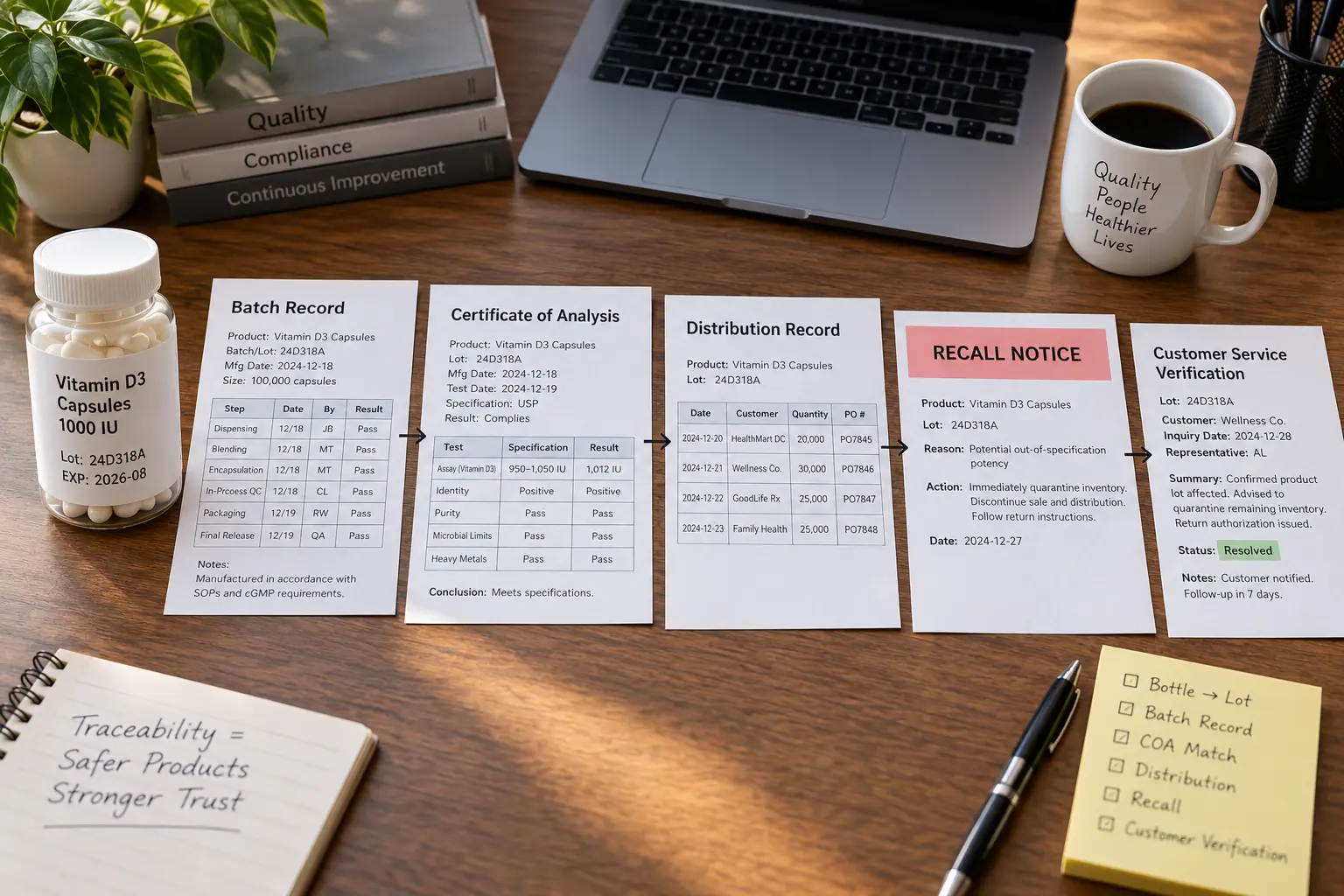
Send a precise verification request
Contact the responsible company using the address or phone on the physical label and cross-check it with an independently found official site. Provide product name, form, strength, bottle count, lot, expiry, seller, purchase date, and photographs. Ask whether the lot is genuine, released, recalled, expired, or subject to a notice.
Request the matching finished-product COA or a summary of release tests, manufacturing facility country, and the correct channel for adverse-event or quality complaints. Save the response with the date and representative name or case number.
Check recalls without overmatching
Search FDA recall and safety-alert pages using the company and product name, then read the notice for lot ranges, package size, UPC or NDC when present, distribution dates, reason, and consumer instructions. A similar product name is not enough to identify an affected bottle.
If the exact lot appears, follow the notice and responsible company’s instructions; do not continue using it because the capsules look normal. If no notice appears, that does not certify the lot as safe or genuine. Recall databases are one part of verification, not a universal product registry.
Traceability red flags
- No lot or batch code on the bottle or immediate packaging.
- A code printed only on a removable marketplace sticker.
- The same lot shown on seller photos across changing formulas or years.
- Company staff cannot recognize the code or identify the responsible manufacturer.
- The supplied COA uses a different lot, product form, or date.
- The lot appears altered, overprinted, rubbed away, or inconsistent with the expiry.
- The seller advises ignoring an official recall match.
Preserve the product rather than discarding evidence immediately when reporting a suspected quality problem.
Where Fat Burn Active fits
When a Fat Burn Active order arrives, photograph its lot and expiry and request documentation matching that exact finished-product batch rather than a generic report.
Quality documentation and clinical effectiveness are separate. Even a genuine GMP record, certification, or certificate of analysis would not prove that Fat Burn Active causes meaningful weight loss. Our independent Fat Burn Active review separates label facts, ingredient evidence, dose relevance, safety, and finished-product evidence.
Fat Burn Active is relevant here because its official listing identifies standardized plant extracts, caffeine sources, vitamins, and zinc in one formula. First read our independent review. If the formula, stimulant profile, evidence limits, and warnings fit your situation, check the current Fat Burn Active price on the official website. We may receive a commission at no additional cost.
Sources
- 21 CFR Part 111
- FDA: Recalls, Market Withdrawals, and Safety Alerts
- FDA: Questions and Answers on Dietary Supplements
- FDA: How to Report a Problem with Dietary Supplements
- FDA: Dietary Supplements
Sources reviewed September 16, 2026. This article is general educational information, not medical advice, diagnosis, or treatment.