What this page answers—and what it does not
People searching this phrase may want a list of botanicals, a shopping category, or reassurance that a product is safer than a synthetic alternative. Those intents must be separated. This guide is a label-and-evidence checklist for products sold as natural thermogenics. For the broad landscape, see our natural fat burners guide; for physiology, see the dedicated thermogenic explainer.
Thermogenesis means heat production and energy expenditure. Demonstrating a short-lived change after a dose is not equivalent to demonstrating durable fat loss. The relevant purchasing question is whether a specific, transparently labeled formula produces a useful outcome with acceptable risk.
Common “natural” thermogenic ingredients
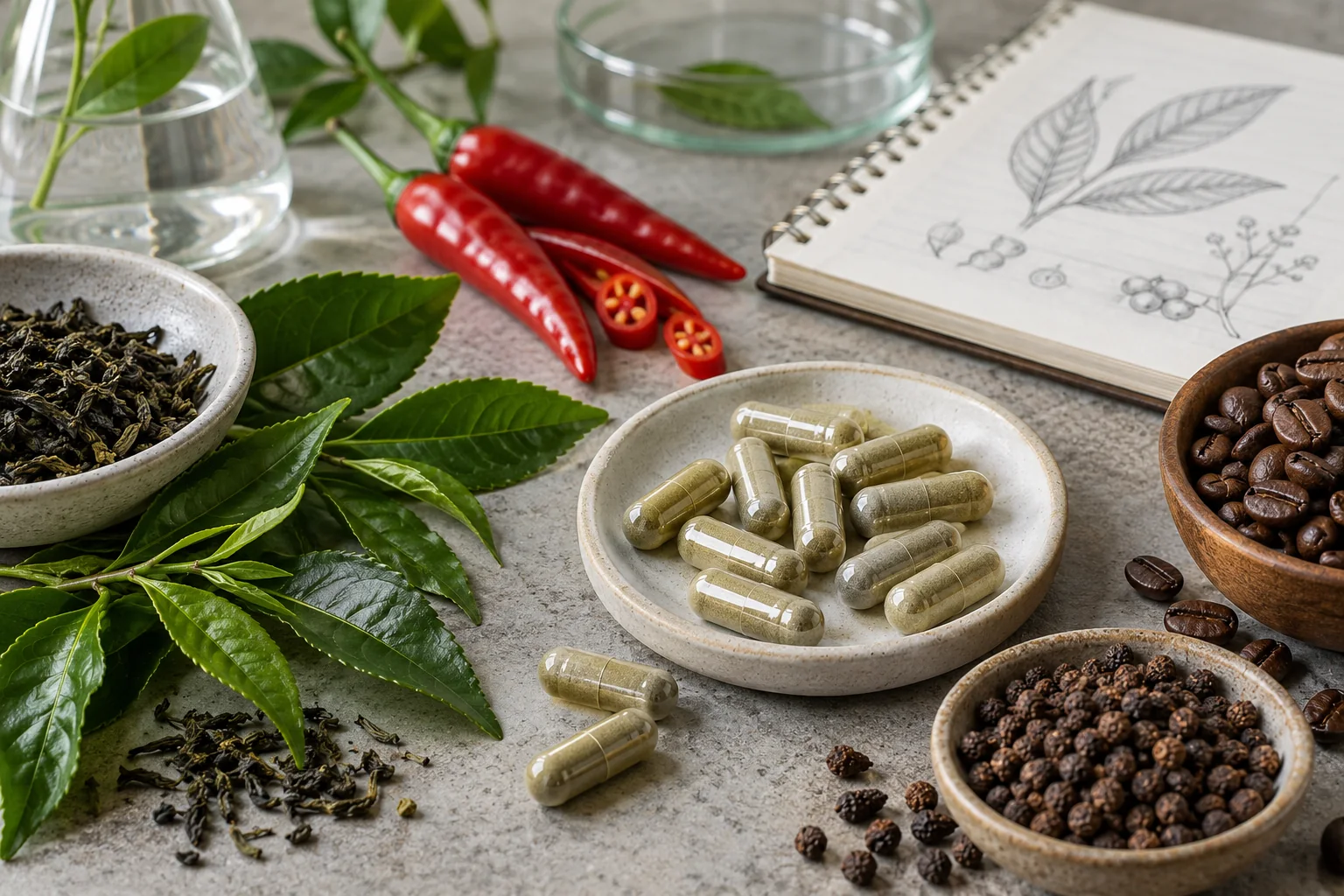
Caffeine may come from coffee, tea, guarana, yerba mate, or anhydrous caffeine. Green-tea extracts may provide catechins including EGCG plus caffeine. Chili-derived capsaicin or phenylcapsaicin and grains of paradise extracts are studied for thermogenic mechanisms. Bitter orange may supply p-synephrine. Each name covers multiple preparations.
Botanical origin does not make extracts equivalent to food. Concentration, solvent, standardization, dose, and combinations change exposure. A cup of tea and a concentrated extract should not be treated as interchangeable simply because they start from the same plant.
Use an evidence ladder
Start with human randomized controlled trials using the same standardized ingredient and relevant dose. Next consider systematic reviews that evaluate bias and heterogeneity. Acute metabolic studies can establish a temporary physiological effect but sit below longer-term body-composition trials for a fat-loss claim. Animal or cell work supports hypotheses, not consumer outcomes.
For multi-ingredient supplements, look for a trial of the finished formula. If none exists, describe the evidence ingredient by ingredient and keep the conclusion narrow. Synergy claims need direct testing; combining several plausible ingredients does not automatically add their effects.
Read the label as an exposure map
Add caffeine from every source, including guarana, coffee, tea, mate, and any separately declared caffeine. Check the daily serving, not just one capsule. Identify extract ratios and standardized constituents. Watch for proprietary blends that reveal total blend weight but hide individual doses.
The “other ingredients” list matters too: capsule shell, colors, flow agents, allergens, and sweeteners can affect suitability. Warnings, lot information, manufacturer contact details, and credible third-party certification improve traceability, although certification does not prove fat-loss effectiveness.
Natural does not mean low risk
Caffeine can cause insomnia, nervousness, palpitations, headache, or gastrointestinal symptoms. Combining sources can make total exposure easy to underestimate. Bitter orange and other stimulating botanicals deserve particular care in people with cardiovascular concerns or medication interactions. Concentrated green-tea extracts have different exposure and safety considerations from brewed tea.
Pregnant or breastfeeding people, minors, people with heart, liver, anxiety, sleep, or blood-pressure conditions, and anyone taking medicines should seek individualized advice. Stop for significant symptoms. Never combine products merely because each uses natural language.
The natural thermogenic buying checklist
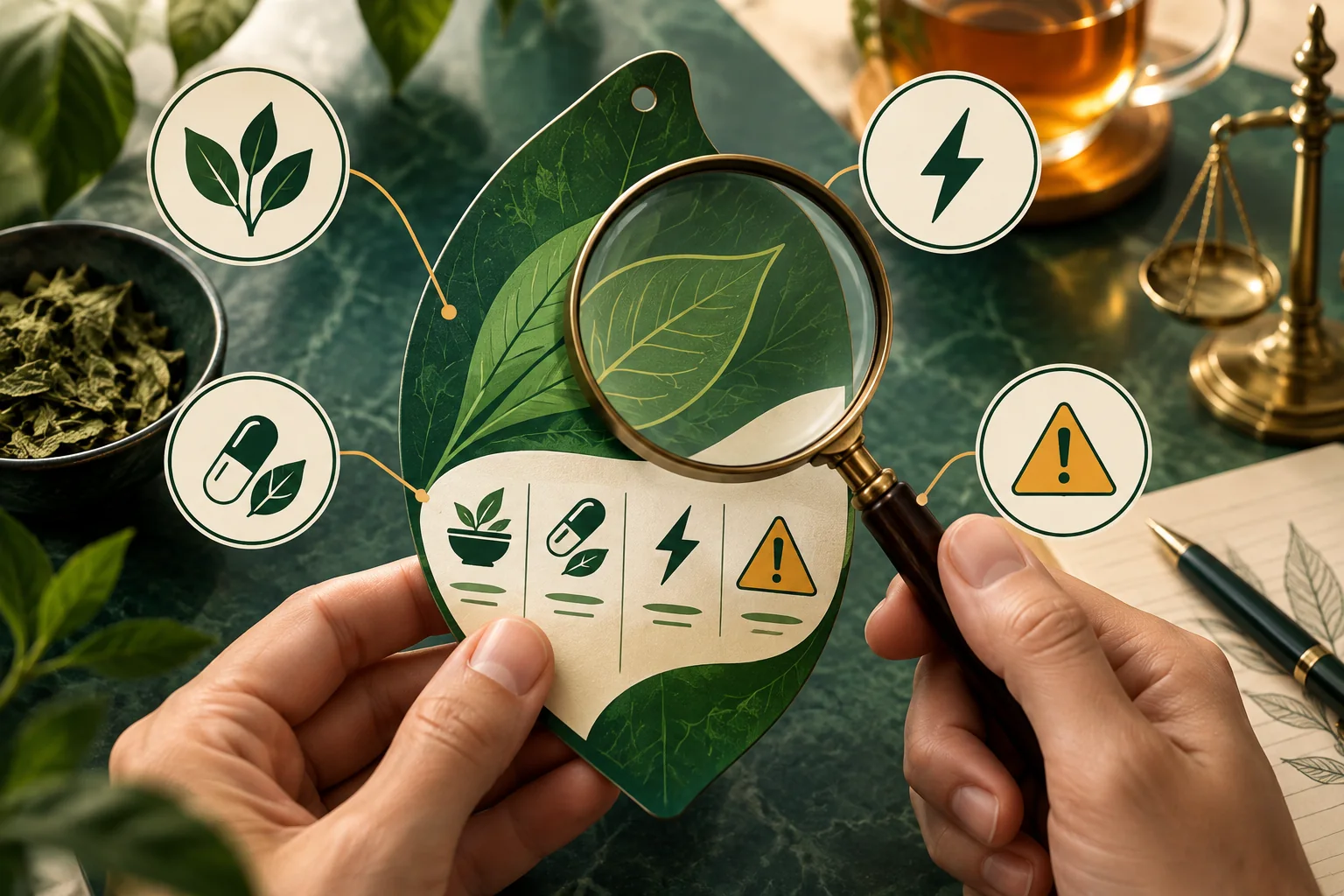
Require exact active amounts, total caffeine, standardization, batch traceability, and a realistic claim. Match the cited study’s ingredient identity, dose, population, duration, and outcome. Look for independent testing that addresses identity and contaminants. Check whether the serving schedule conflicts with sleep.
Reject “proprietary natural matrix,” miraculous before-and-after imagery, guaranteed pounds lost, or citations that test a different material. A money-back promise does not repair weak evidence. A long ingredient list may create more uncertainty rather than more value.
How this differs from other thermogenic pages
A general thermogenic page explains the category and mechanisms. A comparison page ranks products or ingredients. A “what does thermogenic mean?” page defines the term. This page addresses the narrower decision created by the word natural: whether the source, label, extraction, dose, evidence, and safety support the implied advantage.
That distinction prevents a false shortcut. Naturalness is one product attribute, not a verdict. A botanical formula can be transparent and sensible, or poorly disclosed and aggressive; a synthetic ingredient can be well characterized or inappropriate. Evidence and context decide.
When the category may or may not fit
A natural thermogenic may fit an adult who already has diet and training fundamentals, wants a modest stimulant-based adjunct, tolerates the disclosed dose, and has no relevant contraindication. It is a poor fit when sleep is fragile, caffeine intake is already high, the label is opaque, expectations are rapid, or clinical issues require professional care.
Treat the purchase as an optional experiment with predefined limits, not a commitment to keep escalating. Track sleep, resting symptoms, training, appetite, and weight trend. Stop if the tradeoff is unfavorable.
Applying the checklist to Fat Burn Active
The official Fat Burn Active listing describes a botanical-heavy thermogenic formula with ingredients such as green tea, guarana, bitter orange, grains of paradise, coleus, capsaicinoid material, and black pepper, alongside caffeine and micronutrients. These are manufacturer-listed facts, not proof that the finished formula produces a specific amount of fat loss.
Before considering it, verify the current Supplement Facts panel, exact serving, total caffeine, standardization, warnings, and whether any ingredient conflicts with medicines or sleep. Our evidence review separates studies of individual ingredients from evidence for the complete product.
Frequently asked questions
Are natural thermogenics safer?
Not automatically. Botanical extracts can be potent, interact with medicines, and add hidden caffeine.
Do they burn fat without a calorie deficit?
They do not override energy balance. Any effect is generally modest and should be considered adjunctive.
Is green tea extract the same as tea?
No. Extracts can provide concentrated catechins and caffeine with different exposure and safety considerations.
What matters most on the label?
Exact doses, total caffeine, standardization, warnings, and complete ingredient disclosure.
Sources
- NIH ODS: Weight-Loss Supplements
- FDA: Dietary Supplement Questions and Answers
- UK FSA: Supplements Containing Caffeine
- FTC: Health Products Compliance Guidance
- NCCIH: Using Dietary Supplements Wisely
Sources reviewed September 18, 2026. This article provides general educational information and does not replace medical advice.