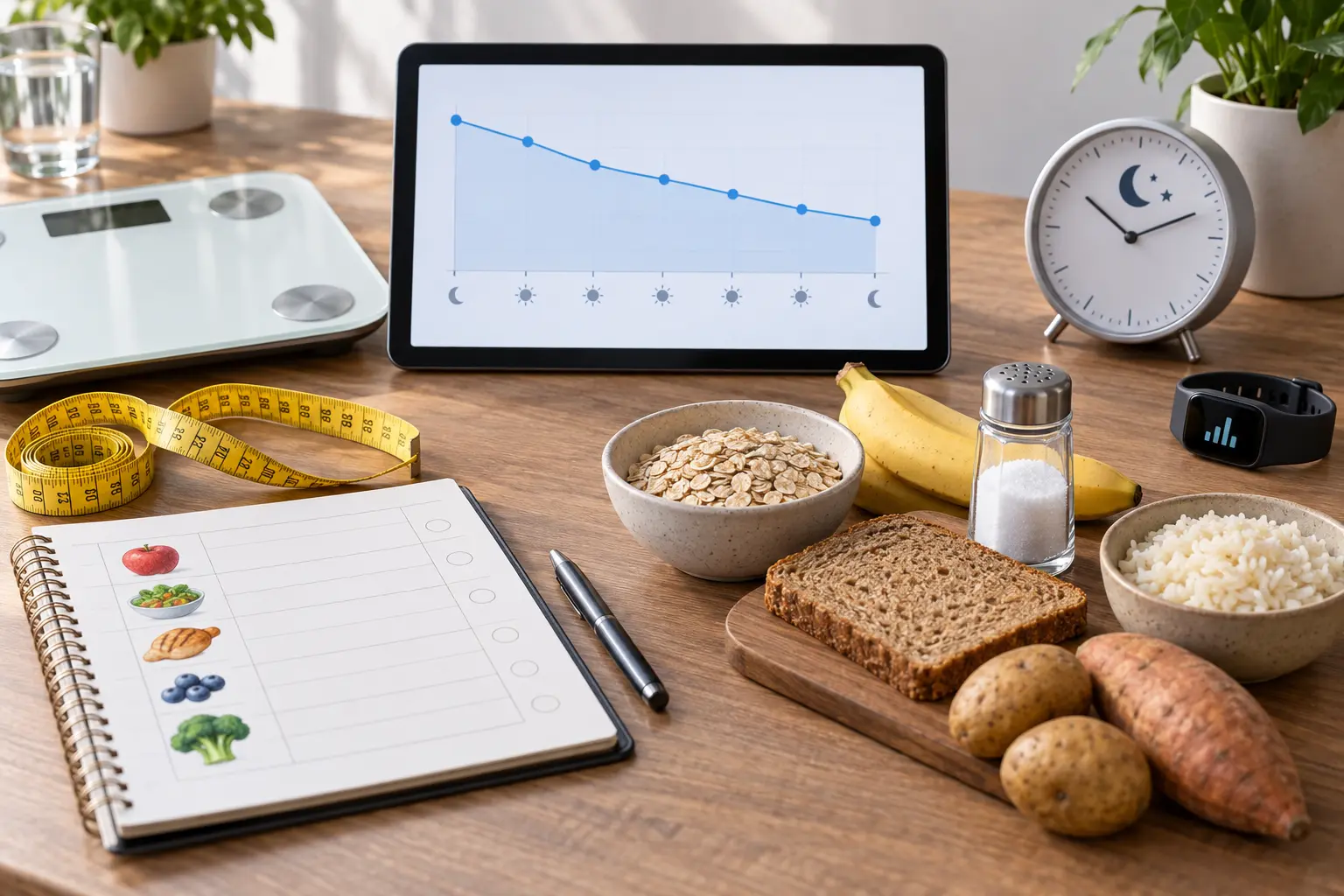
A planned deficit is not always a realized deficit
Energy-expenditure calculators use population equations and activity assumptions. Food labels, restaurant entries, watches and portion estimates also contain error. If intake is consistently below true expenditure, stored energy must eventually decline, but the bathroom scale may not show that immediately because water, glycogen and digestive contents move independently.
The useful question is not “Why is physics broken?” It is “Which input or measurement is uncertain, and for how long?”
Use the correct troubleshooting order
- Confirm standardized weigh-ins and seven-day averages.
- Check whether at least three comparable weeks exist.
- Note menstrual-cycle phase, sodium, carbohydrates, constipation, travel and new training.
- Audit oils, sauces, drinks, bites, weekends and restaurant portions.
- Measure a sample of recurring foods without permanently micromanaging every gram.
- Compare actual movement with the baseline; dieting can reduce spontaneous activity.
- Recalculate needs after meaningful weight loss and review symptoms or medicines.
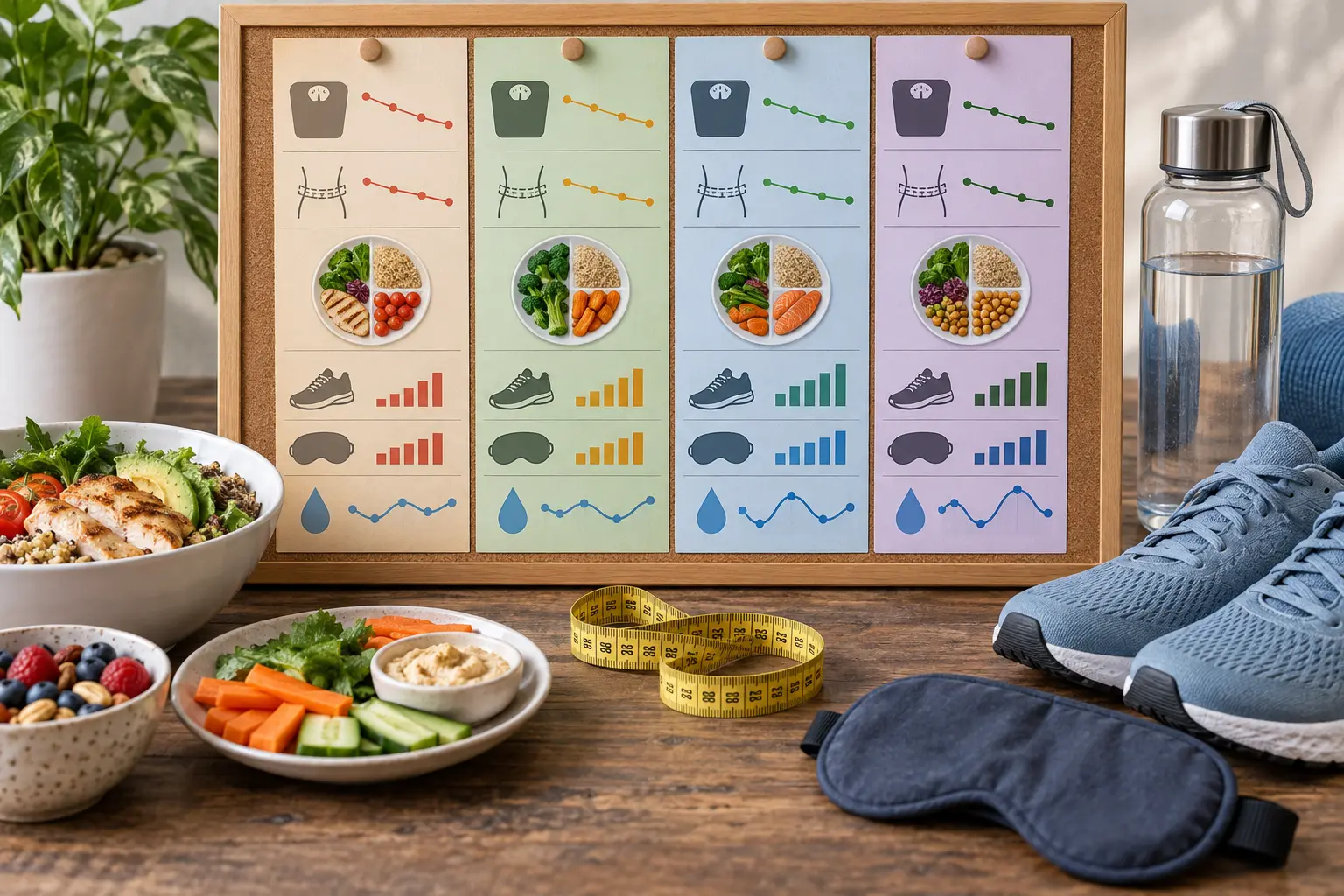
Metabolic adaptation is real but not magic
A smaller body uses less energy, and expenditure may decline beyond simple size predictions. People may also move less without noticing. These adaptations can narrow a planned deficit, but they do not make long-term energy balance irrelevant. Avoid the opposite mistake of dismissing every plateau as noncompliance.
Use trend data compassionately. If execution is strong and symptoms suggest thyroid disease, sleep apnea, fluid retention, medication effects or another condition, seek clinical review.
Make one modest adjustment
If multiple measures remain flat after the audit, reduce a repeatable energy source or add feasible movement. Examples are measuring dinner oil, changing one drink, modifying a restaurant order, or adding a daily walk. Preserve protein, produce and the meals that prevent rebound eating.
Set another review date rather than changing the plan after every weigh-in. A correction that worsens hunger and weekends can leave the weekly balance unchanged.
The most common causes
- Underestimating portions, cooking oils, drinks and snacks; studies show people commonly underreport intake.
- Weekend or evening eating that cancels weekday deficits.
- Overestimated exercise calories from devices.
- Reduced everyday movement during the diet.
- Water retention from new exercise, salt, menstrual cycle or stress.
- Calorie targets not updated after weight loss.
When to see a doctor
If you have carefully tracked intake for several weeks with no change, or you have symptoms such as fatigue, feeling cold, swelling, irregular periods or unexpected weight gain, ask a doctor to check for conditions such as hypothyroidism, medication effects or fluid retention.
Where a supplement fits
A stalled scale is rarely solved by adding a supplement. Checking intake and activity first is more effective.
A supplement should not be added until measurement error, intake, movement, sleep and health have been reviewed. Fat Burn Active is optional; it cannot create a weekly deficit when food and drink intake exceed expenditure. Its current official page lists at least 120 mg caffeine per serving from caffeine anhydrous and guarana, additional green-tea caffeine that is not quantified, and bitter-orange extract standardized to 6 mg synephrine. Alertness, warmth, reduced appetite or sweating does not prove meaningful finished-product fat loss.
Once the practical steps in this guide are working, decide whether an optional supplement adds enough value. Start with the Fat Burn Active review; if the formula and limitations are acceptable, see the current price on the official site. We may receive a commission.
Frequently asked questions
Must I count every calorie?
No. Tracking can diagnose portions and patterns, but repeatable meal structures and targeted checks can also create a deficit.
Can one high-calorie meal stop fat loss?
One meal changes the weekly total but does not define it. Resume the normal plan at the next meal.
How long should I check a trend?
Use comparable weekly averages for several weeks; short-term water and digestive changes can hide a small tissue trend.
Sources
- NIDDK: Body Weight Planner
- NIDDK: Treatment for Overweight and Obesity
- Fundamentals of glycogen metabolism
- NIH ODS: Weight-Loss Supplements
Sources reviewed September 13, 2026. This article is general educational information, not medical advice, diagnosis, or treatment.