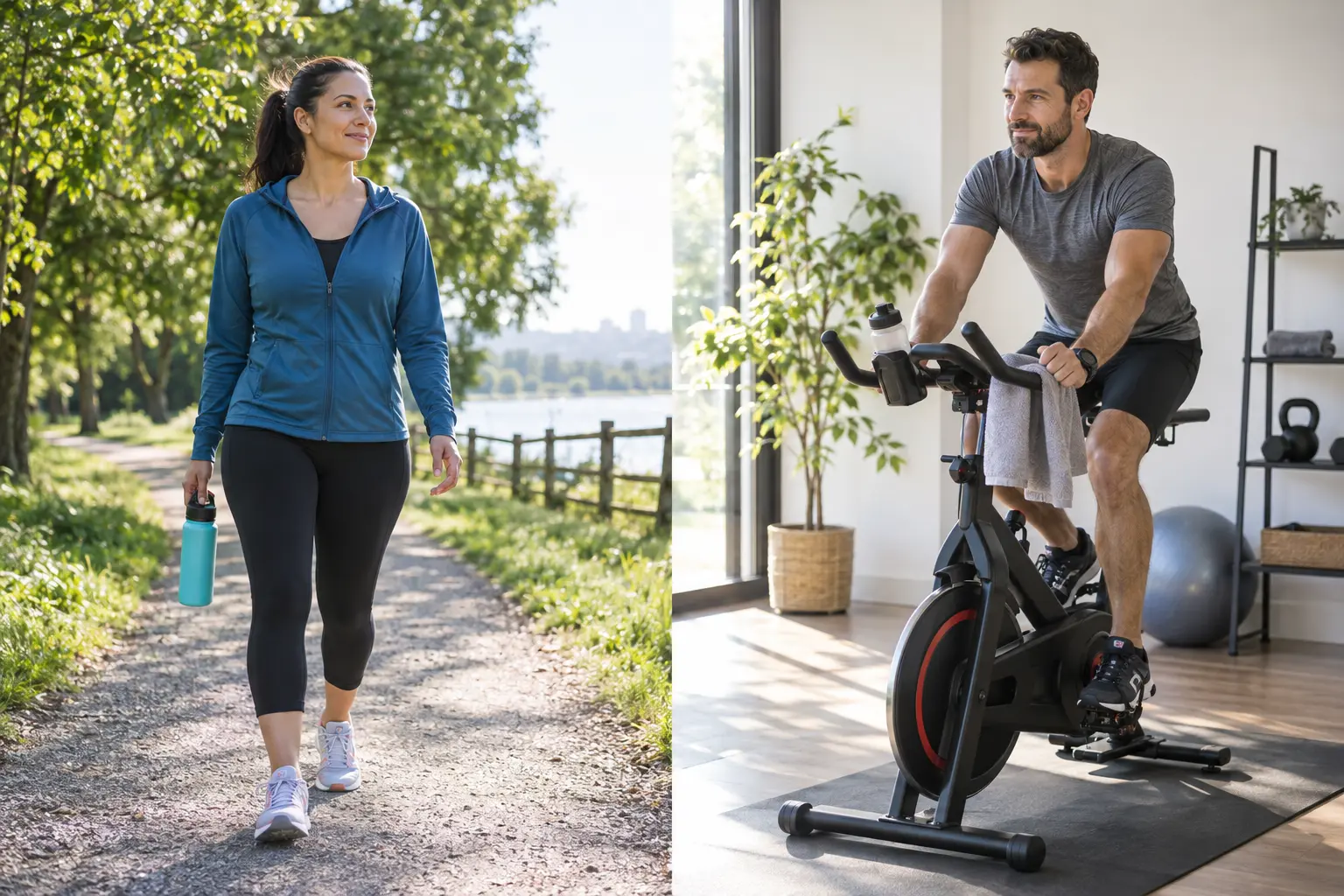
The practical comparison
Do not compare default machine numbers
A leisurely ride can expend less per minute than brisk uphill walking; hard cycling can expend substantially more than easy walking. Mode alone does not determine calories. Bike resistance, cadence, coasting, wind, hills, body mass, and efficiency change the result.
Stationary bikes may estimate work from resistance, while consumer displays still vary. Walking watches infer expenditure from motion and personal data. Compare standardized sessions and real-world trends rather than cross-device totals.
Equipment fit can decide whether cycling works
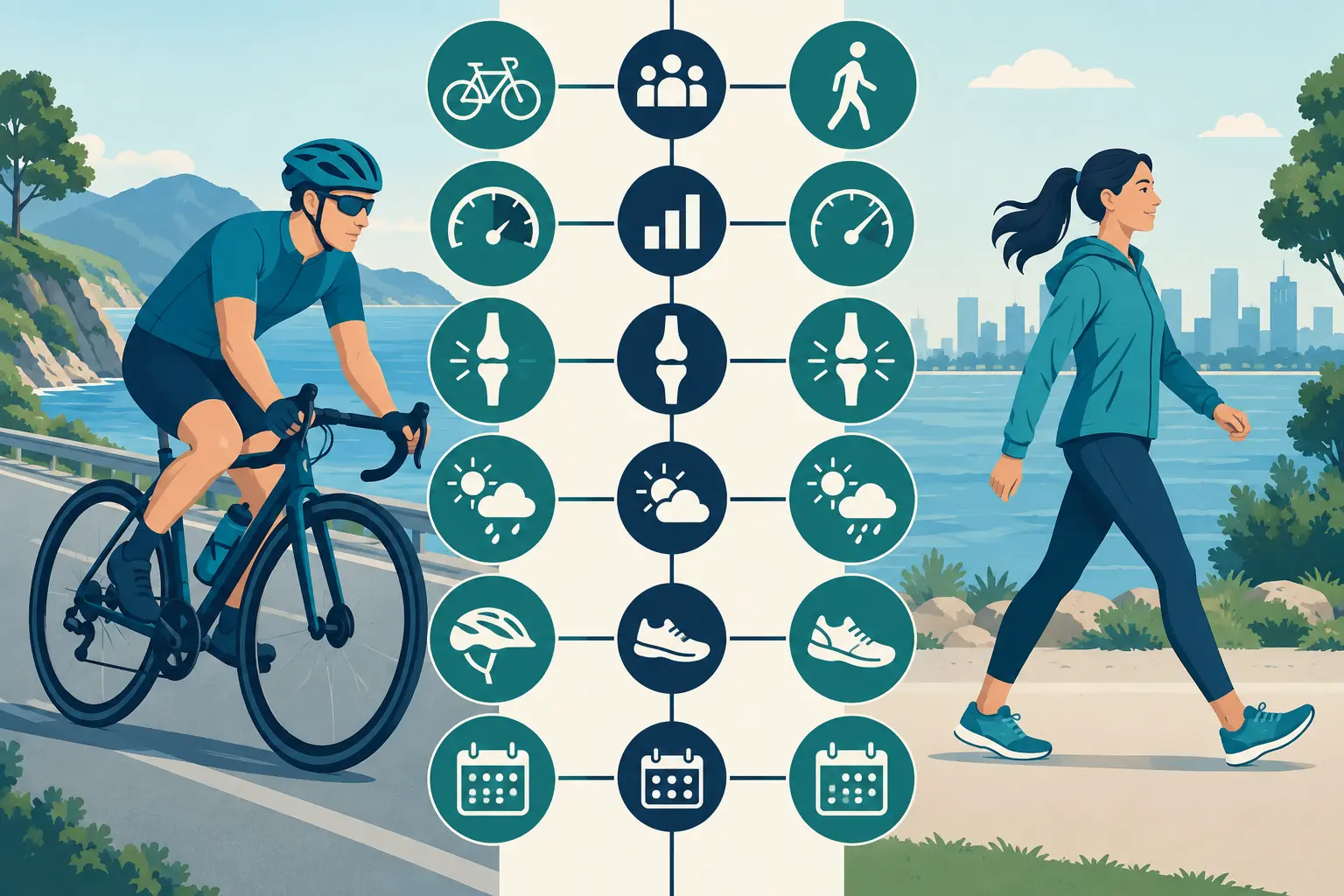
Saddle height, reach, handlebar position, resistance, and cadence affect comfort. A very low saddle or heavy gear can increase knee stress; an unsuitable saddle can cause pressure or numbness. Professional bike fitting or clinical guidance may be useful when symptoms persist.
Walking also needs progression. A sudden jump in steps, hills, or hard surfaces can provoke foot and lower-limb symptoms. Neither activity is inherently injury-proof.
A hybrid week often beats a forced choice
Use walking for short trips and sedentary breaks, then cycle for one or two longer aerobic sessions. This distributes load, adds variety, and creates backup options for weather or schedule changes. Include strength work twice weekly when appropriate.
Compare the plan's total time and recovery after four weeks. If cycling creates more vigorous minutes but eliminates ordinary walking, assess the whole week. If walking volume is high but never challenges fitness, add brisk segments or resistance through another mode.
A final choice check
Seasonal access matters. Create an indoor or bad-weather backup before the first disruption so an equipment problem does not end the whole activity plan. Include setup, travel, and changing time when comparing convenience honestly and fairly.
For transport cycling, count traffic decisions and visibility equipment as part of the session.
Comparing energy use
At a comfortable pace, walking at about 5 km/h (3 mph) is roughly 3.5 METs, while leisurely cycling under 16 km/h (10 mph) is about 4 METs and moderate cycling at 19–22 km/h (12–14 mph) around 8 METs. In practice, the activity you can do for longer and more often will matter more than these per-minute differences.
Choosing by joints, access and enjoyment
Cycling puts less impact on the knees and hips and suits many people with joint pain or higher body weight. Walking needs no equipment, builds bone through impact and is easy to fit into errands and commuting. Many people do best with both: walking on most days and cycling two or three times a week.
Where a supplement fits
Neither cycling nor walking needs a supplement. The deciding factor is which one you will do consistently.
Once the practical steps in this guide are working, decide whether an optional supplement adds enough value. Start with the Fat Burn Active review; if the formula and limitations are acceptable, see the current price on the official site. We may receive a commission.
Frequently asked questions
Which burns more fat?
Over the same time, moderate cycling often uses more energy than walking, but the one you do more often wins over months.
Should I trust machine calorie readings?
Treat them as rough estimates; they can be off by 20% or more.
Must every session be hard?
No. Easy and moderate sessions are the foundation; add harder intervals once or twice a week if you enjoy them.
What if the scale rises after I start?
New exercise can cause temporary water retention in muscles. Judge the trend over several weeks.
Sources
- US Physical Activity Guidelines
- WHO Physical Activity Guidelines
- Compendium of Physical Activities
- CDC: Benefits of Physical Activity
Sources reviewed September 15, 2026. This article is general educational information, not medical advice, diagnosis, or treatment.