
What happens to the arithmetic
If three dieting weeks create an average gap and one week is at maintenance, the four-week average deficit is smaller than dieting continuously. Earlier tissue loss is not erased unless the break becomes a sustained surplus. A short scale rise commonly reflects glycogen, water, sodium, and more digestive contents.
What a break may help
These benefits do not require unlimited eating or a “cheat week.”
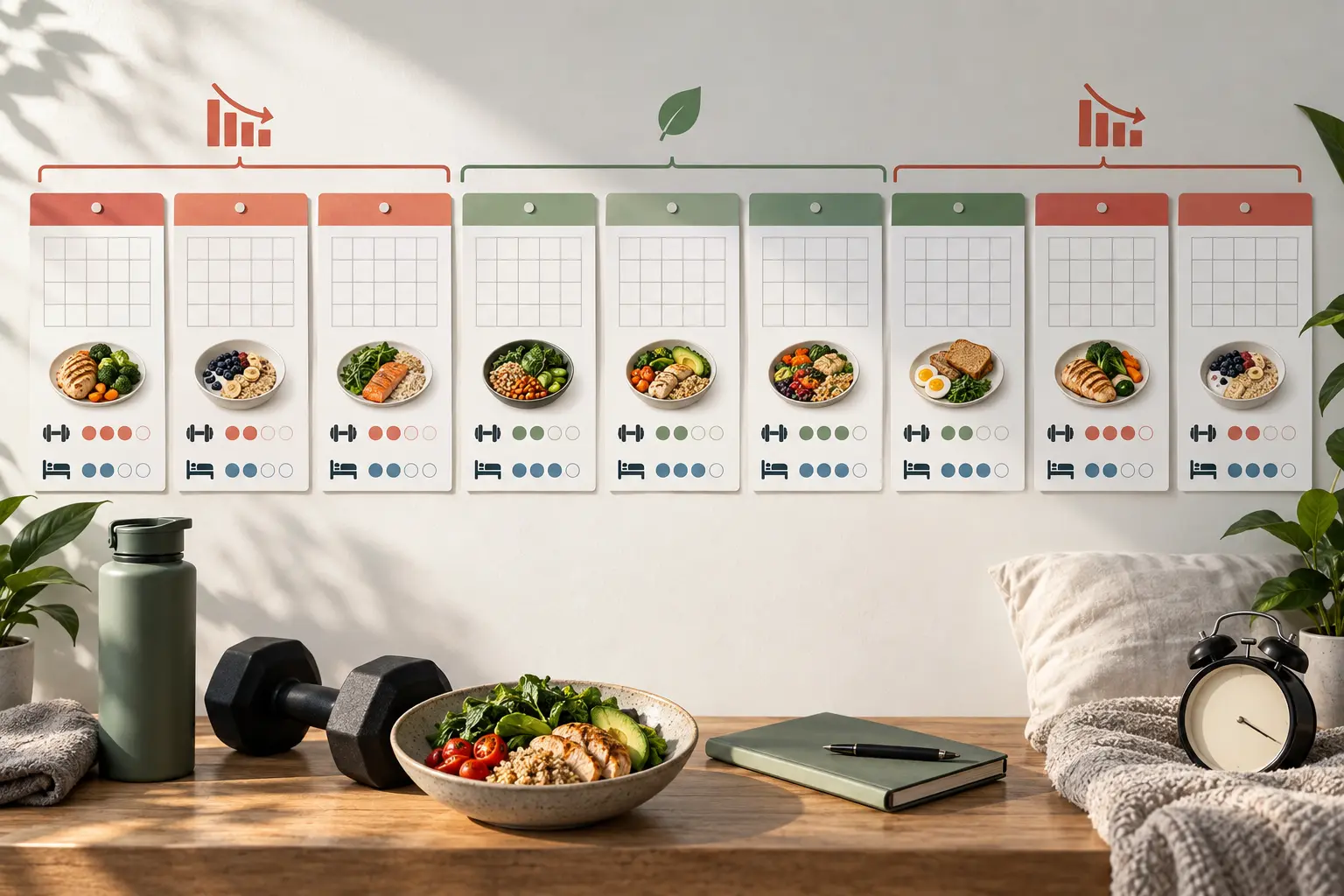
Example: planned pause, predictable timeline
After eight consistent weeks, Priya schedules seven days near recalculated maintenance during travel. She keeps protein, meals, steps, and weigh-in conditions reasonably stable. Weight rises briefly after more carbohydrate and sodium, then settles. She restarts the deficit on the planned date without compensatory fasting.
What research shows
In the MATADOR trial, men with obesity who alternated two weeks of dieting with two weeks at maintenance lost more fat over the study than those who dieted continuously, although the total time was longer. Other studies have found similar results to continuous dieting. Diet breaks appear at least as effective and may help adherence for some people.
When a break may help
Consider a one- to two-week break at maintenance after 8–12 weeks of dieting, during stressful periods or holidays, or when hunger and fatigue are building. Plan the start and end dates in advance.
Design a maintenance interval before starting it
A diet break is a planned period near estimated maintenance intake, commonly longer than a single higher-calorie day. Its purpose may be adherence, relief from persistent restriction, training support, or practice maintaining habits. It does not magically reset metabolism. Write a start and end date, the meal pattern, a movement floor, and how you will evaluate the period. A vague “break until motivation returns” is harder to compare with the original plan.
Expect scale weight to rise briefly when carbohydrate and sodium intake return toward usual levels: glycogen and water can change faster than body fat. That does not prove the prior loss was false or that the break created a large fat gain. At the same time, maintenance is an estimate, not an unlimited eating instruction. Review the trend over the full block rather than interpreting the first morning after a restaurant meal as the result.
A break is not always the right response to a plateau. If the apparent stall is just two noisy weeks, first check the observation window. If the plan has become excessively restrictive or symptoms are concerning, review safety and professional support before preserving the deficit. If the main issue is uncounted intake or less activity, a break alone will not resolve the measurement error. Match the tool to the actual bottleneck.
After the planned interval, decide whether to resume a manageable deficit, stay at maintenance, or revise the goal. Compare hunger, sleep, training, adherence, and several weekly weight averages. The most useful result may be learning a sustainable maintenance pattern. No supplement should be used to “cancel” the break or force its scale readings downward.
Where Fat Burn Active fits
Fat Burn Active is optional. It cannot measure a small deficit, make an aggressive deficit safe, preserve a planned gap during maintenance, or remove calories and impaired judgment associated with alcohol. Alertness, warmth, sweating, or short-term appetite change does not prove finished-product fat loss.
Do not use stimulants to compensate for drinking, overeating, or a maintenance day. Count caffeine from all sources and review sleep, anxiety, blood pressure, heart rhythm, medicines, and other supplements. Alcohol and stimulant combinations can also make subjective alertness a poor guide to impairment.
A supplement is not required to benefit from this guide. If your foundations are already in place, use the independent Fat Burn Active review to judge whether the formula has a useful optional role. If it fits your expectations and stimulant tolerance, check the current price on the official site. We may receive a commission.
Frequently asked questions
Does a diet break burn more fat?
Not automatically. It pauses the planned gap and may help later execution.
Is it a cheat week?
No. It is structured intake near current maintenance.
Will scale weight rise?
It may rise temporarily through glycogen, water, sodium, and food contents.
Sources
- MATADOR Trial
- Intermittent Energy Restriction Review
- ICECAP Trial
- NIDDK Body Weight Planner
- NIDDK: Changing Habits
Sources reviewed September 17, 2026. This article is general educational information, not medical advice, diagnosis, or treatment.