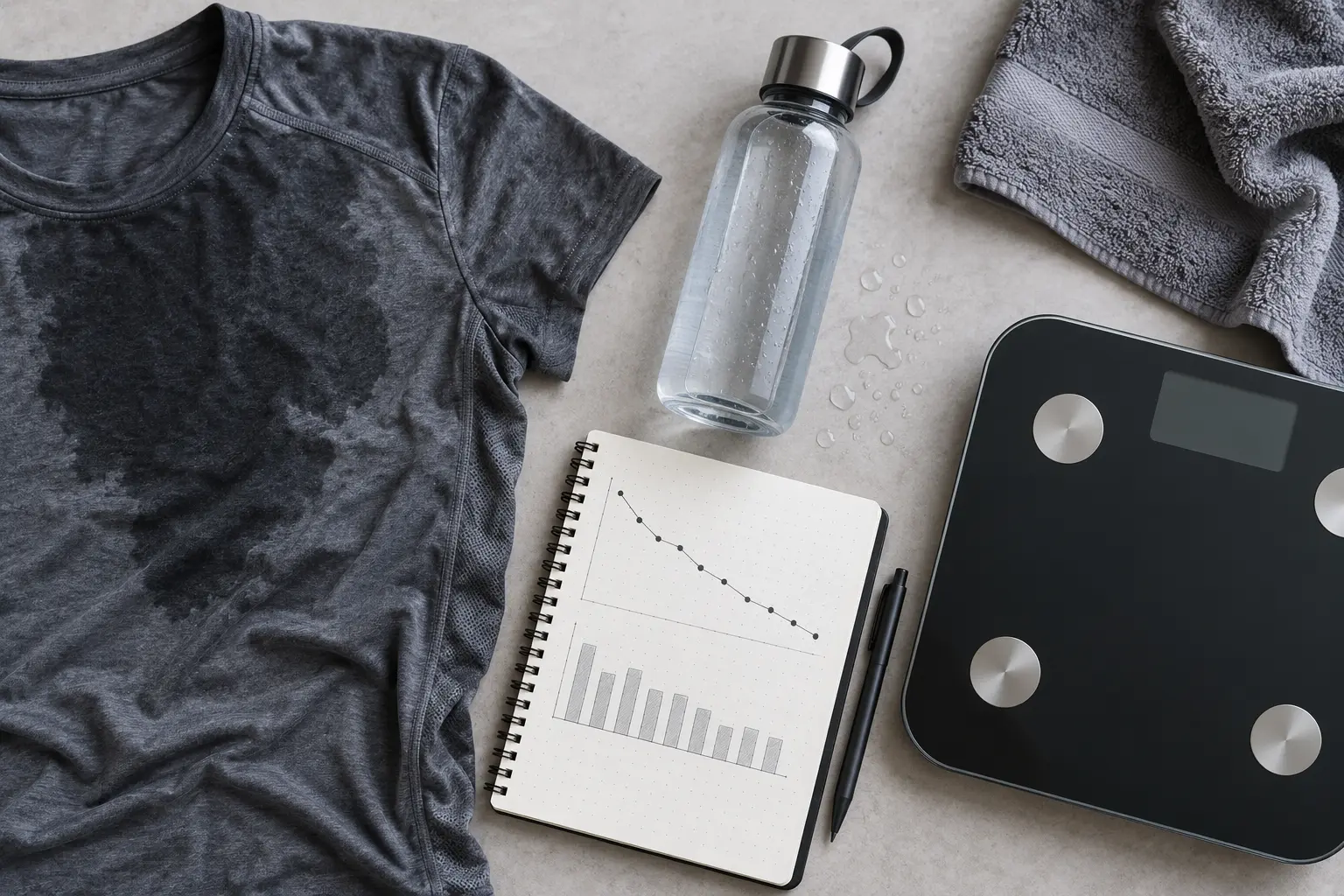
Separate sweat, calorie use, and fat loss
Heat, humidity, clothing, airflow, acclimatization, genetics, body size, medicines, hydration, and workout intensity all affect sweating. More sweat does not rank workouts by effectiveness.
Why the scale drops after a sweaty session
A kilogram of immediate weight loss cannot represent a kilogram of fat burned during an ordinary workout. The rapid change is mostly water leaving through sweat and breathing, plus smaller shifts in bladder and digestive contents. Drinking and eating restore much of it.
Pre- and post-session weight can help estimate fluid loss for endurance or hot-weather planning. It should not be recorded as a body-fat result. Deliberately restricting fluids, using sweat suits, or extending sauna time can impair performance and increase heat-illness risk.
What makes sweating useful information
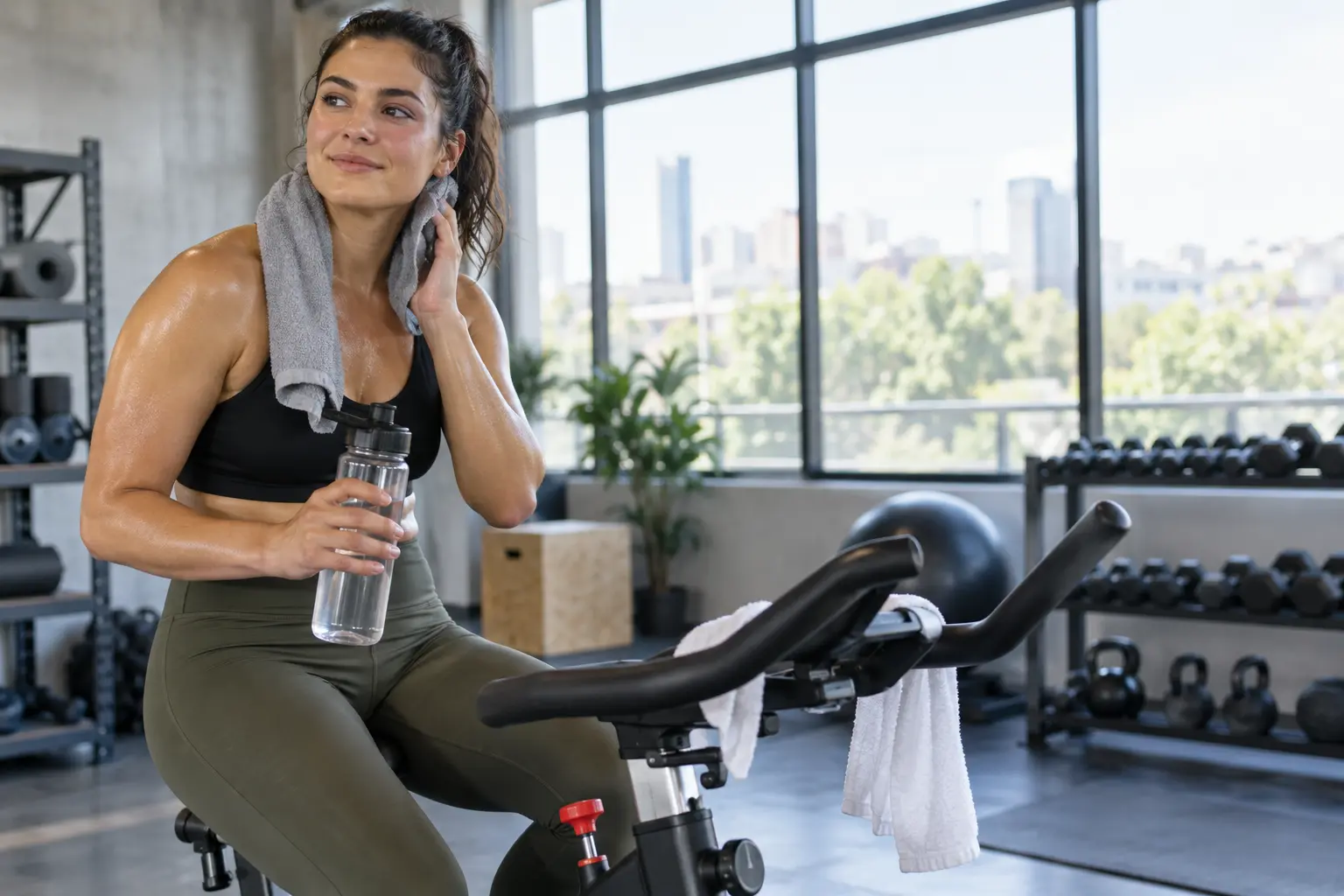
Sweat can tell you about cooling and hydration demands. For a long session, weigh under similar conditions, account for fluid consumed and urine produced, and treat the result as an approximate sweat-rate estimate. Needs vary, so avoid copying another person’s electrolyte plan.
For fat-loss tracking, weigh after waking under comparable conditions and use a seven-day average. Add waist measurements every two to four weeks, performance, steps, and adherence. This separates a useful training session from the misleading demand that every workout look dramatic.
Example: two workouts, different shirts
Jordan walks briskly outdoors on a cool morning and finishes almost dry. The same route on a humid afternoon leaves a soaked shirt and a lower immediate scale reading. The second session did not automatically use more stored fat; evaporation was less efficient and cooling required more sweat. The training value belongs to the work and repeatability, not the wetness of the clothing.
Why sweat volume varies so much
Sweat rate depends on temperature, humidity, clothing, fitness, body size and genetics. Fitter people often start sweating sooner and sweat more, because their cooling system has adapted. Two people doing the same workout can lose very different amounts of sweat while using similar amounts of energy.
Where Fat Burn Active fits
Fat Burn Active is optional. Its stimulant and botanical ingredients may create alertness, warmth, sweating, or a temporary change in appetite, but those sensations do not demonstrate that the finished product reduces fat mass. Evidence for a mechanism or isolated ingredient cannot establish the effect of the complete formula at the sold dose.
Do not use a thermogenic supplement to chase sweat, heat, dehydration, or a lower post-workout scale reading. Count caffeine from every source and review sleep, anxiety, blood pressure, heart rhythm, medicines, and other supplements. Never combine it with deliberate overheating or use more than the current label directs.
A supplement is not required to benefit from this guide. If your foundations are already in place, use the independent Fat Burn Active review to judge whether the formula has a useful optional role. If it fits your expectations and stimulant tolerance, check the current price on the official site. We may receive a commission.
Frequently asked questions
Does sweating more burn more calories?
Not reliably. Sweat rate and energy expenditure are different measurements.
Is sauna weight loss fat?
The rapid change is primarily fluid and returns with rehydration.
Can exercise still burn fat if I barely sweat?
Yes. Sweat volume does not determine whether exercise uses energy.
Should I replace every gram lost?
Needs depend on the session and person; individualized guidance is useful for long or hot exercise.
Sources
- CDC: Heat and Athletes
- ACSM: Hydration and Electrolytes
- NATA Fluid Replacement Position Statement
- NIDDK Body Weight Planner
- NIH ODS: Weight-Loss Supplements
Sources reviewed September 17, 2026. This article is general educational information, not medical advice, diagnosis, or treatment.