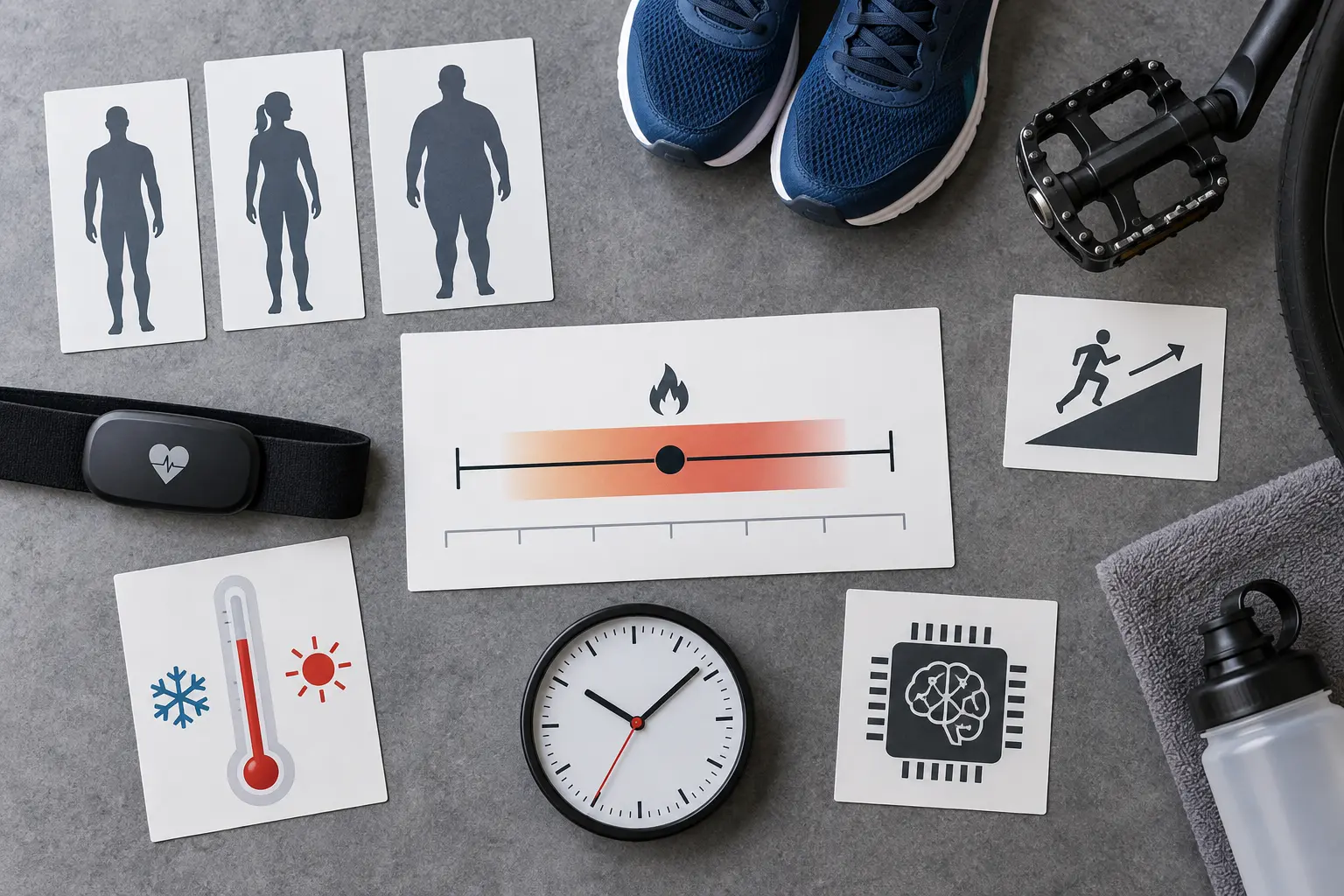
Why four numbers can all differ
The person changes the cost
Two people moving at the same external speed may differ in body mass, technique, fitness, efficiency, heart-rate response, and use of supporting muscles. Wind, heat, terrain, incline, carrying load, and equipment calibration add more variation. Improved economy can lower energy cost at a familiar pace even as performance improves.
The estimate also depends on the time window and whether resting expenditure is included. Check the definition before comparing values.
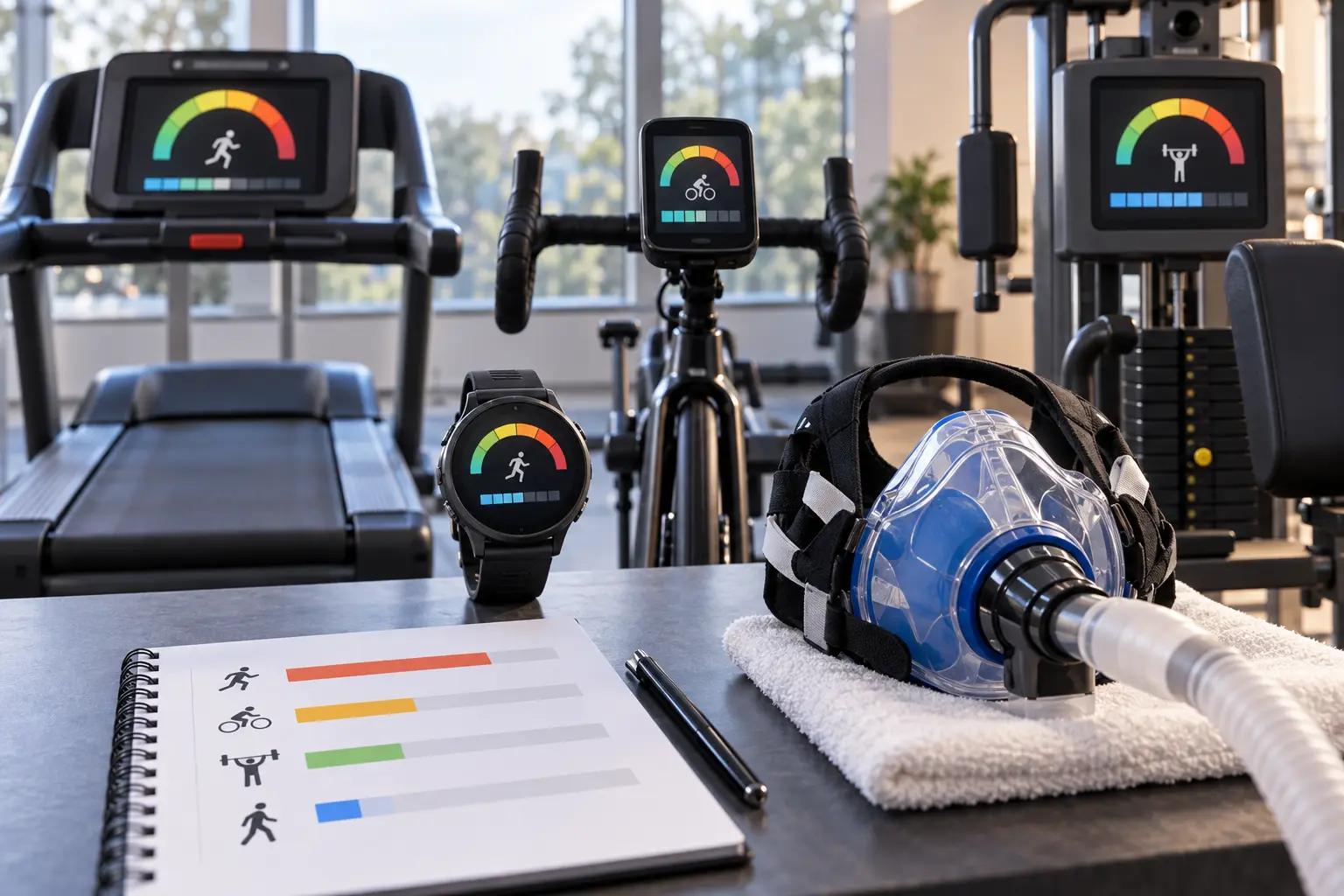
Example: the closed-loop error
A treadmill reports 500 calories, a watch reports 360, and a food app imports 500 automatically. Sam’s maintenance target already assumes three weekly workouts, so eating the imported value can count normal exercise twice. Sam disables the import, tracks the session by time and workload, and calibrates the full plan against multiweek trends.
For comparison, Sam repeats similar sessions on the same device and treats changes as relative signals. He does not compare a cycling estimate with a running estimate as though their algorithms were interchangeable. Food adjustments follow the observed weekly outcome and recovery, not whichever screen displays the largest number. He records device settings whenever the comparison matters.
How accurate wearables are
Studies comparing fitness trackers with laboratory measurements have found that heart-rate readings are often reasonably accurate, but energy-expenditure estimates can be off by 20% to more than 50%, depending on the device and the activity. Errors tend to be larger for cycling, strength training and activities with arm movement.
Should you eat exercise calories back?
If your calorie target was set using an activity level that already includes your workouts, adding exercise calories on top double-counts them. If your target assumes a sedentary lifestyle, eating back part of the estimate, for example half, is a cautious compromise. The most reliable method is to watch your weekly weight trend for three to four weeks and adjust intake based on that.
Better uses for the data
Use exercise calorie numbers to compare similar sessions on the same device, not as exact values. Track things you can measure directly: minutes of activity, distance, weight lifted, steps and how hard the session felt. These tell you whether training is progressing without pretending to measure calories precisely.
Where a supplement fits
Supplement marketing often quotes extra calories burned. Like exercise estimates, these numbers are uncertain and rarely tested in the finished product.
Treat Fat Burn Active as an optional addition, not a substitute for the steps in this guide. Review its listed ingredients and limitations in our product analysis. If the evidence, warnings, and cost fit your decision, check the current price and formula on the official site. We may earn a commission.
Frequently asked questions
Which exercise-calorie number is correct?
Without an appropriate reference measurement, none should be treated as exact; each uses different inputs and definitions.
Can I subtract a fixed percentage?
A universal correction can still be wrong because error varies by activity, intensity, device, and person.
Should I eat exercise calories back?
Avoid automatic matching. Plan fueling from total needs, session demands, recovery, and longer trends.
Sources
- Indirect calorimetry practical guide
- Wearable energy-expenditure systematic review
- Fitness tracker validity systematic review
- Physical Activity Guidelines for Americans
- NIDDK: Staying Active at Any Size
Sources reviewed September 17, 2026. This article is general educational information, not medical advice, diagnosis, or treatment.