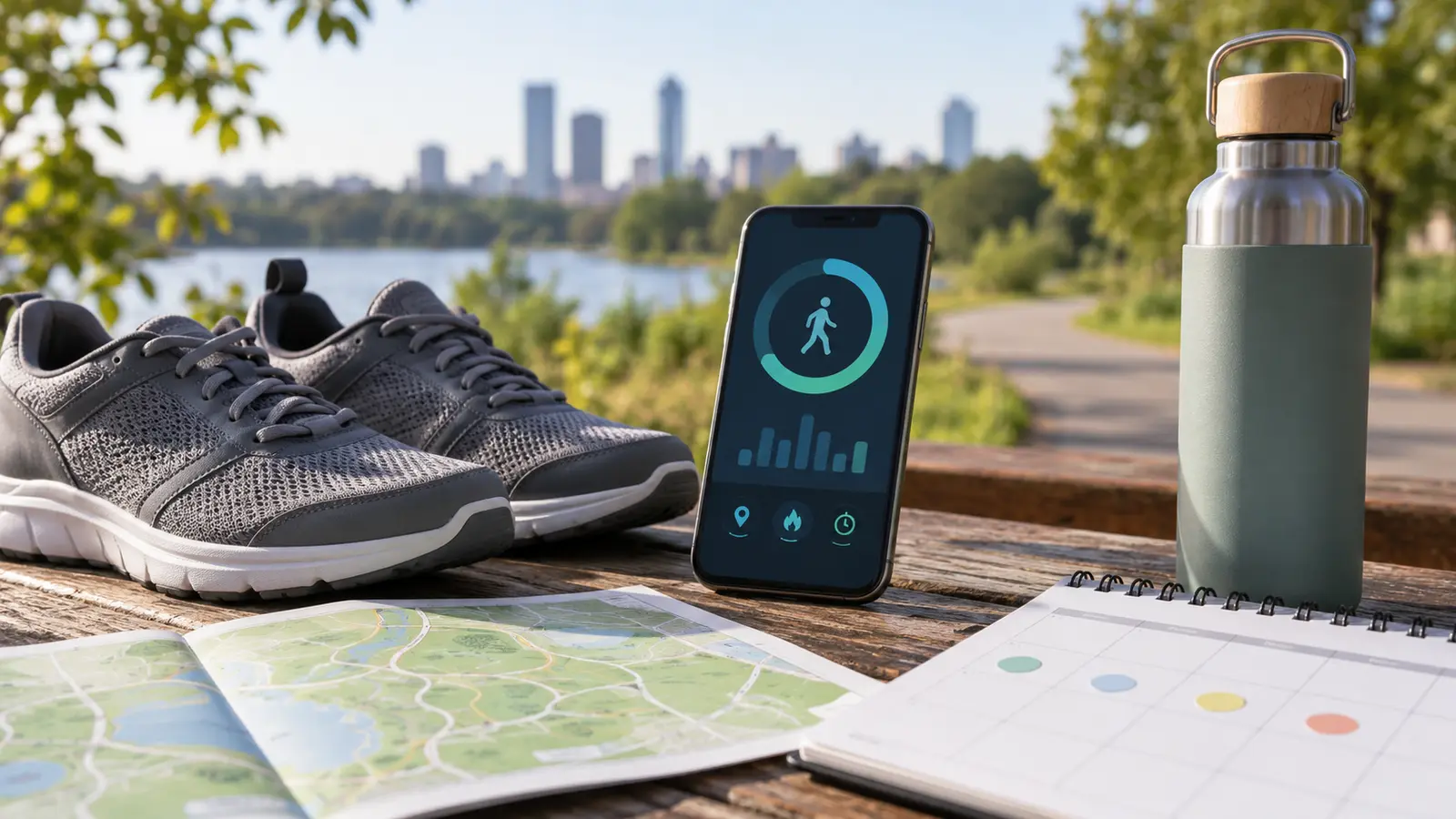
What step research can actually answer
Pedometer programs generally produce modest increases in activity, and studies that combine step goals with dietary treatment can support weight loss. One study in adults following a calorie-restricted program associated greater success with accumulating about 10,000 steps, including a meaningful brisk component. That does not prove everyone needs exactly that number.
Large observational studies show health benefits at totals below 10,000, but health-risk associations are not the same outcome as fat loss. Search results often mix mortality thresholds, weight-loss trials and marketing-derived targets. Keep those questions separate.
Build the target from your own baseline
- Wear the same phone or tracker for seven typical days.
- Exclude unusually active travel or sick days.
- Calculate the daily average and note your lowest days.
- Add a small repeatable block, such as two ten-minute walks.
- Hold the target for two weeks before increasing it.
- Reduce or redistribute steps if pain or exhaustion persists.
A person averaging 3,000 steps may gain more from reaching 4,500 consistently than from attempting 10,000 twice and abandoning the plan.

Total steps and purposeful walking do different jobs
Use a four-week step audit
Record steps, planned walking, pain, appetite and weekly average weight. If steps rise but weight does not change, do not assume the tracker is broken. Food intake may have increased, other movement may have fallen, or normal water fluctuation may hide a small change. Review the full week before adding more.
Walking is valuable even when scale change is small. Stop and seek appropriate care for chest pain, faintness, severe breathlessness, sudden weakness or worsening joint pain. People with balance limitations, neuropathy, cardiovascular disease or recent surgery may need another activity measure and professional guidance.
What the numbers mean
Large studies link higher daily steps with lower mortality, with benefits rising from around 4,000 steps and leveling off at roughly 7,000–10,000 for many adults, and lower thresholds in older people. For weight loss, steps add energy use: 1,000 extra steps, about 10 minutes of walking, uses roughly 30–50 calories for many adults depending on body size and pace.
Steps and diet together
Increasing steps on its own rarely produces large weight loss, because the energy involved is modest and appetite can rise. Combined with a moderate calorie deficit, it helps protect the everyday activity that tends to fall during dieting and supports weight maintenance afterwards.
Where a supplement fits
Extra steps add real energy use; supplements do not replace them.
A stimulant cannot create walking consistency, and a stronger sensation during a walk does not prove greater fat loss. Fat Burn Active is optional and cannot repair an eating environment, replace sleep or treat emotional eating. Its current official page lists at least 120 mg caffeine per serving from caffeine anhydrous and guarana, additional unquantified caffeine from green-tea extract, and bitter-orange extract standardized to 6 mg synephrine. Feeling more alert or less hungry for a short time is not proof of meaningful fat loss.
A supplement is not required to benefit from this guide. If your foundations are already in place, use the independent Fat Burn Active review to judge whether the formula has a useful optional role. If it fits your expectations and stimulant tolerance, check the current price on the official site. We may receive a commission.
Frequently asked questions
Do I need 10,000 steps a day?
No. Benefits begin at lower counts; increasing gradually from your baseline is what matters.
How many calories do 10,000 steps burn?
Roughly 300–500 for many adults, depending on body size and pace.
Do steps help weight loss on their own?
Modestly. They work best combined with a calorie deficit.
Sources
- Daily steps and weight loss study
- Daily steps and health outcomes systematic review
- CDC: Physical activity basics
- NIDDK: Weight-management treatment
Sources reviewed September 13, 2026. This article is general educational information, not medical advice, diagnosis, or treatment.