
Match frequency to the decision
Use a consistent weigh-in protocol
Use the same scale on a firm surface, preferably after waking and using the bathroom, before food, with similar clothing. Record the number once and leave the scale. Do not recheck throughout the day.
For daily readings, compare seven-day averages. For weekly readings, keep the weekday and conditions similar and wait for several observations before acting. Set a review trigger in advance so ordinary fluctuation does not rewrite the plan.
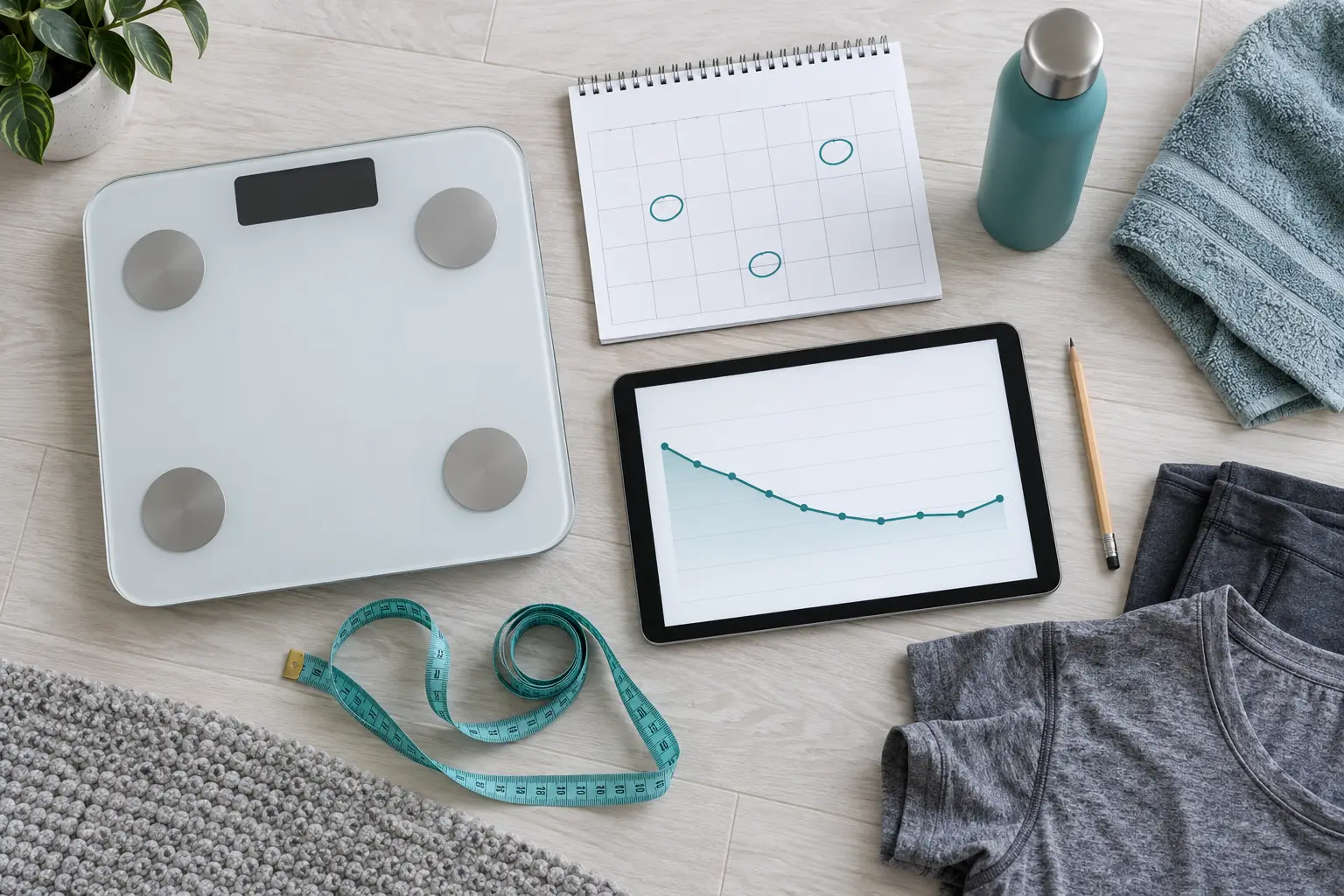
Example: choose less data, not no feedback
After dieting, Ana weighs daily and changes dinner whenever the number rises. Restaurant sodium and menstrual changes create repeated false alarms. She moves to Monday, Wednesday, and Friday readings, reviews only the weekly average, and measures her waist monthly.
The reduced schedule still detects a sustained rise, but it removes four opportunities to overcorrect. If even three readings caused distress, a non-scale plan with professional support would be more appropriate.
What studies say about self-weighing
Studies of people who successfully keep weight off often find regular self-weighing among their habits, and trials of daily weighing with feedback have shown better weight maintenance for many participants. The benefit seems to come from catching small increases early, not from the act of weighing itself.
Use a maintenance range, not a single number
Set a range of about 1–2 kg (2–4 lb) around your maintenance weight. Movements inside the range need no action. If your weekly average stays above the top of the range for two to three weeks, review portions, alcohol, activity and sleep. This prevents reacting to normal water swings while still catching gradual regain.
If the scale is not right for you
Some people find any weighing stressful. Alternatives include a monthly waist measurement, how a familiar pair of trousers fits, or weekly check-ins with a professional. If weighing triggers restriction, bingeing or intense anxiety, stop and discuss it with a doctor or dietitian.
Where a supplement fits
Supplements are not a maintenance tool. The habits that kept weight off during the diet are what keep it off afterwards.
Once the practical steps in this guide are working, decide whether an optional supplement adds enough value. Start with the Fat Burn Active review; if the formula and limitations are acceptable, see the current price on the official site. We may receive a commission.
Frequently asked questions
Is daily weighing best?
It can help some people, but frequency should fit the decision and psychological response.
When should I act?
Use a sustained trend outside a predefined range, not one reading.
What if weighing causes anxiety?
Reduce or stop it and use other measures with appropriate support.
Sources
- Systematic review of self-weighing and weight outcomes
- Daily self-weighing and weight loss trial
- Maintenance of lost weight and long-term obesity management
- NIDDK: Keeping a Healthy Weight
- NIMH: Eating Disorders
Sources reviewed September 17, 2026. This article is general educational information, not medical advice, diagnosis, or treatment.