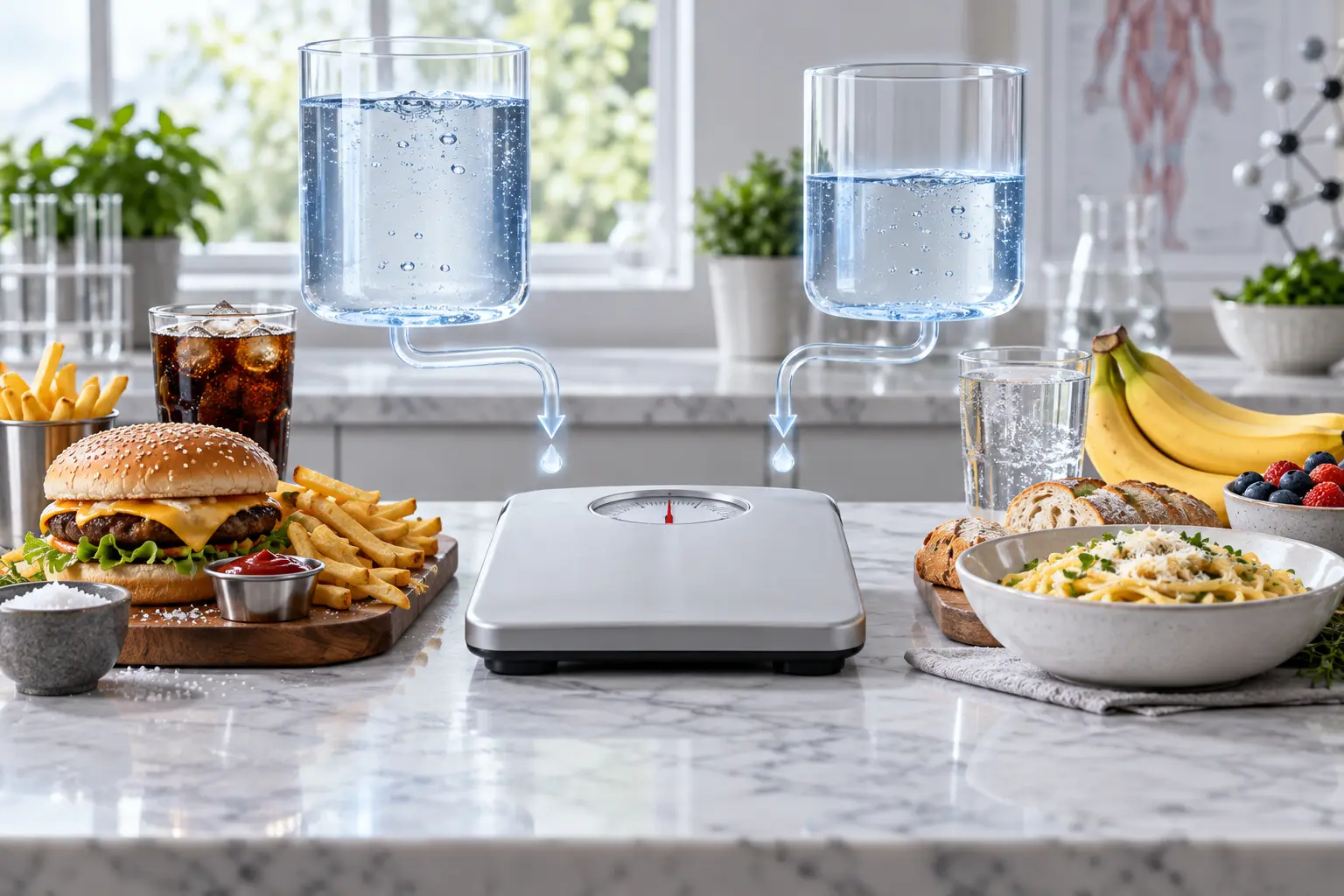
Why sodium moves water
The kidneys and hormones regulate sodium and water together. A high-sodium meal can increase thirst and fluid retention; restaurant meals also tend to be larger and higher in carbohydrate, adding food mass and glycogen-related water. A scale cannot separate these components.
Sodium does not contain calories and does not directly create body fat. However, many salty foods are also energy dense, so water fluctuation and calorie surplus can occur in the same meal without being the same process.
Respond without trying to dehydrate
- Resume ordinary water intake and meals.
- Do not use sauna, diuretics, extra exercise, or severe restriction to chase the reading.
- Keep weigh-in conditions comparable.
- Compare the next seven-day average with prior averages.
- Review swelling, symptoms, medicines, and medical advice.
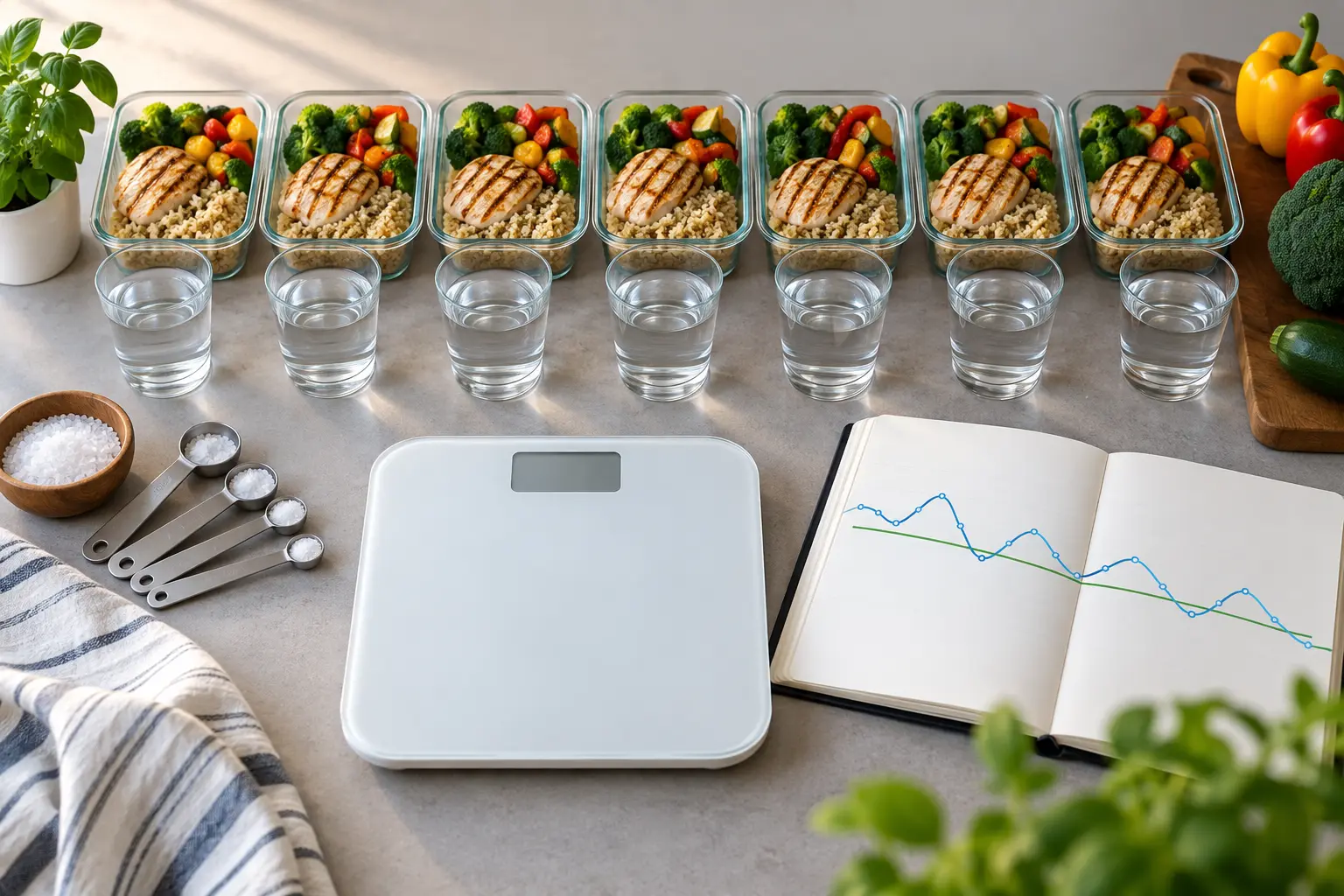
Example: the restaurant jump
After a late restaurant meal, Ana weighs more the next morning. She notes the sodium, carbohydrate, later timing, and larger food volume, then continues her normal plan. Weight settles across several days. She learns that the immediate jump was not a direct measurement of fat gain.
How carbohydrates add water too
The body stores carbohydrate as glycogen in muscles and the liver, and each gram is stored with roughly three grams of water. A high-carbohydrate day can therefore add a kilogram or more of water weight, and a low-carbohydrate start explains much of the quick early loss on low-carb diets. This water is not fat and comes and goes with intake.
Where most sodium comes from
Most sodium in the US diet comes from packaged and restaurant foods rather than the salt shaker: breads, cured meats, pizza, soups, sandwiches, sauces and snacks. The Dietary Guidelines advise adults to keep sodium under 2,300 mg a day. Checking labels and cooking more at home are the most effective ways to reduce it.
Getting back to your usual weight
After a salty or high-carbohydrate meal, return to your normal eating and drinking pattern. Drinking enough water, eating potassium-rich foods such as vegetables, fruit and beans, and normal activity help the body restore balance. Most of the extra water usually clears within a few days. Swelling that persists, affects one leg, or comes with breathlessness needs medical attention.
Where a supplement fits
Fat burners do not remove sodium-related water. Any quick drop in weight after a stimulant is likely to be fluid, not fat.
A supplement is not required to benefit from this guide. If your foundations are already in place, use the independent Fat Burn Active review to judge whether the formula has a useful optional role. If it fits your expectations and stimulant tolerance, check the current price on the official site. We may receive a commission.
Frequently asked questions
How long does sodium water weight last?
It varies with exposure, kidneys, activity, fluids, hormones, and health; avoid promising a fixed deadline.
Should I stop drinking water?
No. Return to normal hydration unless a clinician prescribed fluid limits.
When is swelling concerning?
New or severe swelling, breathlessness, rapid unexplained gain, or illness needs medical advice.
Sources
- National Academies: Sodium Dietary Reference Intakes
- CDC: About Sodium and Health
- American Heart Association: Sodium
- NIDDK: Kidneys and How They Work
- NHLBI: DASH Eating Plan
Sources reviewed September 17, 2026. This article is general educational information, not medical advice, diagnosis, or treatment.