Map the holiday period before it begins
Put gatherings, travel days, and quiet days on one calendar. Choose the events where traditional foods, dessert, or drinks matter most. Keep ordinary breakfasts and lunches on non-event days rather than saving calories through extreme hunger.
Buy a few simple anchors before the schedule fills: eggs or yogurt, fruit, vegetables, a convenient protein, and one easy dinner. Decide which movement is realistic—perhaps a morning walk, active family outing, or ten minutes after a meal.
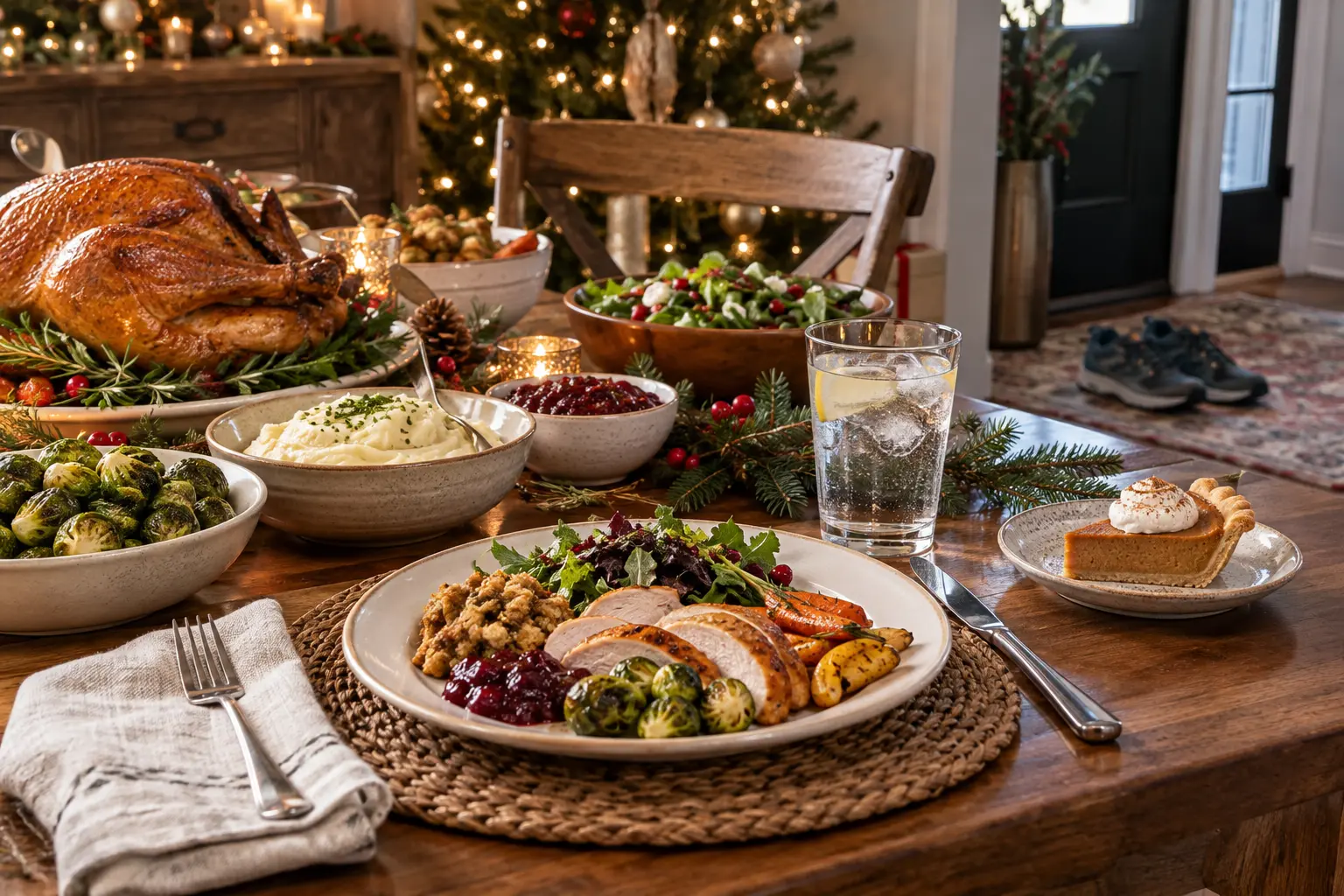
Use a flexible celebration meal
Survey the food before serving. Build a plate from foods you genuinely want, include protein and produce where available, and leave room for a favorite dessert. Eat seated when possible and pause before seconds. This is guidance, not a rule that makes the meal morally good.
Alcohol can add energy, reduce restraint, and disrupt sleep. Decide the amount beforehand, alternate with nonalcoholic drinks, and never drive impaired. People who avoid alcohol do not need to start for social reasons.
Handle the next morning without compensation
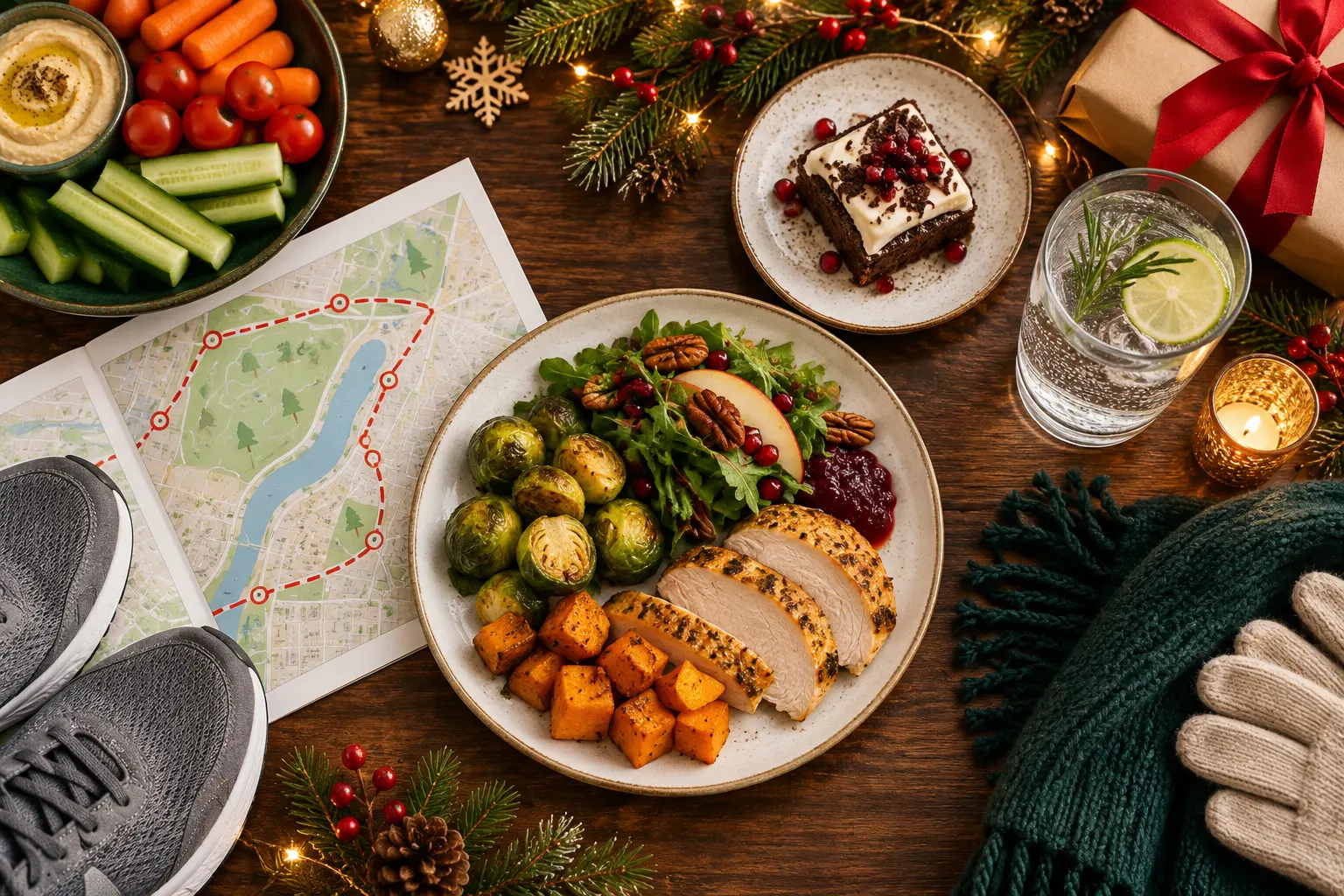
A higher post-holiday reading can reflect sodium, carbohydrate, alcohol, later eating, and more digestive contents. Resume normal fluids, meals, sleep, and movement. Do not fast, dehydrate, or double exercise to force the number down.
After the season, compare several ordinary readings and review the pattern. If weight remains above the range, restore the first missing anchor and reassess. One modest correction is more useful than a January crash diet.
How much weight people actually gain
Studies of holiday weight gain generally find average increases of about 0.5–1 kg over the winter holiday season, smaller than often claimed. The concern is that this gain is often not lost afterwards, so it can add up over the years. People who already have higher weight tend to gain more.
Strategies with good support
- Keep regular meals so you do not arrive at events very hungry.
- Weigh yourself regularly during the season; studies suggest this alone can reduce gain.
- Stay active, even with short daily walks.
- Choose the foods that are special to the season and skip the everyday ones.
- Plan alcohol limits in advance.
After the holidays
Return to your normal routine on the first ordinary day. Expect a temporary rise from salty food and carbohydrate that usually settles within a week. If your weekly average is still higher two weeks later, restart the habit that slipped first rather than starting a strict diet.
Where a supplement fits
No supplement offsets holiday eating. The habits you keep during the season matter more than anything you add.
A supplement is not required to benefit from this guide. If your foundations are already in place, use the independent Fat Burn Active review to judge whether the formula has a useful optional role. If it fits your expectations and stimulant tolerance, check the current price on the official site. We may receive a commission.
Frequently asked questions
Should I diet before a holiday meal?
No. Eating normally earlier in the day usually leads to less overeating than arriving very hungry.
Can I eat dessert?
Yes. Choose the dessert you enjoy most and serve a planned portion.
What if weight rises afterward?
Much of the first rise is water. Return to normal routines and compare weekly averages after one to two weeks.
Sources
- NIDDK: Keeping a Healthy Weight
- CDC: Tips for Healthy Eating
- Holiday weight gain in adults
- Physical Activity Guidelines for Americans
- NIAAA: Alcohol and Your Health
Sources reviewed September 17, 2026. This article is general educational information, not medical advice, diagnosis, or treatment.