
Why movement after food can change glucose
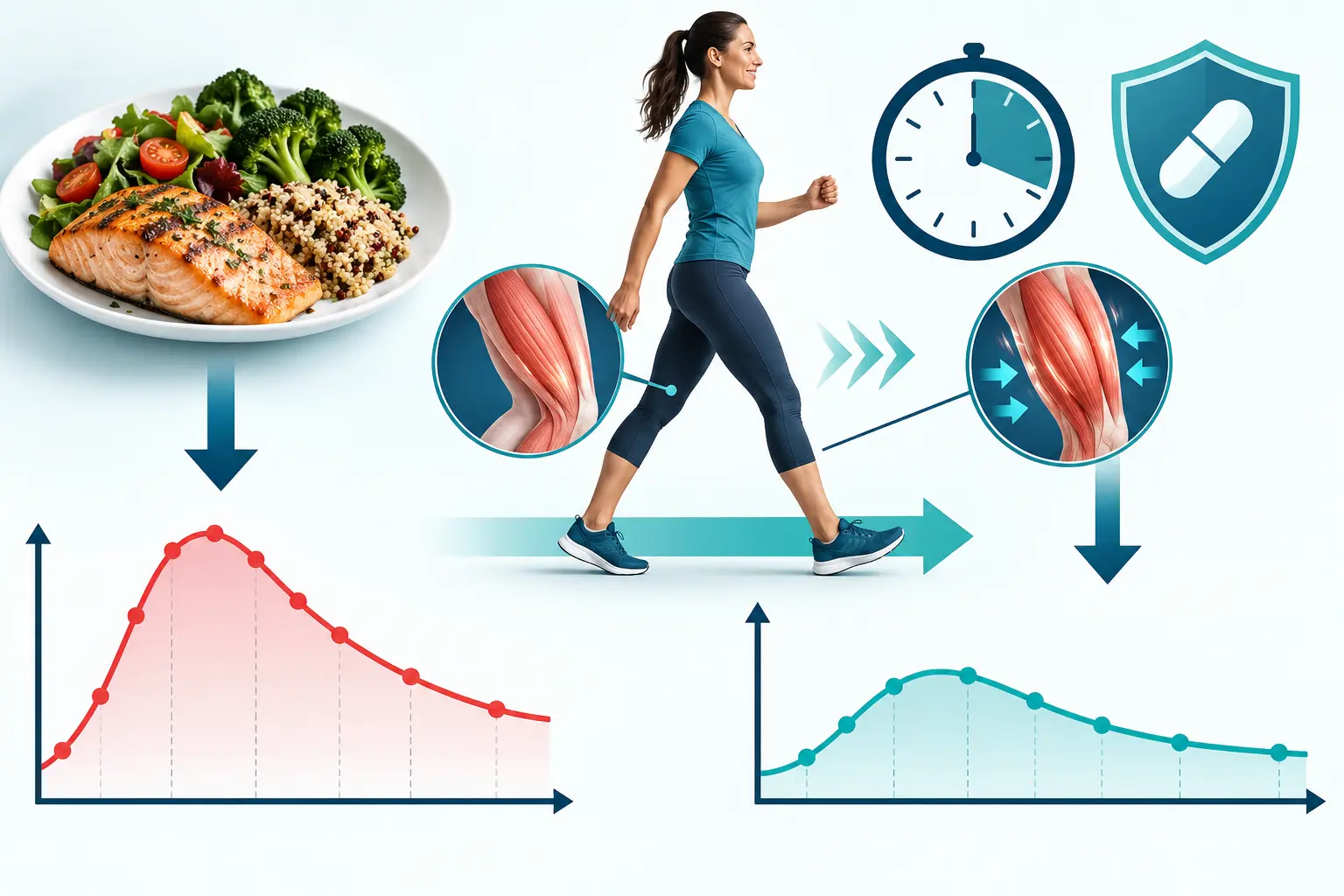
Contracting muscle can increase glucose uptake through pathways that do not depend entirely on insulin. Walking also replaces sitting during the period when glucose from the meal is entering circulation. This makes timing biologically plausible.
The acute glucose curve is a metabolic outcome, not direct evidence of fat loss. A smaller peak does not prove that the meal contained fewer calories or that body weight will fall.
Timing, duration, and comparison matter
Controlled trials and reviews generally find that post-meal activity can lower postprandial glucose relative to sitting, and starting relatively soon after eating may be useful. Some research suggests several brief walks after meals can outperform one longer walk at another time for daily glycemic control.
Studies differ in diabetes status, meal composition, exercise intensity, measurement method, and duration. Avoid converting a group-average glucose result into a universal prescription.
A meal-specific two-week protocol
- Select breakfast, lunch, or dinner rather than changing all three.
- Record three baseline meals with similar composition.
- Begin with five easy minutes soon after finishing.
- Repeat under similar conditions for one week.
- Track comfort, symptoms, adherence, and clinician-directed glucose data.
- Extend gradually only if the practice remains useful.
Walking in place or another safe light activity may substitute when leaving the building is impractical.
Do not turn the walk into compensation
A post-meal walk cannot neutralize an oversized meal, alcohol, or an entire sedentary day. It should not become punishment for eating. Food quality, portions, sleep, strength work, and total activity still matter.
Large meals, reflux, gastroparesis, dizziness, or gastrointestinal discomfort may make immediate walking unsuitable. Slow down, delay the bout, or seek individual guidance rather than forcing a protocol.
Personalize the routine
If glucose data are available, interpret them with the treating team rather than chasing a perfectly flat curve. Normal meals produce physiological changes, and isolated readings can be misleading without meal and medicine context across several comparable and representative typical days.
How big the effect is
Studies comparing a short walk after meals with sitting have found meaningful reductions in the post-meal rise in blood sugar, with the largest effect when walking starts within about 30 minutes of eating. Even two to five minutes of light walking helped in some studies. The effect on long-term weight is small; the main value is for blood sugar control, especially in people with insulin resistance or type 2 diabetes.
Fitting it into daily life
- Walk around the block or the office after lunch and dinner.
- Clear the table and wash up standing up, then take a short stroll.
- Take phone calls on foot after meals.
- On bad-weather days, walk indoors or march on the spot.
Where a supplement fits
A post-meal walk needs no supplement. People with diabetes should discuss any stimulant product with their care team, because it can affect blood sugar and heart rate.
Once the practical steps in this guide are working, decide whether an optional supplement adds enough value. Start with the Fat Burn Active review; if the formula and limitations are acceptable, see the current price on the official site. We may receive a commission.
Frequently asked questions
How long should the walk be?
Ten to fifteen minutes is a common target, but even a few minutes helps blood sugar.
How soon after eating should I walk?
Within about 30 minutes of finishing the meal seems most effective.
Does it need to be brisk?
No. Easy walking is enough for the blood sugar benefit.
I take insulin. Is it safe?
Usually yes, but ask your care team, because activity can lower blood sugar.
Sources
- Postprandial Exercise Timing Meta-Analysis
- Post-Meal Walking in Type 2 Diabetes Trial
- ADA Standards of Care
- US Physical Activity Guidelines
- CDC Diabetes and Physical Activity
Sources reviewed September 15, 2026. This article is general educational information, not medical advice, diagnosis, or treatment.