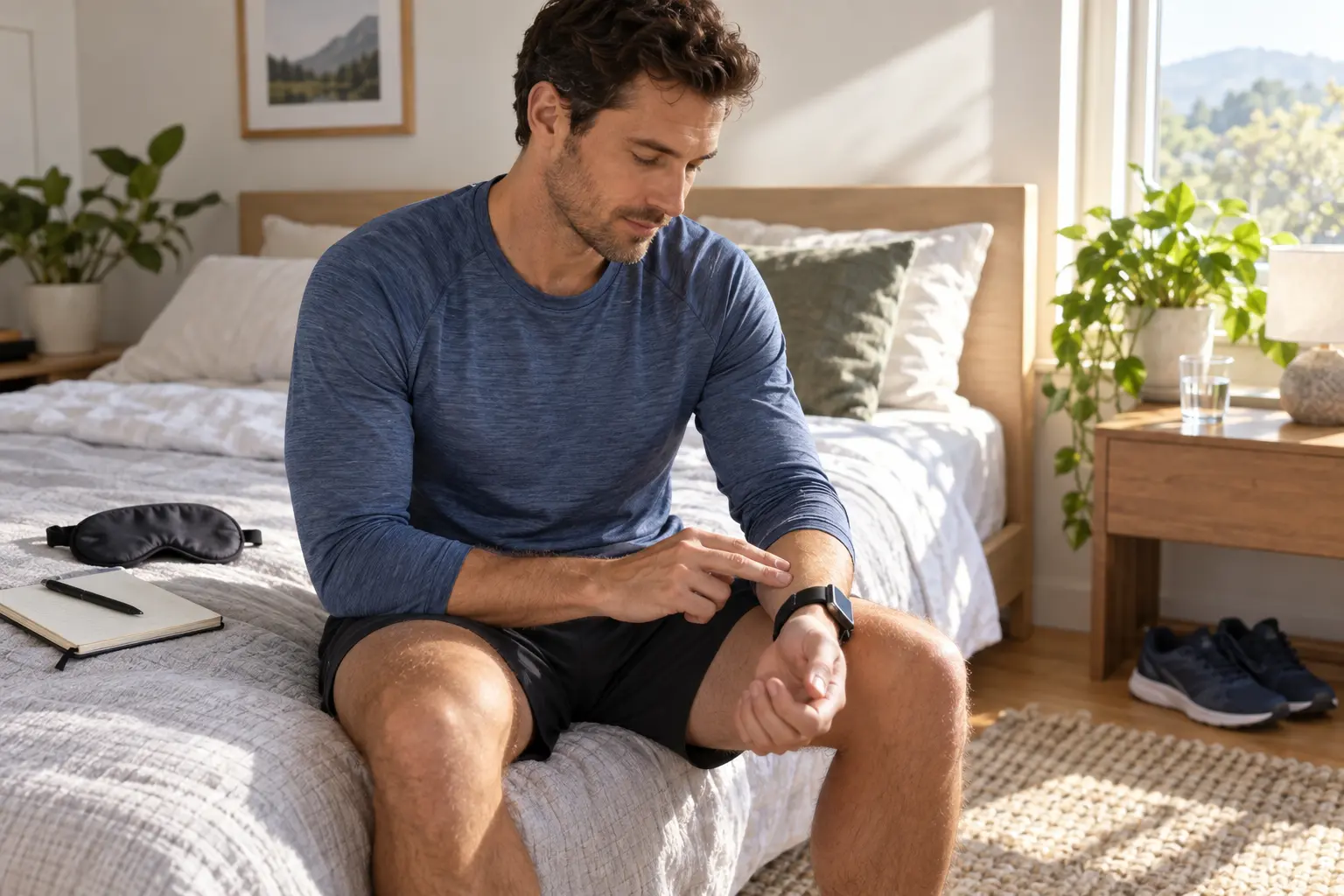
Create a personal baseline
- Measure after waking, before caffeine, food, or activity, in the same position.
- Use the same device or manual method and allow a quiet settling period.
- Collect at least a normal week rather than choosing one favorable value.
- Record illness, alcohol, heat, travel, hard sessions, and medicines.
- Respond to sustained change plus symptoms or performance—not one isolated point.
Use a traffic-light decision, not a diagnosis
A usual reading with normal symptoms supports the planned day. A modest unusual rise plus poor sleep or soreness may justify an easier session and recheck. A sustained change, marked symptoms, or an irregular rhythm requires appropriate clinical assessment. Universal thresholds are less useful than a personal baseline, but symptoms always outrank the spreadsheet.
Example: Ava's morning value rises after travel and a hot evening session. She replaces intervals with easy walking, hydrates normally, and reviews sleep and temperature. The trend settles. If it had remained abnormal or included chest symptoms, she would stop self-experimenting and seek care.

What counts as normal
For most adults, a resting heart rate between 60 and 100 beats per minute is considered normal, and fit people often sit below 60. What matters for recovery is your own baseline. A morning reading 5–10 beats above your usual average for several days can be a sign of incomplete recovery, illness, dehydration, heat, alcohol or poor sleep.
Common causes of a raised reading
- Hard or unusually long training sessions.
- Short or disrupted sleep.
- Alcohol the evening before.
- Caffeine, nicotine and stimulant supplements.
- Heat, dehydration and travel.
- Early stages of a cold or other infection.
- Stress and anxiety.
What to do with the information
If your reading is high and you feel run down, swap a hard session for easy movement or rest and check again the next morning. If it stays high for a week despite rest, or you notice palpitations, chest discomfort, breathlessness or fainting, see a doctor. A wearable is a training aid; it does not diagnose heart conditions.
Where a supplement fits
Stimulant fat burners raise heart rate in many people, which can make resting heart rate useless as a recovery signal. If you track it, keep stimulant use and timing consistent or avoid them.
For Resting Heart Rate as a Recovery Signal, health assessment comes before a supplement purchase. If Fat Burn Active is being considered, start with who should avoid the formula, then use the independent review to decide whether any further step is reasonable.
Frequently asked questions
What is a normal resting heart rate?
Ranges vary with age, fitness, medicines, health, and measurement; use clinical guidance and personal context.
Does a higher value mean overtraining?
No. It is nonspecific and must be interpreted with other evidence.
Can a wearable diagnose an arrhythmia?
Consumer alerts are not a complete diagnosis; concerning readings or symptoms need medical assessment.
Sources
- American Heart Association: All About Heart Rate
- MedlinePlus: Pulse
- ECSS and ACSM Overtraining Consensus
- CDC: About Sleep
- NIDDK: Staying Active at Any Size
Sources reviewed September 17, 2026. This article is general educational information, not medical advice, diagnosis, or treatment.