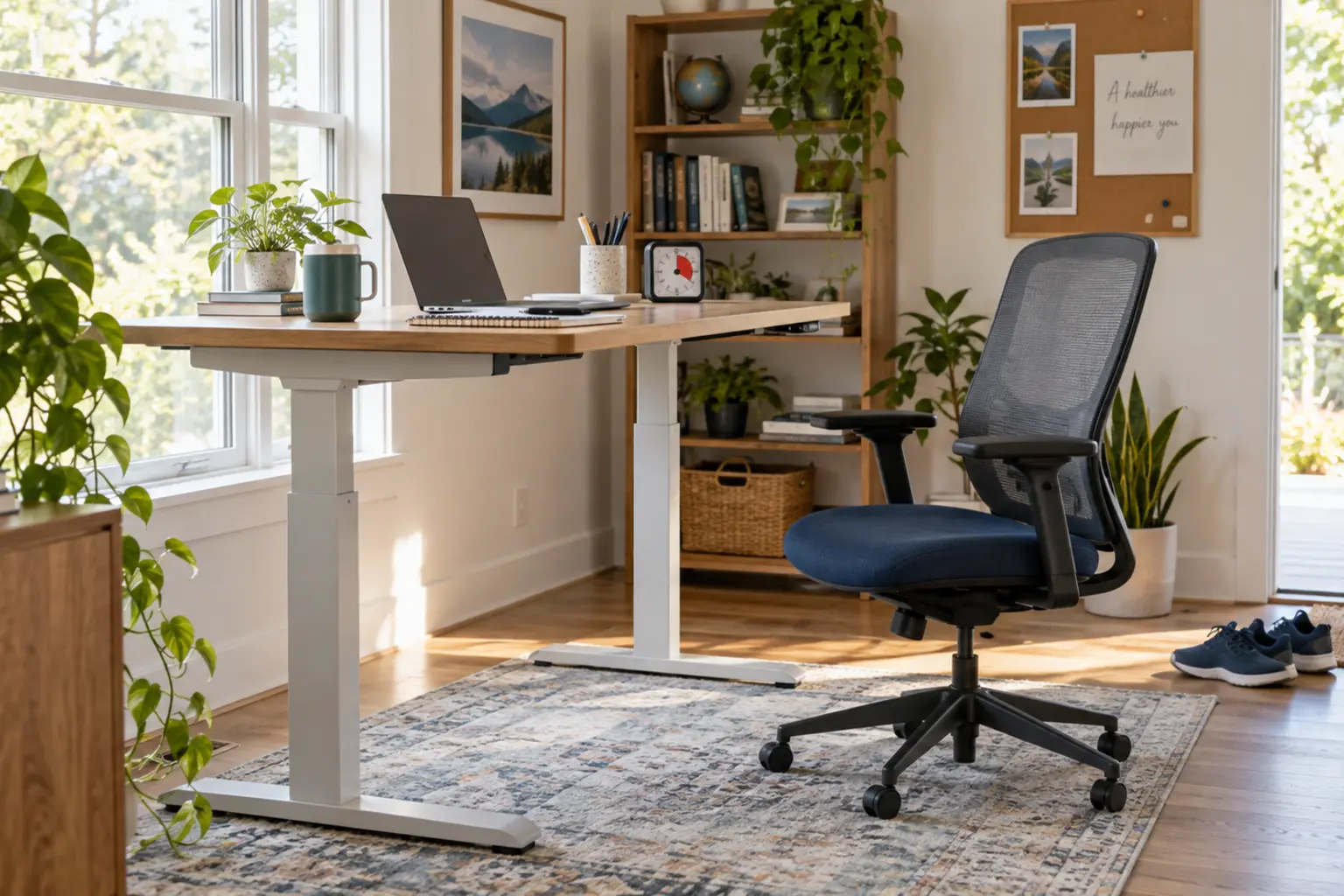
How much more energy does standing use?
Standing requires postural muscle activity, yet both sitting and quiet standing remain low-intensity behaviors. Reviews generally find a small average energy-expenditure difference, with substantial variation by body size, posture, movement and measurement method. Multiplying a laboratory estimate across an entire workday can exaggerate the result because people lean, shift, sit again and compensate later.
A calorie estimate is therefore a range, not a personal meter reading. Even when standing adds some expenditure, body-fat change still depends on the complete weekly balance of food, movement and adaptation. A desk cannot guarantee that the small difference remains uncompensated.
What a sit-stand desk may do better
These outcomes are useful even without weight loss. Do not convert an ergonomic tool into a metabolic promise it was not designed to deliver.
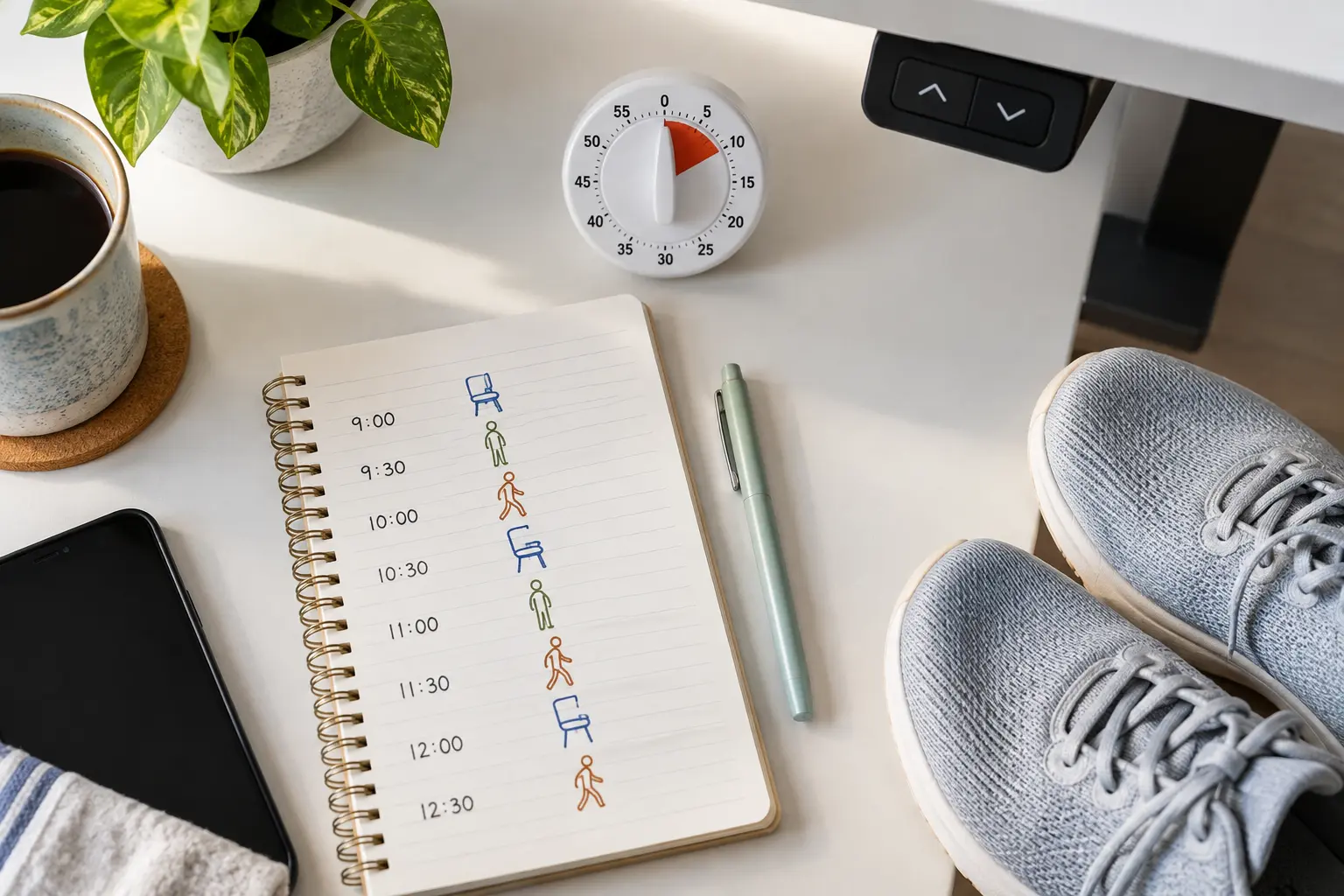
Set up standing without creating a new problem
- Begin with five to fifteen minutes at natural task boundaries.
- Keep the screen near eye level and keyboard at a comfortable elbow height.
- Distribute weight comfortably instead of locking the knees or leaning for hours.
- Wear suitable footwear and use an appropriate surface.
- Return to sitting before discomfort changes your posture.
- Add walking separately; standing still is not walking.
Persistent foot, back, vascular or joint symptoms deserve adjustment and, when needed, professional assessment. People with balance limitations may need another way to break up sitting.
Turn the desk into a movement system
Attach standing to a specific task such as reading email, then attach a two-minute walk to the end of that task. This sequence matters: standing adds little movement, while the walk creates a clearer muscular demand. Use phone calls, printer trips, stairs and lunch routes where safe and practical.
Track the number of long sitting blocks interrupted for two weeks. If the desk rises but total steps and movement remain unchanged, keep it for comfort if useful—but do not claim a meaningful calorie intervention. If weight loss is the goal, review weekly-average weight, waist, meals, sleep and total activity together.
How much extra energy standing uses
Studies estimate that standing uses only about 0.15 extra calories a minute compared with sitting, roughly 9–10 calories an hour. Over a full working day, that adds up to only a few dozen calories. Walking uses far more: a slow walk can triple the energy used compared with sitting.
Using a standing desk well
Alternate between sitting and standing every 30–60 minutes, wear supportive shoes, set the desk height so your elbows are at about 90 degrees, and add short walking breaks. Standing all day can cause leg and back discomfort.
Where a supplement fits
A standing desk and a supplement both have small effects. Walking breaks contribute more.
Fat Burn Active cannot turn quiet standing into exercise or correct an ergonomic setup. Build the movement system first and treat any supplement as optional. Fat Burn Active is optional and cannot repair an eating environment, replace sleep or treat emotional eating. Its current official page lists at least 120 mg caffeine per serving from caffeine anhydrous and guarana, additional unquantified caffeine from green-tea extract, and bitter-orange extract standardized to 6 mg synephrine. Feeling more alert or less hungry for a short time is not proof of meaningful fat loss.
Treat Fat Burn Active as an optional addition, not a substitute for the steps in this guide. Review its listed ingredients and limitations in our product analysis. If the evidence, warnings, and cost fit your decision, check the current price and formula on the official site. We may earn a commission.
Frequently asked questions
Does a standing desk help weight loss?
Only slightly. The extra energy used is small.
How long should I stand?
Alternate positions through the day rather than standing for hours.
Is a treadmill desk better?
Walking slowly uses much more energy than standing, if it suits your work.
Sources
- Systematic review of sitting versus standing energy expenditure
- Cochrane review of workplace sitting interventions
- US Physical Activity Guidelines
- CDC physical activity basics
Sources reviewed September 13, 2026. This article is general educational information, not medical advice, diagnosis, or treatment.