Lower impact does not mean zero joint load
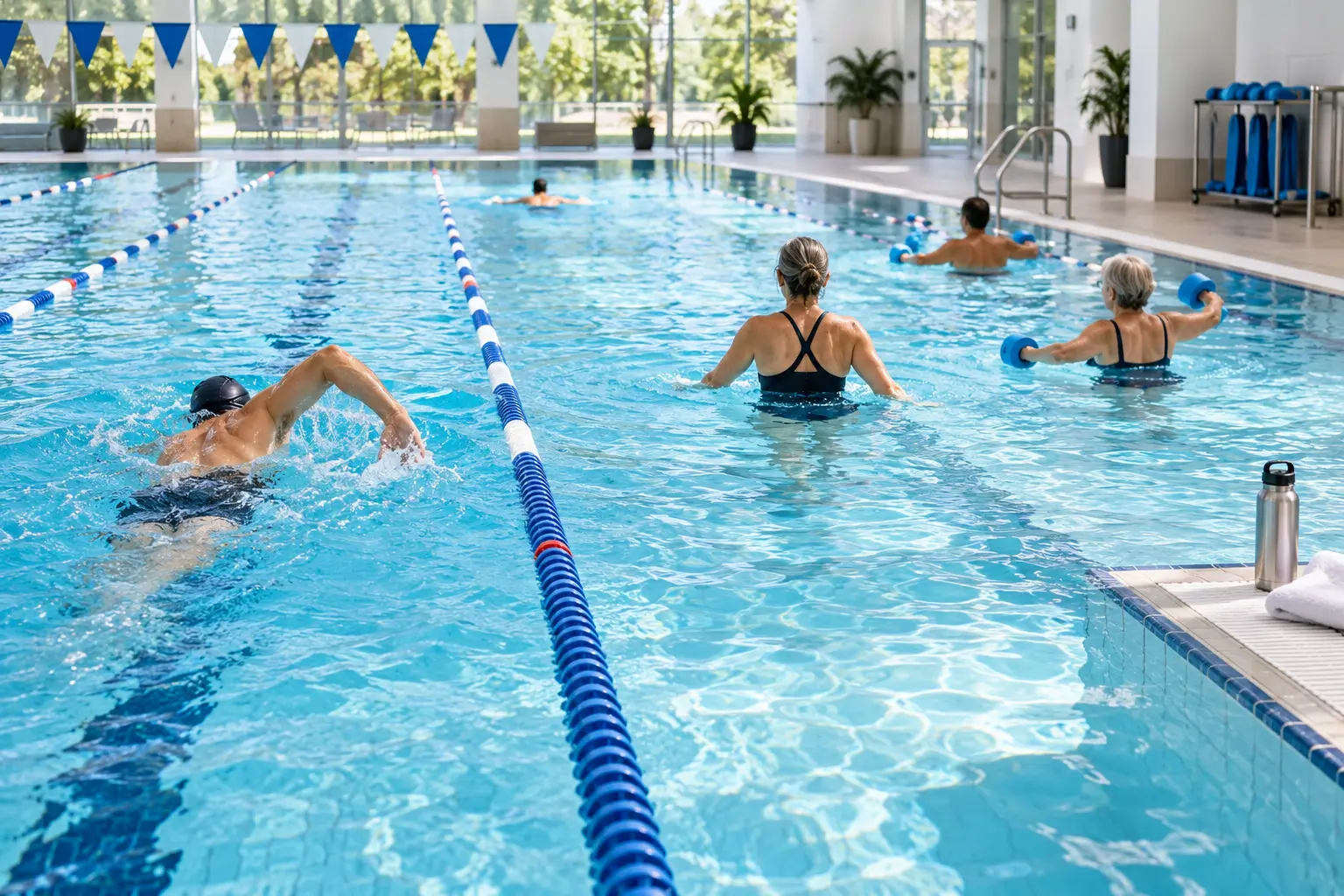
Buoyancy reduces loading through the feet, knees, hips, and spine compared with many land activities. Water also provides resistance in multiple directions. This can make swimming or water walking useful when weight-bearing exercise is uncomfortable.
Shoulders still repeat large ranges, breaststroke can irritate some knees, wall turns require force, and pool decks create fall risk. Choose stroke, range, and equipment from symptoms and skill—not from the claim that swimming is universally joint friendly.
Why swimming research does not promise special loss
Swimming expends energy, but the amount varies enormously with stroke, technique, speed, rests, water temperature, and body size. Older small comparisons should not be treated as a verdict against swimming, and laboratory expenditure is not the same as net fat loss.
Some people become hungry after swimming or reward the session with larger meals. Others adhere better because they enjoy water and recover comfortably. The energy balance across weeks determines the weight outcome.
A beginner-friendly pool structure
- Confirm water confidence and pool safety rules.
- Warm up with five easy minutes of water walking or gentle lengths.
- Alternate one easy length with a planned rest.
- Stop the set before stroke quality collapses.
- Cool down and record shoulder, knee, breathing, and fatigue responses.
- Add a few minutes the next week only when recovery is predictable.
Water aerobics, deep-water running, and water walking are valid alternatives when continuous lap swimming is not suitable.
Solve access and appetite before buying equipment
Account for travel, admission cost, changing time, lane availability, skin or hair care, and supervision. A theoretically excellent workout that consumes two hours of logistics may lose to a thirty-minute walk completed consistently.
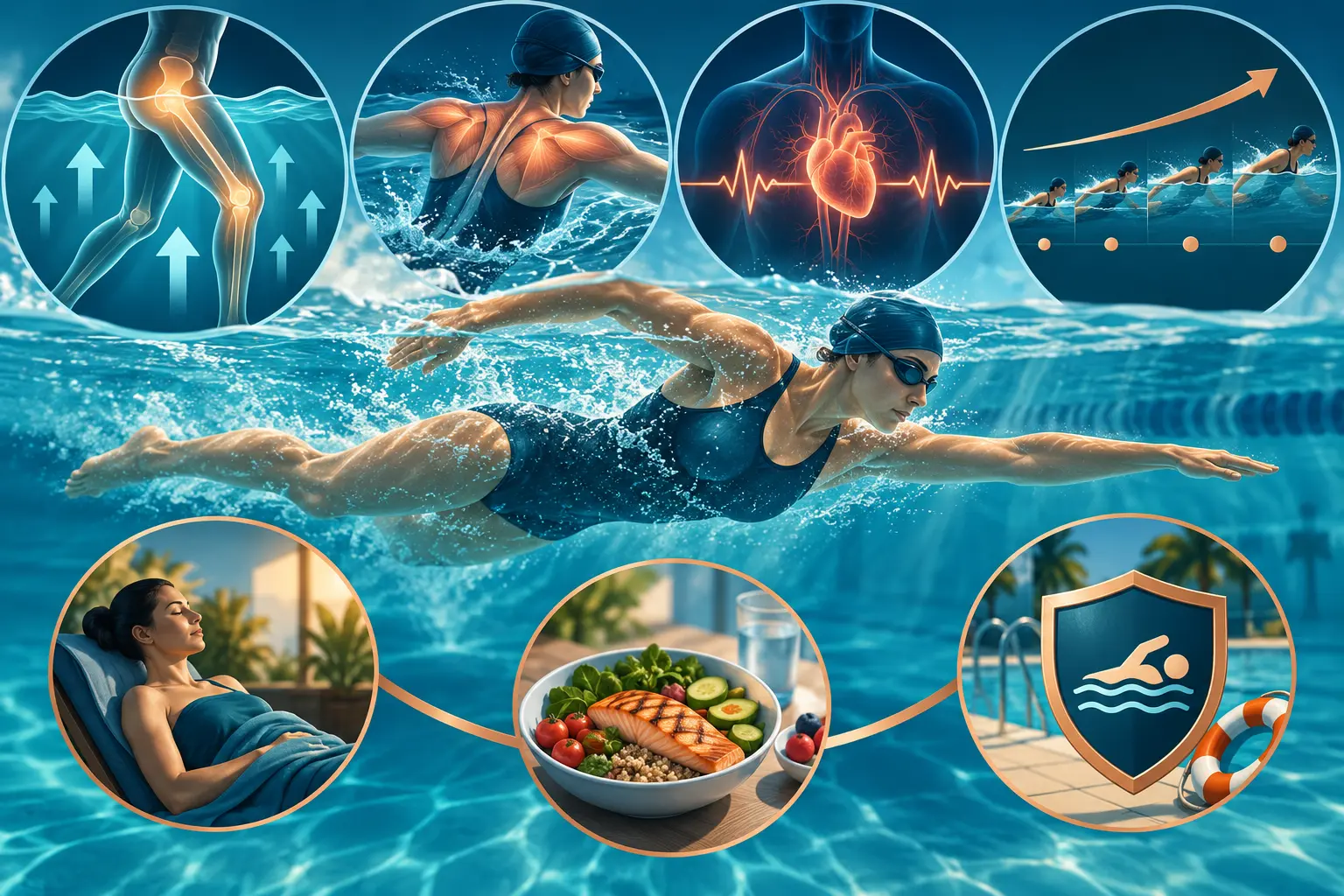
Plan the post-swim meal before entering the pool: include protein, produce, a suitable carbohydrate, and fluid. This prevents intense hunger from turning into an unplanned energy-dense purchase. Hydration still matters even when sweat is less visible.
A final choice check
Swimming skill strongly affects effort: inefficient technique can feel exhausting without allowing useful duration. Lessons may improve comfort, confidence, and training quality more than extra laps performed poorly or anxiously.
How much energy swimming uses
Swimming at a leisurely pace is about 6 METs, and vigorous freestyle laps around 8–10 METs, according to the Compendium of Physical Activities. In practice, beginners often spend much of their pool time resting at the wall, so the energy used in a session varies widely with skill.
Swimming and hunger
Some people feel especially hungry after swimming, possibly because of cool water. Plan a meal or snack with protein for after the session, so a large unplanned snack does not cancel the energy used.
Where a supplement fits
Swimming is a good joint-friendly exercise; no supplement improves its effect. Avoid stimulants before long swims, as they can raise heart rate further.
Do not use Fat Burn Active to push through symptoms related to Swimming for Weight Loss and Joint-Friendly Fitness. Review its product-specific safety considerations and discuss relevant conditions or medicines with a qualified professional before considering purchase.
Frequently asked questions
Is swimming good for weight loss?
It can help as part of a regular activity routine and suits people with joint pain.
How often should I swim?
Two to three sessions a week is a good start alongside other activity.
What if I cannot swim well?
Water walking and aqua aerobics give similar joint-friendly benefits while you learn.
Sources
- US Physical Activity Guidelines
- WHO Physical Activity Guidelines
- Compendium of Physical Activities
- CDC: Swimming and Recreational Water Safety
Sources reviewed September 15, 2026. This article is general educational information, not medical advice, diagnosis, or treatment.