
The clock is only one variable
Run a matched-session experiment
Repeat a familiar session at the same intensity on several evenings. Record finish time, caffeine, shower, food, estimated sleep onset, awakenings, morning alertness, and performance. Then move only the finish time or intensity. Do not compare a gentle walk with a new interval workout and attribute everything to the clock.
If late training is the only workable option, shorten the hardest portion, avoid unneeded stimulants, use a calm cooldown, and prepare post-workout food in advance. A session that consistently costs sleep may be moved, modified, or replaced.
What studies on evening exercise show
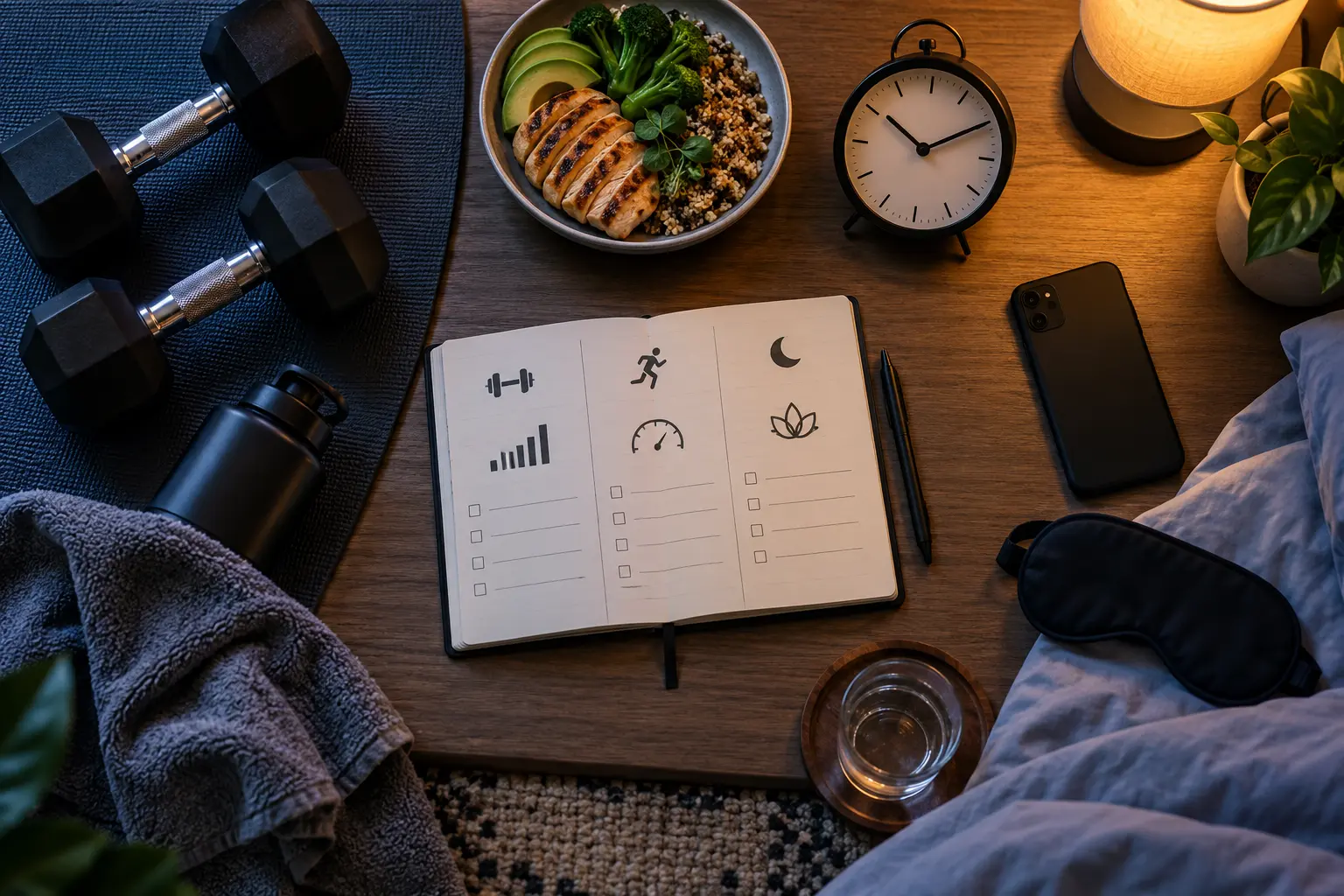
Reviews of evening-exercise studies have generally found that moderate exercise in the evening does not harm sleep in healthy adults, and some people fall asleep slightly faster afterwards. The exception is vigorous exercise that ends close to bedtime, roughly within the last hour: in some studies it delayed sleep onset and raised heart rate during the first part of the night.
Individual responses vary. Fitness level, the type of session, caffeine taken beforehand and how much time you leave to cool down all change the result.
A practical wind-down after late training
- Finish the hardest part of the session first and end with 5–10 minutes of easy movement.
- Take a lukewarm shower; very hot water can keep body temperature elevated for longer.
- Eat a planned post-workout meal so you are not hungry at bedtime, but avoid a very large meal right before sleep.
- Dim lights and put screens away for the last 30 minutes if you can.
- Keep the bedroom cool and dark.
If late training keeps costing sleep
Move the most intense sessions to the morning or weekend and keep evenings for lighter strength work, technique or easy cardio. If the only free time is late, shorten high-intensity intervals and lengthen the warm-up and cool-down instead. Consistent sleep supports appetite control and recovery, so protecting it usually pays off more than one hard late session.
Where a supplement fits
Pre-workouts and fat burners often contain caffeine, which can stay active for many hours. If you train late, skip stimulant products in the afternoon and evening rather than relying on the workout to offset them.
Treat Fat Burn Active as an optional addition, not a substitute for the steps in this guide. Review its listed ingredients and limitations in our product analysis. If the evidence, warnings, and cost fit your decision, check the current price and formula on the official site. We may earn a commission.
Frequently asked questions
How late is too late?
There is no universal cutoff; test intensity, finish time, and sleep response.
Is walking before bed harmful?
Easy walking is usually different from vigorous training and may be well tolerated.
Should I use pre-workout at night?
Review total stimulant dose and timing because it can independently disrupt sleep.
Sources
- Evening exercise and sleep systematic review
- Exercise before bedtime meta-analysis
- CDC: About Sleep
- NHLBI: Healthy Sleep Habits
- Physical Activity Guidelines for Americans
Sources reviewed September 17, 2026. This article is general educational information, not medical advice, diagnosis, or treatment.