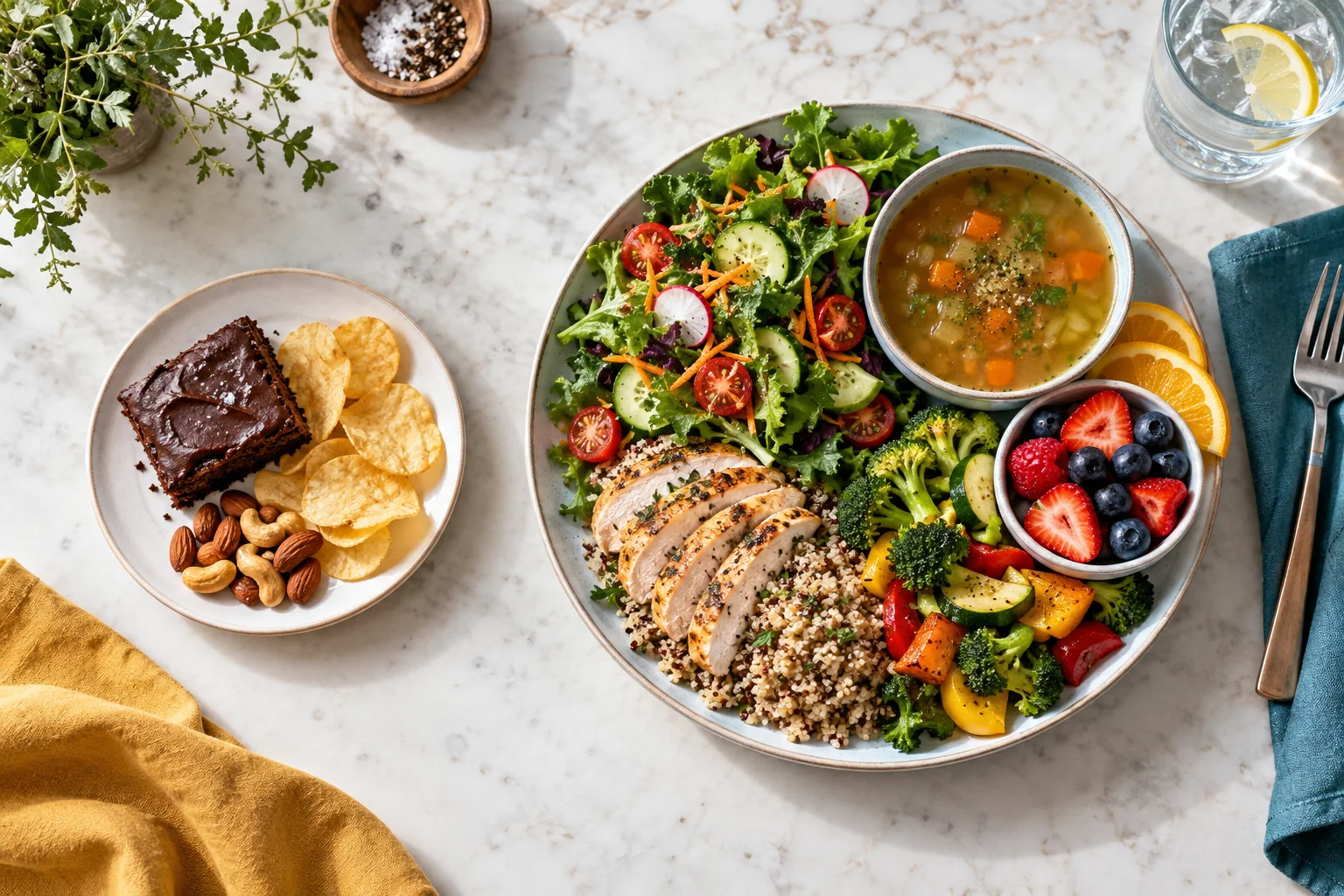
Start with energy density, not a giant plate
Energy density describes calories per gram of food. Water adds weight and volume without calories, so soup, fruit and vegetables can occupy more space than an equal-calorie portion of crackers, pastry or nuts. Fiber and slower eating may add useful fullness signals. Protein also contributes to satiety, even though “high volume” discussions sometimes overlook it.
For actual meal examples, see five lower-calorie, higher-volume plates and compare portions with your current meal.
Volume is not identical to nutrition. A very low-calorie food can crowd out protein, fat, iron, calcium or other needs. Conversely, olive oil, nuts and avocado are energy dense but can belong in a healthy diet. The goal is a satisfying energy budget, not the lowest possible number for every ingredient.
Build a high-volume meal that lasts
- Choose a meaningful protein source such as fish, poultry, eggs, tofu, beans or suitable dairy.
- Add one or two fist-sized portions of vegetables or fruit in a form you digest comfortably.
- Include a fiber-rich carbohydrate such as potatoes, oats, beans or whole grains when it supports hunger and activity.
- Add an intentional amount of fat, sauce or topping for flavor and nutrition.
- Use water-rich starters—salad, fruit or broth-based soup—when they help rather than feeling compulsory.
A bowl of vegetable-bean soup with yogurt and fruit may be more durable than a huge plain salad. The difference is structure, not visual size alone.
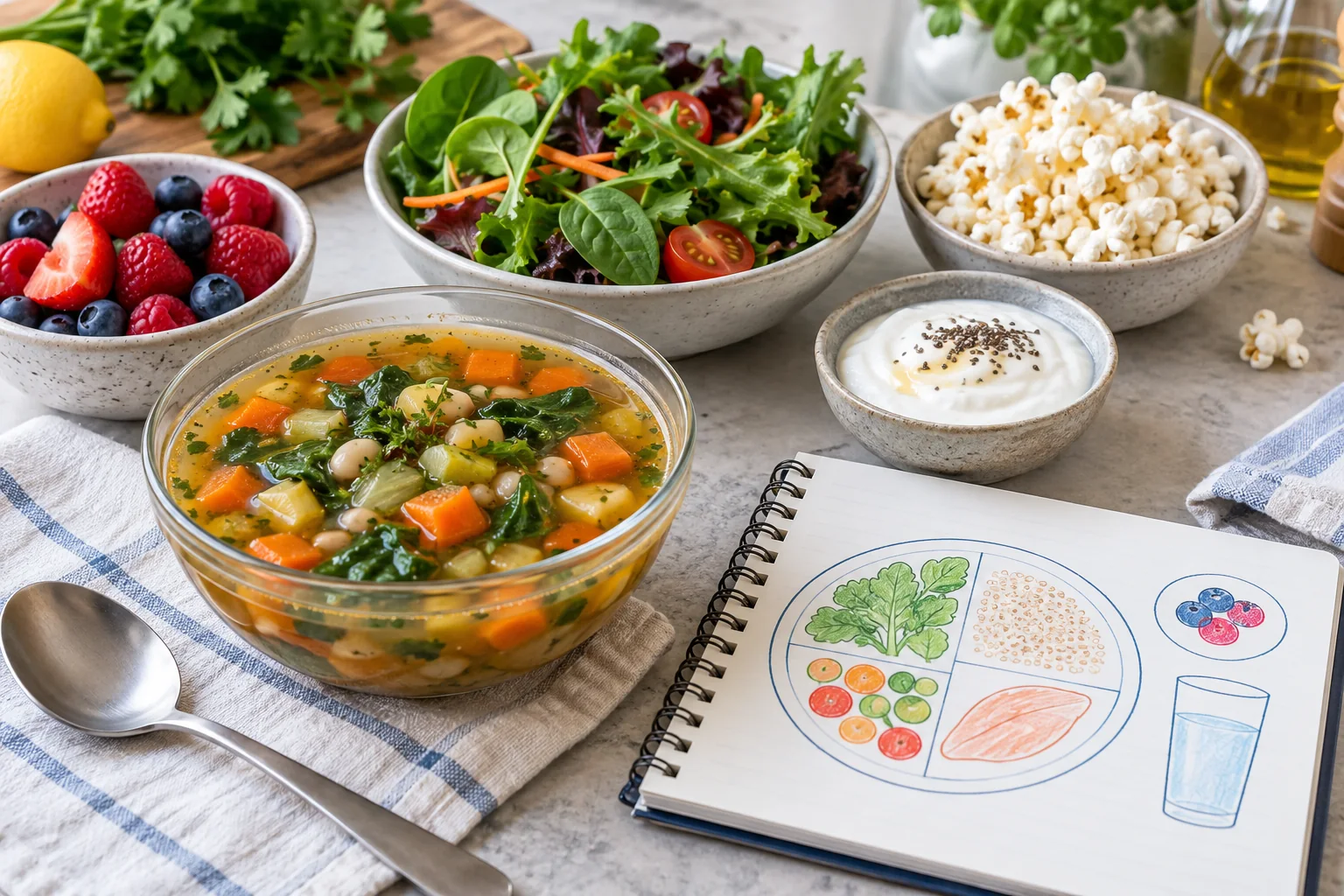
Why volume eating sometimes backfires
Very bulky meals can worsen bloating, reflux or gastrointestinal symptoms. Artificially inflated foods may create temporary stomach volume without satisfaction. “Saving calories” all day can also produce an evening rebound, especially when protein and fat were stripped from earlier meals.
People with digestive disease, fluid restrictions, swallowing problems or a history of restrictive eating should not force high-volume plans without appropriate guidance. Cooking vegetables, spreading fiber increases gradually and choosing lower-volume nutrient-dense foods can be the better option.
Use a volume ladder instead of banning foods
This preserves choice and makes adherence measurable. A smaller serving of pizza with salad may work better than a “perfect” substitute that leads to a second dinner.
Volume swaps
- Replace half the pasta or rice with vegetables.
- Choose broth-based soups instead of creamy ones.
- Use spinach or lettuce as a base for meals.
- Choose air-popped popcorn instead of chips.
- Swap dried fruit for fresh berries.
What studies show
Research by Barbara Rolls and colleagues found that people tend to eat a consistent weight of food, so lowering the energy density of meals reduces calorie intake without increasing hunger. This approach has been effective in weight-loss trials.
Where a supplement fits
Volume eating controls hunger through food; a fat burner is not needed.
A capsule cannot create meal volume or supply the protein, fiber and micronutrients missing from a poorly structured diet. Fat Burn Active is optional and cannot repair an eating environment, replace sleep or treat emotional eating. Its current official page lists at least 120 mg caffeine per serving from caffeine anhydrous and guarana, additional unquantified caffeine from green-tea extract, and bitter-orange extract standardized to 6 mg synephrine. Feeling more alert or less hungry for a short time is not proof of meaningful fat loss.
Once the practical steps in this guide are working, decide whether an optional supplement adds enough value. Start with the Fat Burn Active review; if the formula and limitations are acceptable, see the current price on the official site. We may receive a commission.
Frequently asked questions
Can I eat unlimited vegetables?
Non-starchy vegetables are very low in calories; watch oils and dressings.
Will volume eating make me bloated?
Increase high-fiber foods gradually and drink enough fluids.
Do I need to give up calorie-dense foods?
No. Include them in smaller portions within a high-volume meal.
Sources
- Portion size and energy density review
- Dietary energy density and body weight
- NIDDK: Weight-management treatment
- CDC: Healthy eating
Sources reviewed September 13, 2026. This article is general educational information, not medical advice, diagnosis, or treatment.