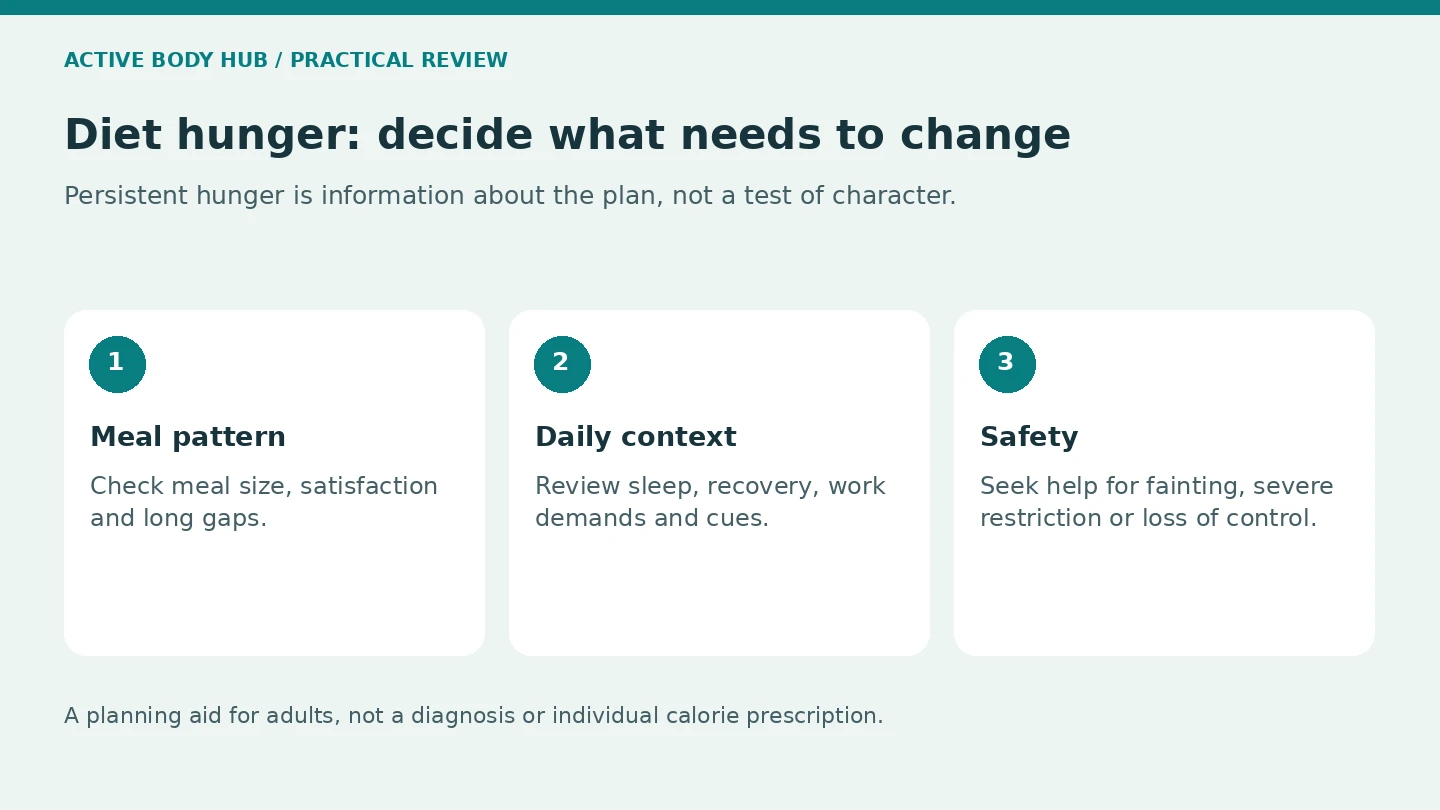
Why diet hunger becomes a plan-breaking problem
A calorie deficit asks the body to cover part of its energy needs from stored tissue. That makes fat loss possible, but it can also increase appetite and make food more attention-grabbing. If the plan treats every hunger signal as a character flaw, people often answer by cutting harder, delaying meals, and relying on willpower. The result can be stronger evening hunger, food preoccupation, and an eat-restrict cycle.
Hunger varies with the restriction, food pattern, sleep, activity, medicines and individual circumstances. A plan that feels easy to one person may be punishing to another.
Ask which part of the plan produces hunger and which manageable change would help.
When hunger returns soon after one meal, use our one-hour-after-eating checklist to inspect that meal and the surrounding context.
Why appetite can rise during weight loss
Appetite reflects signals from the brain, digestive tract and other tissues, as well as habits and food cues. Weight loss can increase the pressure to eat. A 2025 meta-analysis found an increase in total ghrelin after weight loss, with varied findings for other appetite-related hormones. A fasting hormone result cannot predict exactly how hungry you will feel. [1]
This does not mean that insulin or a damaged metabolism makes fat loss impossible. Hunger may increase intake, and fatigue may reduce movement, so the achieved deficit can become smaller than the intended one. The practical response is to improve the plan rather than chase a hormone reset.
Choose the response that fits your hunger
| Pattern | What to review | Next useful step |
|---|---|---|
| Hunger before a usual meal | Meal timing and whether the previous meal was enough | Eat the planned meal; hunger does not need to be defeated. |
| Strong evening hunger | Small earlier meals, long work gaps or hard training | Make lunch or a suitable snack more accessible. |
| Hunger most of the day with fatigue | Size and duration of the restriction | Reassess the deficit with a qualified professional if needed. |
| Shakiness, sweating or confusion | Possible low glucose, especially with certain medicines | Follow your glucose care plan; severe symptoms need urgent help. |
Water can address thirst, but it is not a substitute for adequate food or treatment of low glucose. If you use insulin or medicines that can cause hypoglycemia, coordinate changes to meals and activity with your care team. [5]
Run a two-week hunger review
- Rate hunger before and after meals. Use a simple 0–10 scale; precision is less important than consistency.
- Record the context. Note time since the last meal, sleep, activity, mood, location, and the food desired.
- Check meal structure. Look for a suitable protein source, fiber-rich plants or grains, adequate dietary fat, and visible volume.
- Compare weekdays and weekends. A diet can be too strict on workdays and unstructured on weekends.
- Change one lever. Add a planned snack, enlarge vegetables or fruit, distribute protein, or reduce the deficit modestly.
- Review averages. Compare hunger, adherence, strength, waist, and weekly average weight—not one difficult afternoon.
If the change reduces hunger while progress continues, keep it. If hunger remains high and function declines, the plan needs a larger redesign or professional guidance. [4]
Build meals that buy more satiety
Start with foods that provide protein and fiber within your health needs, then add vegetables, fruit, whole grains, legumes, or other low-energy-density foods you enjoy. Include enough fat for taste, nutrition, and satisfaction while keeping energy-dense additions visible. Soup, potatoes, oats, beans, yogurt, eggs, fish, tofu, fruit, and vegetables can all play useful roles; no single food is mandatory.
Texture matters. Drinking calories or eating quickly may provide less sensory exposure than a meal that requires chewing. Satisfaction matters too: a technically perfect meal that leaves you searching the kitchen can fail in practice. A planned portion of a desired food may work better than declaring it forbidden and thinking about it all evening.
Do not confuse “more filling” with “free.” Nuts, oils, cheese, avocado, and granola can be nutritious and energy-dense. Measure the result of the full meal rather than awarding ingredients a health halo. [2] [3]
Put food where the pressure actually occurs
Meal frequency has no universal winner. Some people prefer three meals; others need a planned snack around a long shift or training session. Move food toward the period when hunger repeatedly breaks the plan instead of saving nearly everything for an idealized schedule.
After exercise, separate temporary appetite suppression from later hunger. A hard session may feel easy at first and produce a large rebound several hours later. Plan recovery food rather than improvising when exhausted. Likewise, do not use a wearable's calorie estimate as a precise eating allowance.
A maintenance interval can provide practice with a stable eating routine. It is not a proven hormonal reset or evidence that metabolism was damaged. Discuss persistent hunger and fatigue rather than repeatedly cycling through severe restriction.
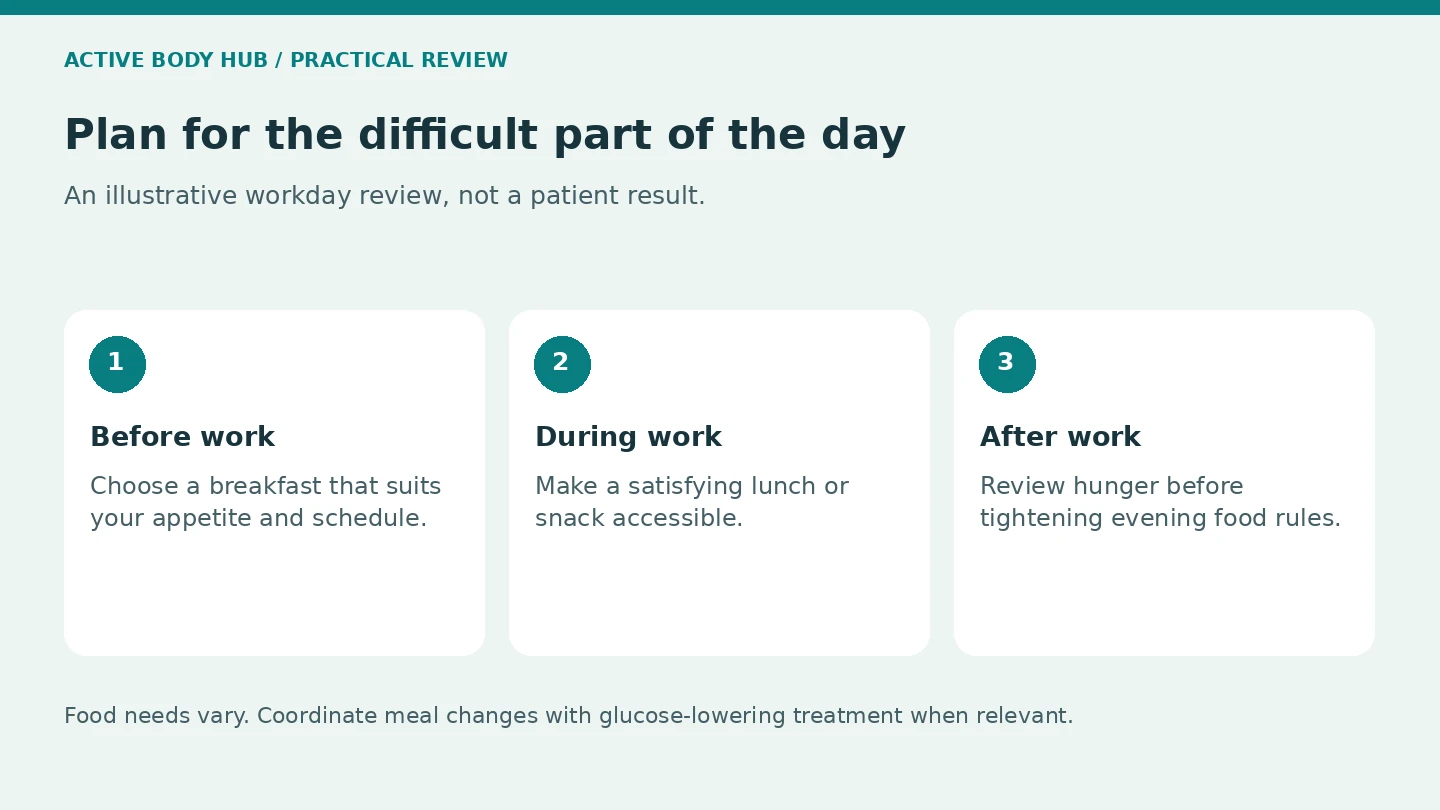
A workday example: change the weak meal first
Imagine breakfast is rushed, lunch is mainly a small salad, and dinner becomes a search for anything filling. Before removing another evening food, arrange a lunch with a protein source, a carbohydrate you enjoy, vegetables or fruit, and enough food to be satisfying. This is an example of meal planning, not a fixed prescription or patient result.
Keep a brief note of afternoon hunger and whether the meal was available. If the change helps, keep it. If hunger remains overwhelming, review the overall restriction rather than adding more rules.
For hunger returning soon after a particular meal, use the one-hour-after-eating guide. For urges linked to cues or feelings, read the food-cravings guide.
Know when to hold, adjust, or stop the deficit
Hold the plan when trends move gradually, hunger is manageable, sleep and training are acceptable, and meals remain workable. Adjust one element when hunger clusters around a repeatable time or meal. Reduce the deficit when hunger is persistent, performance falls, or the routine repeatedly ends in overeating.
Stop self-directed dieting and seek help when restriction produces dizziness, fainting, loss-of-control eating, compensatory behaviors, severe distress, or rapid unintended loss. Sustainable fat loss is a safe pattern that can be repeated long enough to produce a meaningful trend and maintained afterward.
When to seek help instead of restricting more
Arrange medical advice for a sudden unexplained appetite change, unusual thirst or urination, unintended weight loss, recurrent dizziness or symptoms beginning after a medicine change. Do not stop prescribed treatment on your own. Fainting, severe confusion or other serious symptoms need prompt care.
If dieting brings binge episodes, compensatory restriction, purging or significant distress, seek support experienced in eating disorders. Pregnancy, adolescence, frailty, significant illness and eating-disorder recovery require an individual plan.
Would Fat Burn Active solve diet hunger?
A supplement cannot repair an overly restrictive diet or supply a missed meal. The evidence reviewed does not establish this finished product as a treatment for persistent hunger. If you are considering it, read the formula and evidence review after checking the basics. That review contains affiliate links; we may earn a commission if you buy.
Frequently asked questions
Does hunger prove the calorie deficit is working?
No. Hunger also occurs at maintenance or after an unbalanced meal. Confirm progress from multi-week trends.
Will hunger eventually disappear?
It may become more predictable, but weight loss can maintain pressure to eat. Better structure can make it manageable.
Should I go to bed hungry?
No. If evening hunger harms sleep or triggers overeating, redistribute food or reassess the deficit.
Sources and editorial notes
- Meta-analysis: Appetite-Related Gut Hormones After Weight Loss (2025)
- Review: Protein in Weight Loss and Maintenance
- Clinical Trial: Dietary Energy Density and Weight Loss
- NIDDK: Choosing a Safe and Successful Weight-Loss Program
- NIDDK: Low Blood Glucose
Sources reviewed October 25–26, 2026. Prepared with AI assistance to organize evidence and practical planning examples. No clinical review, personal product use or laboratory testing is claimed. This is educational information for adults, not an individual treatment plan.