
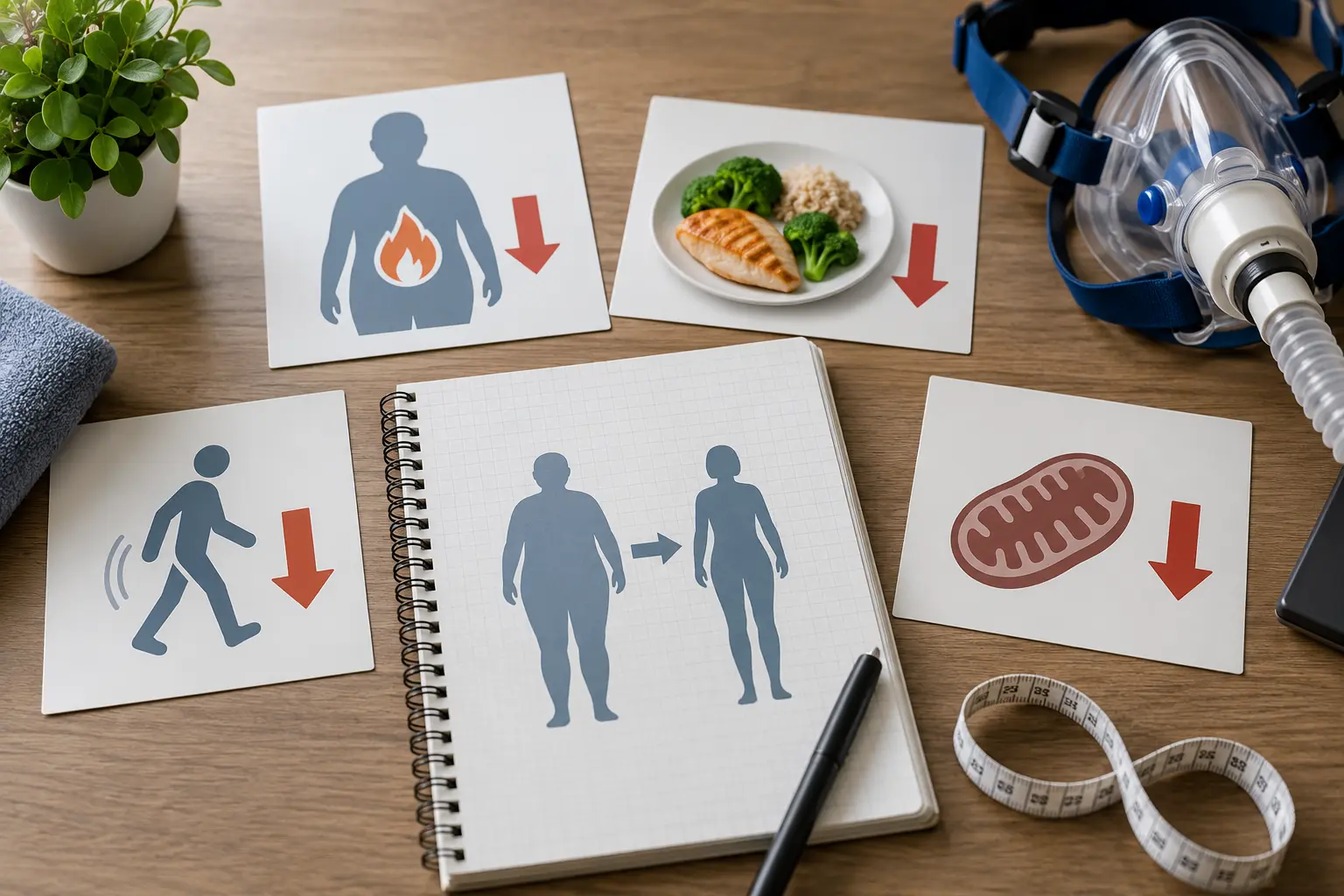
Separate five sources of lower expenditure
Adaptive thermogenesis is not the whole slowdown
Researchers estimate adaptation by comparing measured expenditure with a predicted value. The result depends on the prediction equation, body-composition method, measurement timing, and whether someone is actively restricting or weight stable. Systematic reviews support the phenomenon but also show substantial variability and generally smaller estimates after weight stabilization.
A plateau cannot measure adaptation. Water retention, menstrual timing, constipation, portion drift, fewer steps, and an outdated maintenance estimate can produce the same visible pattern. Treat adaptation as one testable contributor, not an all-purpose diagnosis.
Respond without escalating the fight
Recalculate needs after meaningful weight change, audit portions briefly, compare current movement with the pre-diet baseline, and protect resistance training, protein, sleep, and recovery. If the plan has become aggressive, a smaller deficit or maintenance phase may improve adherence and training; it is not a guaranteed metabolic reset.
Example: Maya’s scale average is flat for three weeks. Instead of cutting dinner and adding intervals, she discovers that workday steps fell and weekend portions grew. She restores a feasible walking floor and standardizes two meals. The next review tests those changes without pretending to know her adaptation in calories.
How large the slowdown usually is
Most of the drop in energy needs after weight loss is expected: a smaller body uses less energy at rest and when moving. Studies estimate the extra adaptive part at anywhere from almost nothing to a few hundred calories a day, varying between people and studies. In the well-known study of former reality-show contestants, the adaptation was unusually large, but they had lost extreme amounts of weight very quickly.
Reducing the slowdown
- Keep the deficit moderate rather than aggressive.
- Continue resistance training to preserve muscle.
- Eat enough protein.
- Protect everyday movement, which often falls during a diet.
- Take planned diet breaks at maintenance if dieting for many months.
These cannot prevent the expected drop, but they can limit the extra losses.
Updating your calorie target
After losing around 5–10% of body weight, recalculate your energy needs with a current weight or a tool such as the NIDDK Body Weight Planner. A target that produced loss at the start will produce slower loss later. Small adjustments based on the weekly trend are more reliable than any formula.
Where a supplement fits
No supplement has been shown to prevent metabolic adaptation. Claims of "boosting metabolism" usually refer to small, short-term effects of caffeine.
A supplement is not required to benefit from this guide. If your foundations are already in place, use the independent Fat Burn Active review to judge whether the formula has a useful optional role. If it fits your expectations and stimulant tolerance, check the current price on the official site. We may receive a commission.
Frequently asked questions
Is this starvation mode?
The phrase exaggerates the evidence. Expenditure can decline, but the body does not stop obeying energy balance.
Can a supplement prevent adaptation?
No supplement has been shown here to prevent all expected or adaptive reductions in expenditure.
Should I immediately eat less?
No. Confirm the trend and audit current intake, movement, recovery, and body size before changing one lever.
Sources
- Systematic review of adaptive thermogenesis
- Review of calorie restriction and human energy metabolism
- Metabolic adaptation and weight-loss maintenance
- NIDDK Body Weight Planner
- Physical Activity Guidelines for Americans
Sources reviewed September 17, 2026. This article is general educational information, not medical advice, diagnosis, or treatment.