The body after weight loss is not the body before it
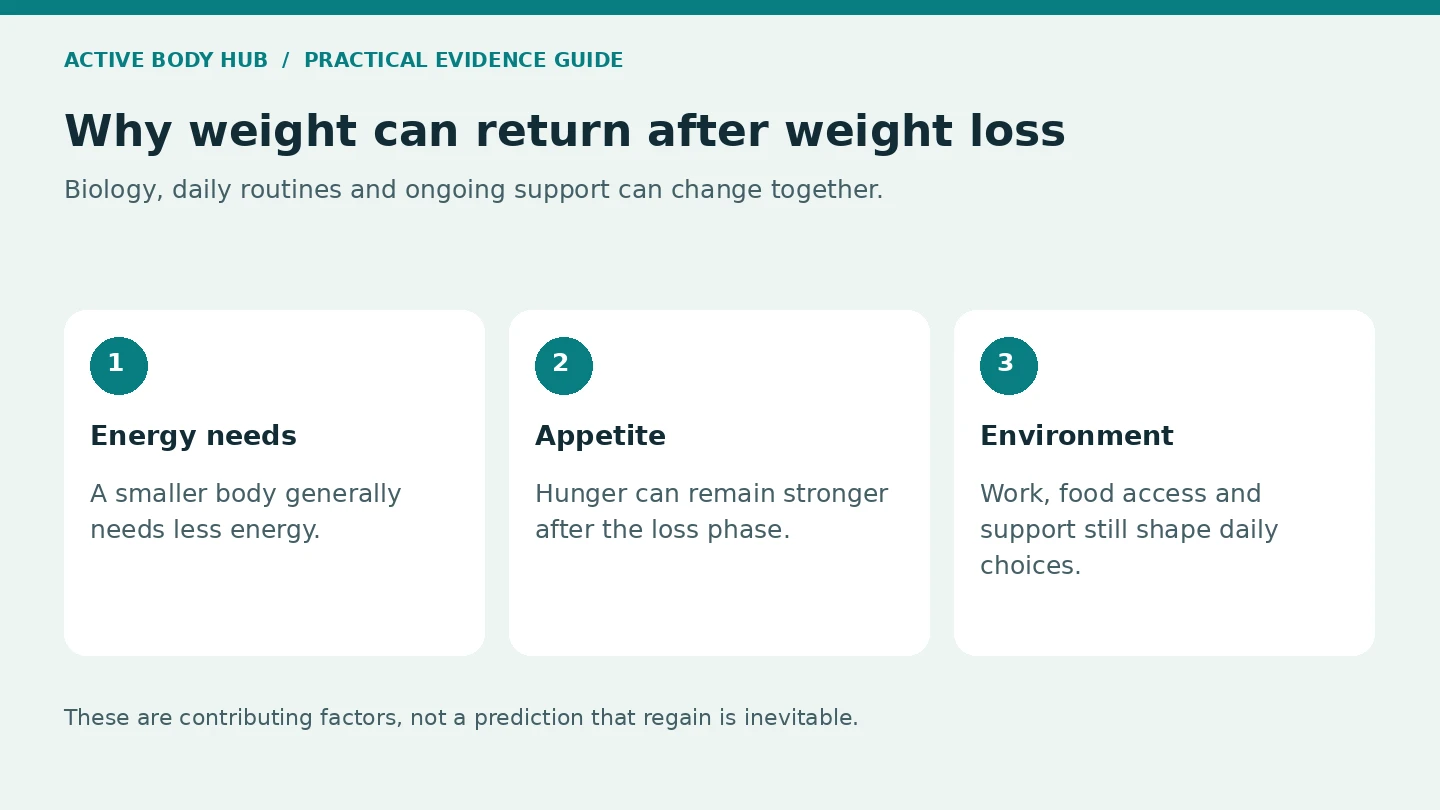
Part of the change is expected: a smaller body generally uses fewer calories at rest and during movement. Some people also experience adaptive thermogenesis, meaning expenditure falls somewhat more than predicted from changes in body size and composition. The size and persistence of this effect vary, and it should not be described as permanent metabolic damage.
Appetite can move in the opposite direction. Research has documented persistent changes in hormones related to hunger and satiety after diet-induced weight loss. Food may feel more rewarding, portions may feel less satisfying, and maintaining the same intake can require more attention than it did early in the diet. [1]
Behavior adapts too
People often focus only on resting metabolism, but daily movement matters. During and after dieting, fatigue can reduce steps, standing, fidgeting, chores, and training output. This decline may be subtle enough that a fitness watch does not fully capture it. Combined changes in body size and daily activity can narrow the maintenance margin.
Diet fatigue also changes decisions. Repeated restriction can make energy-dense food more salient. Tracking becomes less accurate, weekend portions grow, and “temporary” exceptions become routine. These responses are not character flaws; they are predictable problems that need a lower-burden system. [1]
The old environment is still present
Weight loss changes the person more quickly than it changes the surroundings. Work schedules, delivery apps, family meals, alcohol, large restaurant portions, sleep disruption, and stress remain. If the maintenance plan depends on ideal conditions, an injury, holiday, or busy month can expose how little redundancy the system has.
Support may also disappear after the goal is reached. Coaching ends, compliments fade, and the clear weekly reward of loss is gone. Maintenance can feel less urgent even though it requires ongoing problem solving. [4]
Why regain can start small
A surplus does not need to be dramatic. An extra snack, slightly larger dinner, fewer daily steps, and more weekend alcohol can combine into gradual gain. Because daily weight fluctuates, the early trend is easy to dismiss. Avoidance then delays correction until the change feels overwhelming.
The opposite mistake is reacting to one high weigh-in. Sodium, carbohydrate, constipation, menstrual timing, travel, and hard training can add temporary water or food mass. Use a consistent average and, when useful, waist or clothing fit. The article on day-to-day weight fluctuation explains these short-term changes.
A five-part regain audit
- Energy needs: Has body weight changed enough that previous maintenance is now too high?
- Intake: Have portions, drinks, snacks, restaurant meals, or cooking fats increased?
- Movement: Are steps, training, standing, or work demands lower than during maintenance?
- Recovery: Are poor sleep, stress, pain, or low mood changing hunger and planning?
- Medical context: Did medicines, reproductive status, illness, or mobility change?
Audit without punishment. The purpose is to identify the smallest relevant lever. If sleep loss is driving evening eating, cutting breakfast may increase hunger without solving the cause. If movement fell after injury, doubling exercise may be unsafe; intake and rehabilitation may need attention instead.
Build protection into maintenance
Use a weight range, not a single target. Keep a few repeatable meals, protein and fiber anchors, a realistic movement floor, resistance training when appropriate, and a scheduled trend review. Plan for predictable disruptions such as holidays and travel. A maintenance phase between future fat-loss cycles may be more useful than repeatedly pushing through fatigue.
When the trend rises, follow the small-regain response. Early correction should be modest and time-limited. Severe restriction after every fluctuation teaches fear, not maintenance. [3]
What regain does not prove
Regain does not prove that weight loss was useless, that the body can never change, or that the solution is a harsher diet. Health improvements, skills, strength, and knowledge may remain even when some weight returns. The useful question is what changed and what level of intervention now matches the person’s health and circumstances.
Regain does not prove one hormone is solely responsible. Appetite, expenditure, health and surroundings interact; a commercial “hormone reset” is not a substitute for assessing that pattern.
Stabilizing weight, improving function or treating a health condition may be a more useful immediate goal than restarting a diet.
Turn causes into protective rules
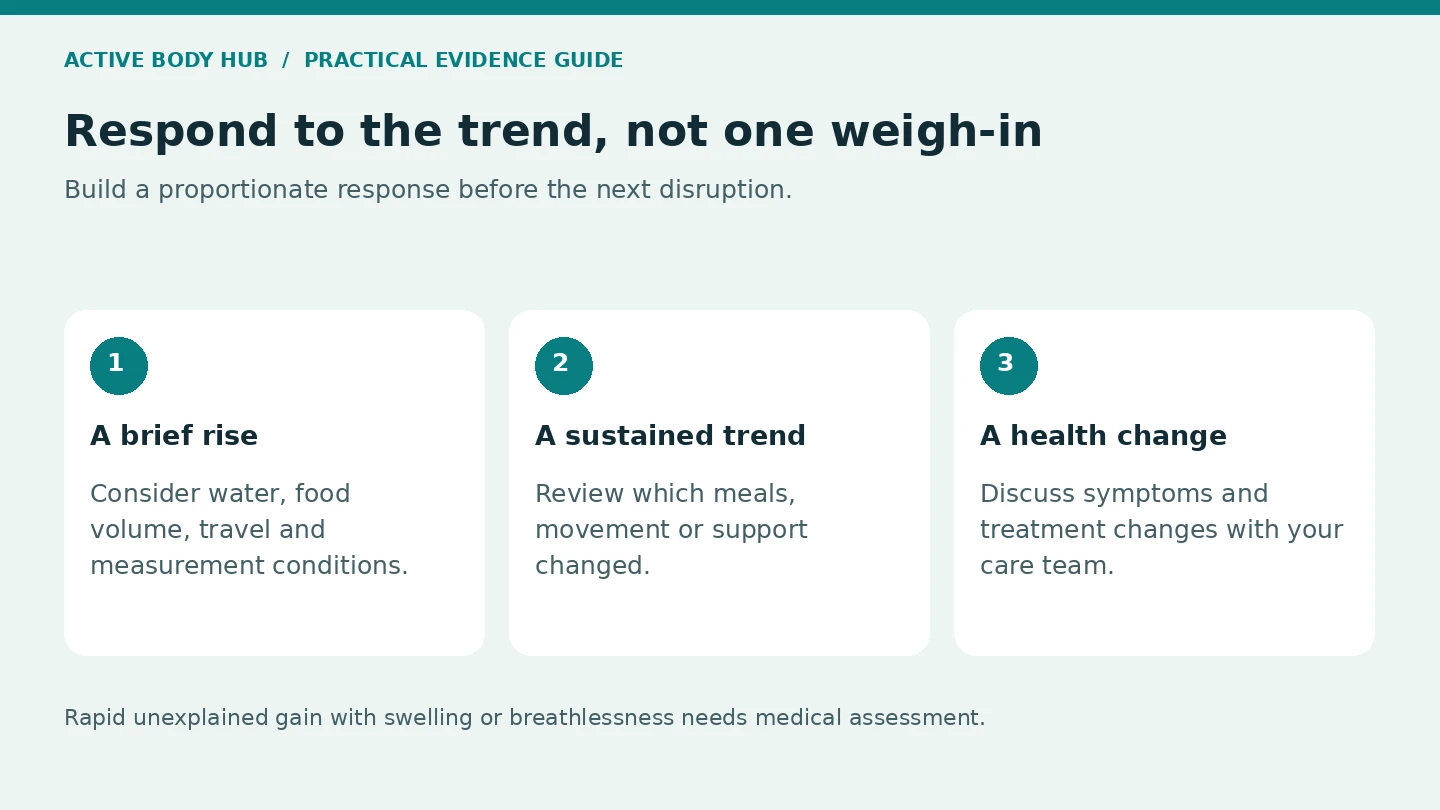
A short-lived rise and a gradual increase across months require different questions. Match your response to the trend rather than assuming every change is new fat or dismissing every rise as water.
Choose a response that fits the time scale
| Pattern | First question | Next step |
|---|---|---|
| A rise after travel or a salty meal | Did measurement conditions, food volume or routine change? | Resume normal routines and compare the following trend. |
| A gradual rise across several weeks | Which meals, activity or support changed? | Restore one useful routine and set a review date. |
| Marked hunger after stopping prescribed weight treatment | Was a maintenance plan agreed with the prescriber? | Arrange a treatment review; do not self-restart or change doses. |
| Rapid unexplained gain with swelling or breathlessness | Could a health problem be involved? | Seek medical assessment rather than treating it as ordinary fat gain. |
This framework is for organizing a conversation, not estimating how much of a weight change is fat. Your clinician may recommend a different response based on symptoms and treatment.
What newer research does and does not tell us
A 2025 narrative review discusses appetite signaling, lean tissue, immune changes and the microbiome as possible contributors to regain. Many findings remain associative or require further intervention research. They do not establish an individual “reset” protocol or show that a supplement can erase a biological memory of obesity. [2]
When regain deserves medical review
Rapid unexplained gain, swelling, shortness of breath, major fatigue, menstrual changes, symptoms of sleep apnea, binge eating, or a strong change after starting medicine deserves professional assessment. People stopping prescription weight-management treatment should coordinate with the prescriber because appetite and weight can rebound after discontinuation.
Can Fat Burn Active prevent regain?
The evidence reviewed does not establish that this finished product prevents long-term weight regain. An alertness effect or an ingredient study cannot answer that question. Use the Fat Burn Active review to assess formula facts and limitations if you are considering it. The review contains affiliate links; we may earn a commission if you buy. [5]
Frequently asked questions
Does regain mean metabolism is broken?
No. Lower expenditure and adaptation can contribute, but intake, movement, appetite, environment, and medical factors also matter.
Is all immediate post-diet gain fat?
No. Higher carbohydrate, sodium, and food volume can quickly increase glycogen, water, and digestive contents.
Can weight regain be prevented completely?
No system guarantees a perfectly flat trend. The practical goal is early detection, flexible routines, and proportionate correction.