Non-stimulant is a constraint, not a benefit claim
Search results often treat “non-stimulant” and “caffeine-free” as synonyms. For a cautious comparison, non-stimulant is broader. A formula can omit added caffeine yet include bitter orange, yohimbe, or another ingredient sold for stimulating effects. Tea, coffee, guarana, yerba mate, and kola sources can also contribute caffeine without placing the familiar word at the front of the label.
Ask for the all-source stimulant total per serving and maximum day. If the manufacturer cannot answer, the product fails the category gate. Passing this gate only establishes absence; it does not establish appetite control, thermogenesis, or fat loss.
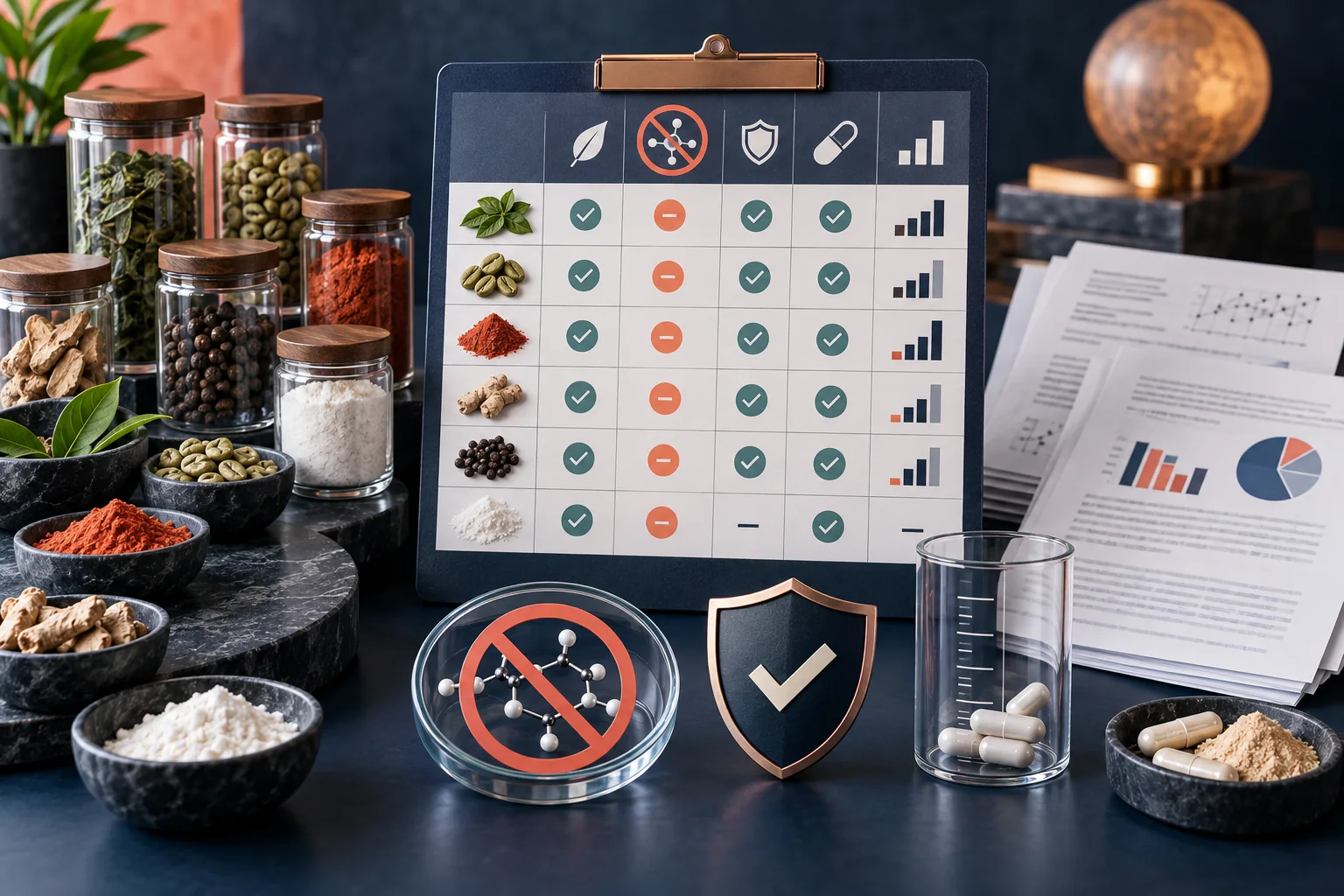
Compare mechanisms in separate lanes
Do not average these lanes into one “potency” score. A fiber intended to support fullness and a capsaicinoid intended to affect thermogenesis solve different problems and need different outcomes.
A seven-step shortlist
- Write why stimulants are being avoided: sleep, anxiety, stacking, preference, or clinical advice.
- Reject hidden botanical caffeine and ambiguous proprietary blends.
- Assign every ingredient one claimed job and one measurable outcome.
- Match form and daily dose to controlled human trials.
- Look for evidence on the complete sold formula separately.
- Compare side effects, interactions, servings, and cost per day.
- Set a review date and stopping rule before buying.
Who may value the category—and who needs more help
A verified non-stimulant option may be relevant to an adult who avoids caffeine, uses coffee or pre-workout already, trains late, or finds stimulation disrupts sleep. The potential advantage is reduced stimulant exposure, not guaranteed fat loss.
Someone with swallowing difficulty, gastrointestinal disease, liver disease, glucose-lowering treatment, multiple medicines, pregnancy, or a history of disordered eating should not assume a botanical or fiber formula is low risk. A clinician or pharmacist can assess the actual label. If hunger is the problem, protein, fiber-rich food, meal timing, sleep, and a less aggressive deficit may address it more directly.
Non-stimulant does not mean risk-free
Products without caffeine still carry their own risks. Green coffee or green tea extracts may contain some caffeine; carnitine can cause stomach upset; chromium and alpha-lipoic acid can affect blood sugar in people taking diabetes medicines; fiber products can block absorption of medicines if taken at the same time. People who are pregnant, breastfeeding, taking prescription medicines or living with liver, kidney or heart disease should check any formula with a pharmacist first.
Where Fat Burn Active fits
Fat Burn Active is a stimulant formula. Its current label (checked October 2026) implies at least 120 mg caffeine per two-capsule day from caffeine anhydrous and guarana, plus green tea extract, so it does not belong on a non-stimulant shortlist.
If stimulants are not a problem for you, compare Fat Burn Active with non-stimulant options side by side, or read the full Fat Burn Active review.
Frequently asked questions
Does caffeine-free always mean non-stimulant?
No. Other compounds may be stimulating, and botanical caffeine may be unclear.
Are non-stimulant fat burners effective?
Some ingredients may have small or context-specific effects, but the category label predicts neither dose nor outcome.
Can I take one at night?
Only after checking every ingredient, directions, interactions, and personal response; stimulant-free does not guarantee sleep neutrality.
Sources
- NIH ODS: Weight-Loss Supplements
- FDA: Dietary Supplements
- FDA: Caffeine and Your Body
- FDA Weight-Loss Product Notifications
Sources reviewed September 8, 2026. This article is general educational information, not medical advice, diagnosis, or treatment.