First verify what the label means
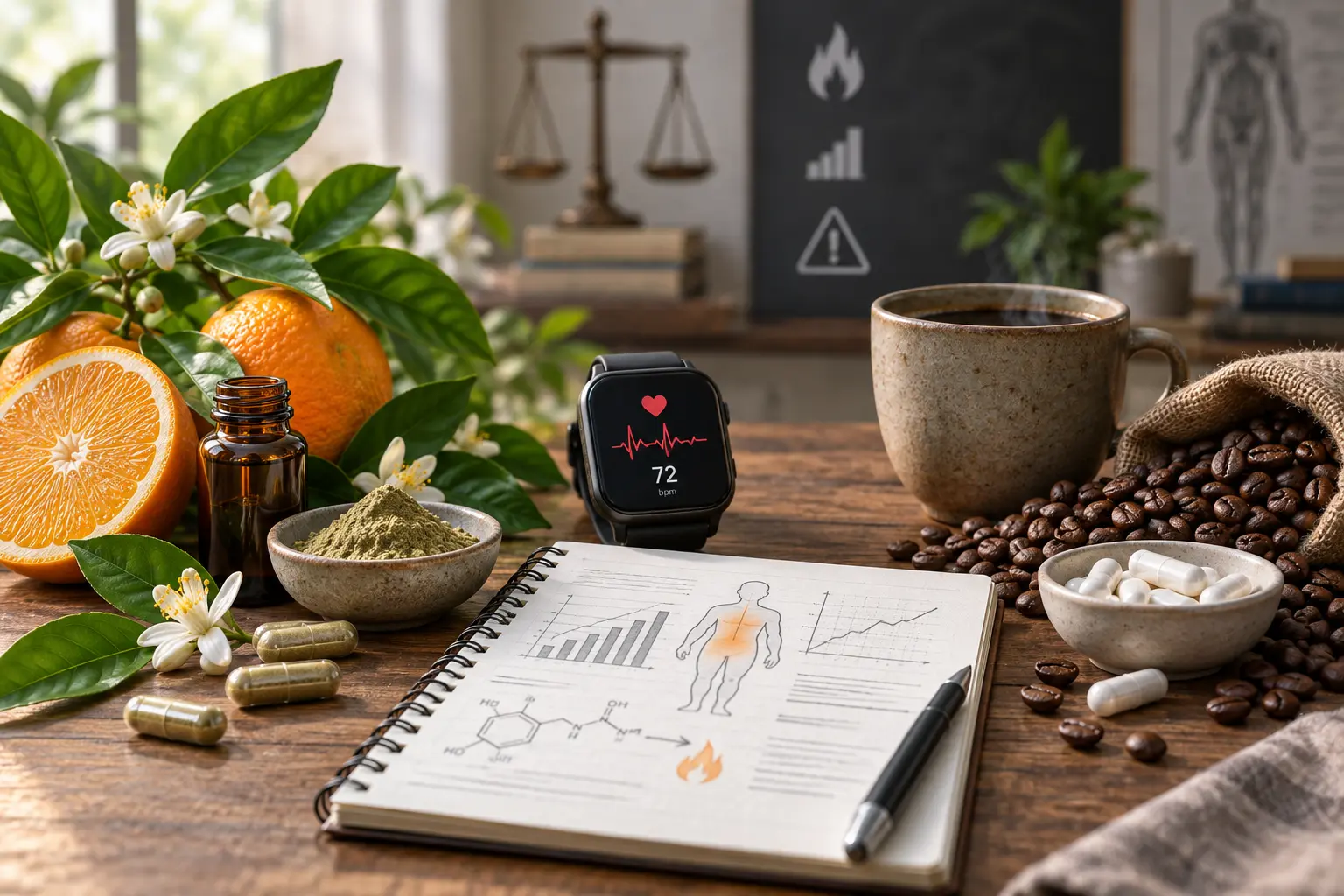
Caffeine is usually disclosed directly or supplied through coffee, tea, guarana, mate, or kola. Synephrine commonly refers to p-synephrine from bitter orange, but the label should state the botanical, extract mass, standardization, and active yield. Do not treat total bitter-orange milligrams as p-synephrine milligrams.
For a 100 mg extract standardized to 6%, the calculated p-synephrine yield is 6 mg. That calculation describes the specification, not laboratory verification or clinical effectiveness.
Thermogenesis is an endpoint, not a verdict
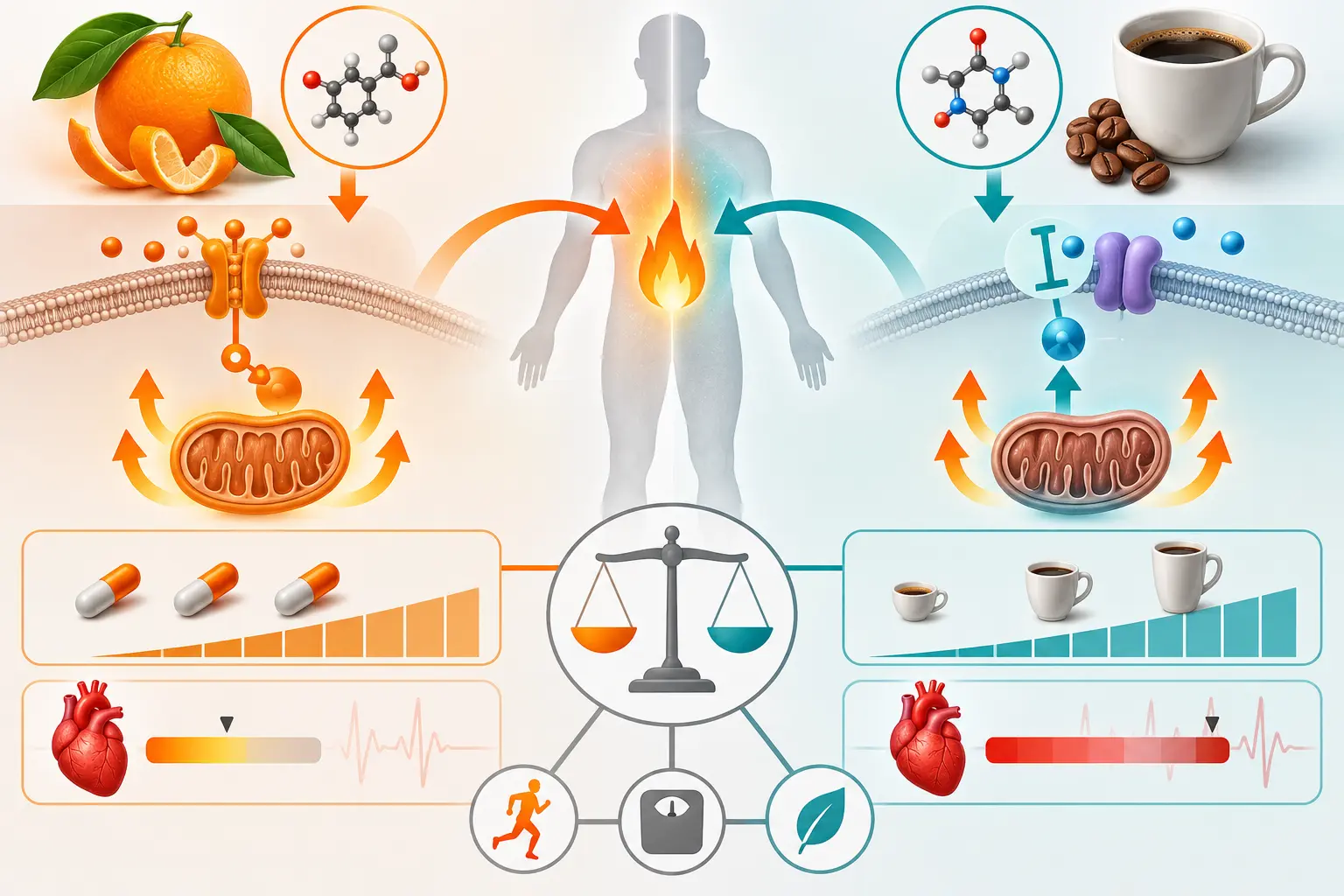
Caffeine acts mainly through adenosine-receptor antagonism and can affect alertness, catecholamine signaling, activity, and acute expenditure. P-synephrine is discussed in relation to adrenergic pathways. Mechanistic differences do not tell buyers which produces meaningful fat loss.
Prioritize controlled human trials measuring body weight, waist, or fat mass. Acute calorimetry, pulse, warmth, or increased alertness may confirm exposure without establishing a durable benefit.
Why the evidence is not symmetrical
Caffeine is widely studied, but a familiar exposure is not automatically a useful weight-loss treatment. Habituation, compensatory eating, and sleep disruption can shrink practical value. Synephrine studies frequently use combinations, small samples, or short durations, making attribution difficult.
A multi-ingredient trial containing both compounds cannot tell you the independent contribution of either. Marketing that cites a combination for synephrine and a separate caffeine study for caffeine creates an artificial head-to-head comparison that never occurred.
A risk-first choice
Someone already consuming caffeine gains little information by adding hidden botanical caffeine or synephrine. A person with hypertension, palpitations, cardiovascular disease, anxiety, pregnancy, or relevant medicines should not self-test a stimulant comparison. Exercise and heat add context because they can also affect pulse and hydration.
If one candidate hides its daily dose, it loses automatically. If both are transparent, caffeine may be easier to quantify, but that is a transparency advantage—not proof of better fat loss.
Worked comparison: disclosed doses without a head-to-head trial
Product A provides 100 mg caffeine. Product B provides 100 mg bitter-orange extract standardized to 6% p-synephrine, yielding a calculated 6 mg p-synephrine. The matching numbers on the front of the calculation do not mean matching potency. They describe different substances, pathways, research programs, and uncertainties. Without a direct comparative trial, no responsible conversion can say that 6 mg synephrine equals a particular caffeine dose.
Now imagine Product C combines both ingredients. It does not automatically combine their claimed benefits. The buyer needs the exact daily maximum, all botanical caffeine, other stimulants, dose timing, finished-product evidence, and adverse-event reporting. A calm response to coffee does not establish tolerance to the combination.
Audit the thermogenesis claim in four layers
- Mechanism: identify the receptor or signaling hypothesis without treating it as an outcome.
- Acute response: check whether expenditure, oxidation, pulse, or blood pressure changed and for how long.
- Clinical outcome: prioritize randomized weight, waist, or fat-mass results over several weeks.
- Finished formula: require evidence for the sold combination rather than assembling separate ingredient citations.
Also ask whether any small expenditure effect would survive tolerance, sleep disruption, compensation, and imperfect adherence. Marketing often annualizes an acute laboratory estimate as though it repeats unchanged every day. That calculation is not a measured weight-loss result.
When the comparison should stop
Stop when p-synephrine identity is unclear, stimulant totals are hidden, warnings conflict with personal health, or the seller uses drug-like promises. Do not use exercise sensations, sweating, or a faster pulse to rank efficacy. These observations can indicate exposure or harm without showing additional fat loss.
Record the decision date and exact lot. Recheck after any reformulation, because a previous calculation cannot establish the dose or safety of a changed product.
Where Fat Burn Active fits
Fat Burn Active supplies direct and guarana-derived caffeine plus bitter-orange p-synephrine, while green-tea caffeine remains unresolved. It should be assessed as a combination, not used as proof that either ingredient wins.
Fat Burn Active is optional; no supplement is required for fat loss. Its current formula must be judged as a combination, not as the winner of any isolated-ingredient comparison. Read our independent Fat Burn Active review, verify the current label and all-source caffeine, and compare the product with the option of using neither.
Fat Burn Active is relevant here because its official listing identifies standardized plant extracts, caffeine sources, vitamins, and zinc in one formula. First read our independent review. If the formula, stimulant profile, evidence limits, and warnings fit your situation, check the current Fat Burn Active price on the official website. We may receive a commission at no additional cost.
Frequently asked questions
Is synephrine caffeine?
No. They are different compounds with different evidence and exposure calculations.
Which is stronger?
“Stronger” is not a useful outcome; compare dose, endpoint, effect size, and risk.
Is the combination better?
There is no automatic additive benefit, while combined safety uncertainty can increase.
Sources
- NIH ODS: Weight-Loss Supplements
- NCCIH: Bitter Orange
- FDA: How Much Caffeine Is Too Much?
- EFSA: Safety of Caffeine
Sources reviewed September 14, 2026. This article is general educational information, not medical advice, diagnosis, or treatment.