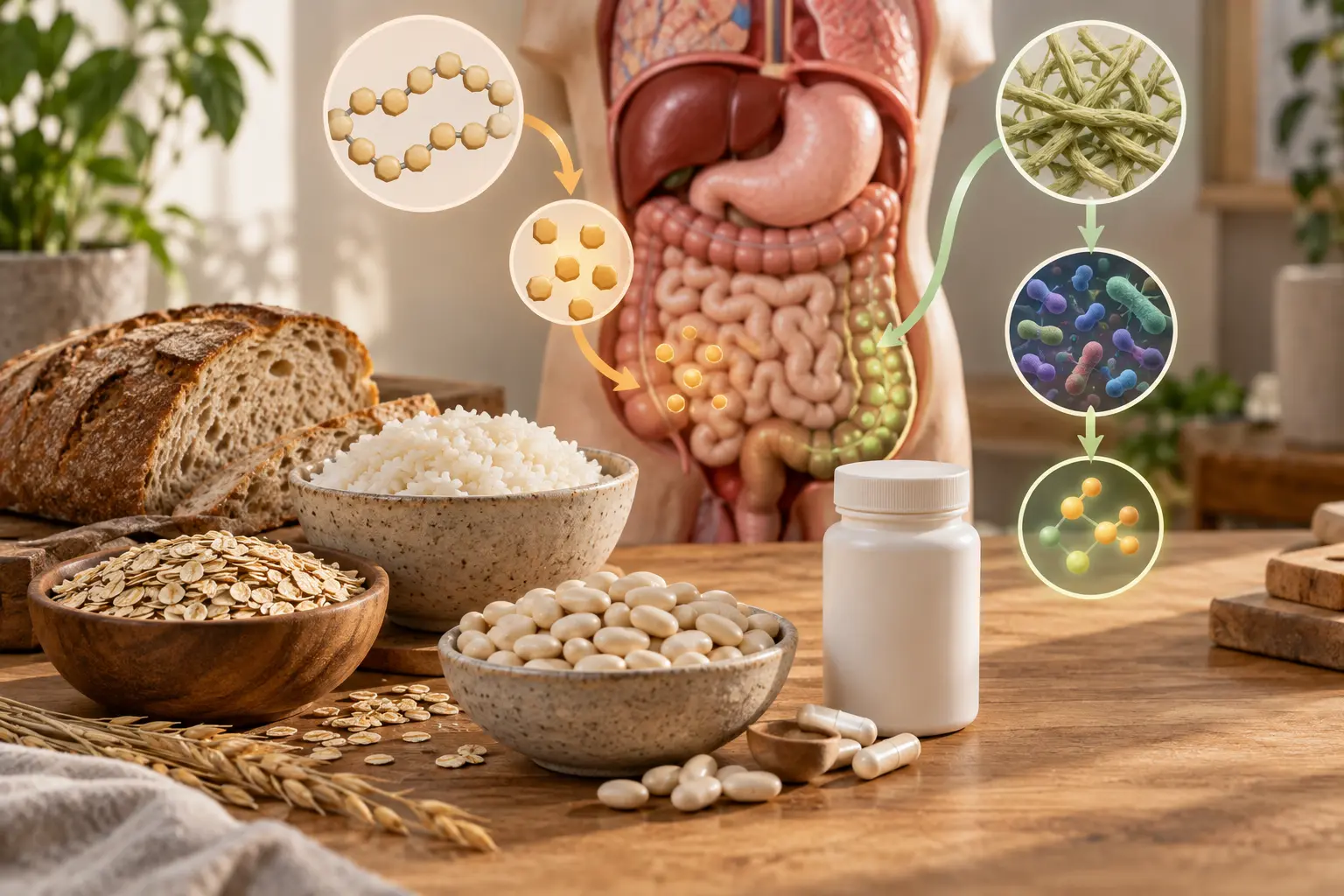
Carbohydrate is not one target
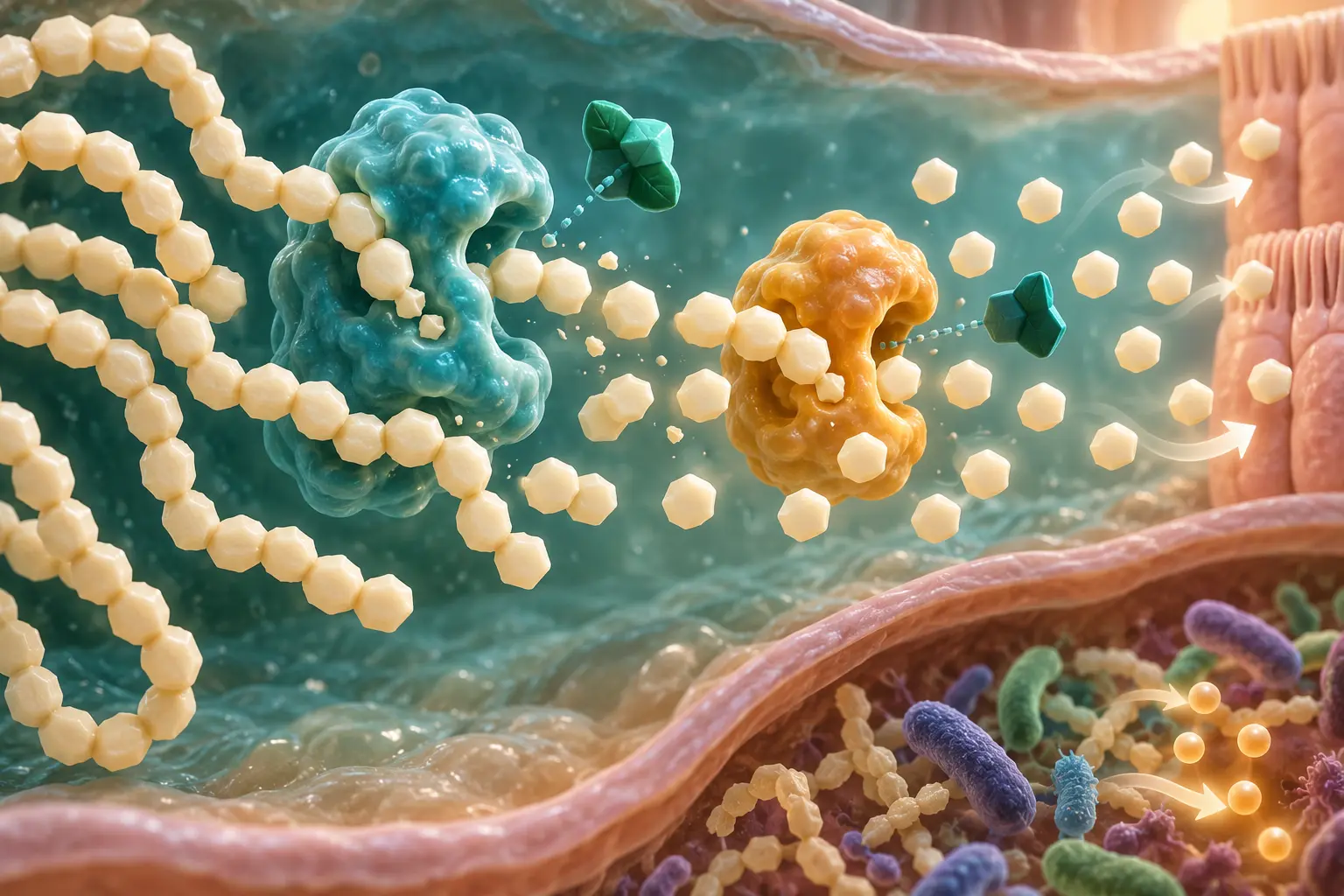
Starch is a chain of glucose units. Enzymes including alpha-amylase and brush-border alpha-glucosidases break digestible carbohydrate into smaller sugars that can be absorbed. Simple sugars do not require the same initial starch-breaking step. Fiber follows different routes and some reaches the colon for fermentation.
An ingredient that inhibits one enzyme cannot be described accurately as blocking all carbohydrate absorption. The effect depends on the substrate in the meal, timing, formulation, dose, and whether the ingredient remains active in the digestive environment. A test-tube result provides a mechanism hypothesis, not a personal calorie deduction.
Do not merge three unlike categories
A smaller glucose rise is not automatically fat loss
A study may measure post-meal glucose, enzyme activity, breath gases, stool energy, appetite, or body weight. These are not interchangeable. Slower digestion can change the shape of a glucose response without eliminating total absorption. More carbohydrate reaching the colon may be fermented, producing gas and metabolites rather than simply vanishing.
For a weight claim, look for randomized trials lasting long enough to measure body-weight or fat-mass differences. Ask whether diet advice was equal, the extract and dose match the sold product, withdrawals were reported, and the difference from placebo was practically important.
Example: the pasta “insurance policy”
A person takes a carb-blocker capsule before pasta and dessert, then logs neither because the package mentions starch control. The dessert contains sugars not addressed by an alpha-amylase claim, and the supplement has no transparent evidence showing that the entire meal becomes non-caloric. The estimate is now less accurate, not more.
A practical alternative is to choose a satisfying pasta portion, include protein and vegetables, and judge the weekly pattern. If glucose control is the concern, use clinician-directed monitoring and treatment rather than borrowing claims from prescription medicines.
Where Fat Burn Active fits
Fat Burn Active should not be described as a carbohydrate blocker unless its exact label, dose, and finished-product evidence demonstrate that effect. A general metabolism claim is not enough.
Fat Burn Active is optional and is not required for fat loss. Its label and finished-product evidence must answer the claim; research on a different medicine or isolated ingredient cannot do that work. Feeling warmer, more alert, less hungry, or seeing a short-term scale change does not prove meaningful fat loss.
Use the criteria on this page to assess Fat Burn Active rather than relying on a headline claim. Our formula evidence analysis explains the remaining uncertainty. If the product fits your needs, see the current price on the official website. We may earn a commission at no extra cost.
Frequently asked questions
Do carb blockers work on sugar?
An alpha-amylase claim concerns starch digestion, not automatic blocking of all simple sugars.
Can I subtract carbohydrates from my food log?
No reliable personal subtraction follows from a supplement label. Log the meal normally.
Why can carb blockers cause gas?
More undigested carbohydrate may reach the colon, where microbes ferment it.
Sources
- NIH ODS: Dietary Supplements for Weight Loss
- FDA: Precose prescribing information
- Systematic review of Phaseolus vulgaris extracts and weight
- NIDDK: Insulin, Medicines, and Other Diabetes Treatments
Sources reviewed September 13, 2026. This article is general educational information, not medical advice, diagnosis, or treatment.