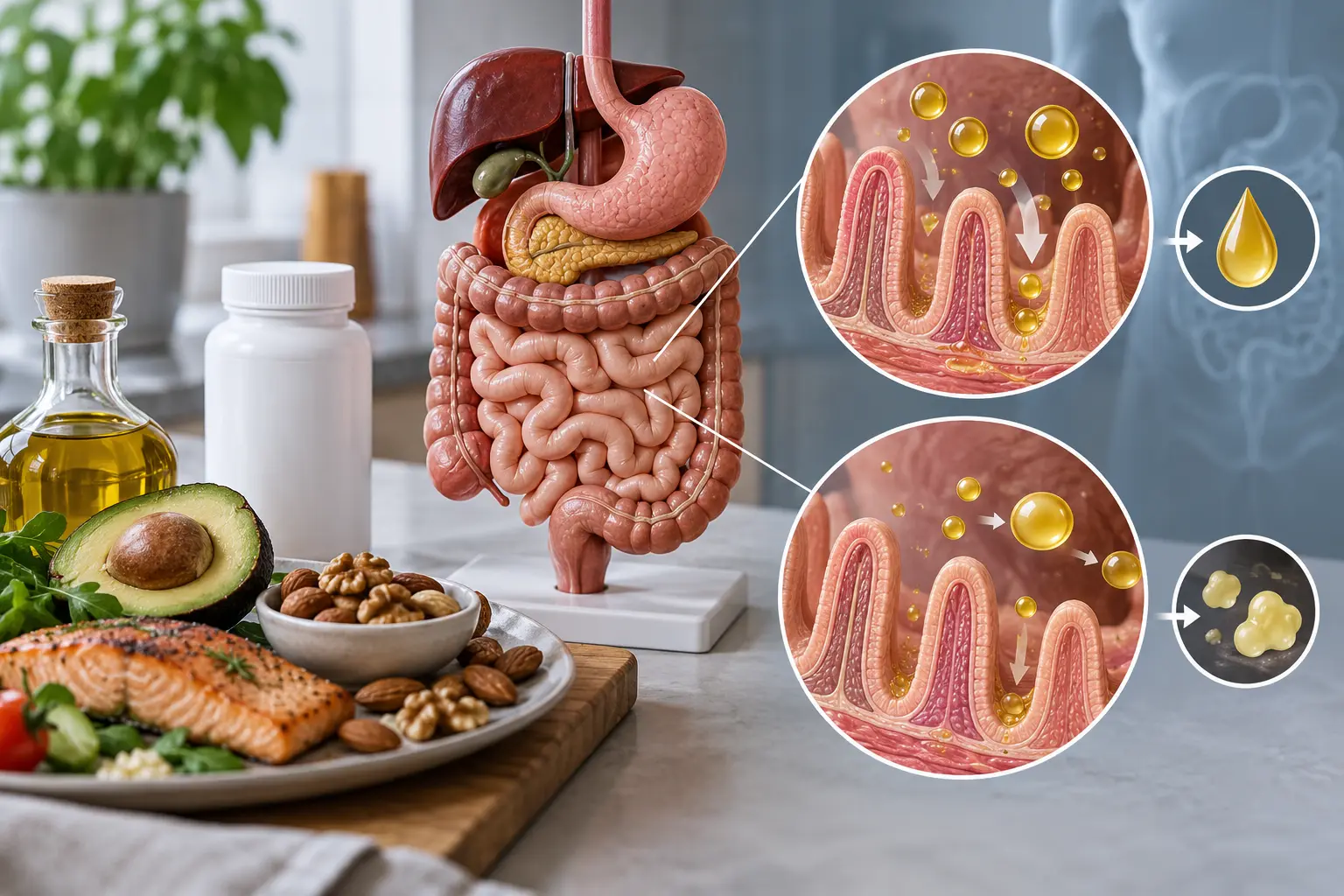
What fat absorption normally involves
Dietary triglycerides are mixed with bile and broken down by enzymes, particularly pancreatic lipase. Their components reach the intestinal surface, enter cells, and are packaged for transport. A genuine inhibitor must interrupt a defined part of that process at a meaningful dose.
“Blocks fat” is often interpreted as stopping an entire meal from counting. Real pharmacology is less dramatic. Partial inhibition leaves substantial absorption, works only on fat eaten around the dose, and can affect the bowel because unabsorbed fat continues through the intestine. It does not remove body fat already stored.
Separate medicine from supplement
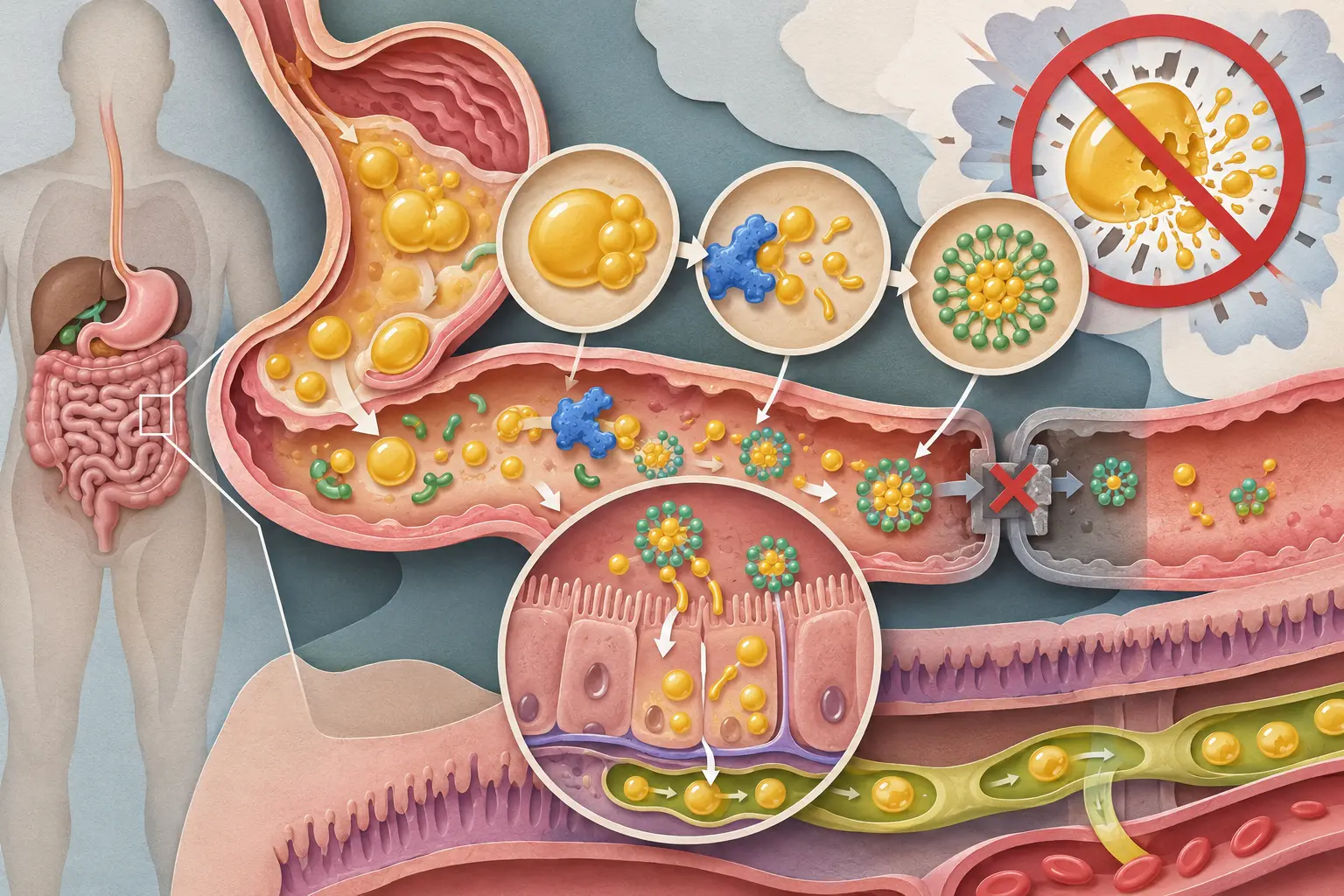
Blocking absorption creates tradeoffs
If less fat is absorbed, more remains in the gastrointestinal tract. With orlistat, oily spotting, urgency, gas with discharge, and fatty stool are recognized adverse effects, especially around higher-fat meals. Absorption of fat-soluble vitamins and some medicines may also require management under the product's instructions and professional advice.
That inconvenience is evidence that the mechanism has consequences; it is not a reason to imitate it with laxatives or “detox” products. Water loss, diarrhea, and faster transit do not equal body-fat loss. A buyer should evaluate adverse effects and treatment burden alongside average weight change.
Example: the restaurant-meal assumption
A person takes a generic thermogenic before a high-fat restaurant meal and assumes the capsule cancels the oil. The label lists caffeine and botanical extracts but no established lipase inhibitor and no finished-product trial measuring fecal fat or body-weight outcomes. The meal still belongs in the weekly energy pattern.
A better response is to decide the valued parts of the meal, use portions that remain satisfying, and resume the usual routine afterward. If prescription weight management is appropriate, that is a separate clinical conversation—not a claim that any “fat burner” works like orlistat.
Where Fat Burn Active fits
The available Fat Burn Active information does not justify presenting it as an orlistat-like fat-absorption blocker. Its stimulant and botanical claims require their own evidence pathway.
Fat Burn Active is optional and is not required for fat loss. Its label and finished-product evidence must answer the claim; research on a different medicine or isolated ingredient cannot do that work. Feeling warmer, more alert, less hungry, or seeing a short-term scale change does not prove meaningful fat loss.
Use the criteria on this page to assess Fat Burn Active rather than relying on a headline claim. Our formula evidence analysis explains the remaining uncertainty. If the product fits your needs, see the current price on the official website. We may earn a commission at no extra cost.
Frequently asked questions
Can a fat blocker cancel a high-fat meal?
No. Partial inhibition is not cancellation, and eating more fat can increase gastrointestinal effects.
Is chitosan the same as orlistat?
No. They are different products with different evidence, regulation, mechanisms, and risks.
Does unabsorbed fat mean stored fat disappears?
No. The mechanism acts on part of dietary fat in the gut, not existing adipose tissue.
Sources
- NIH ODS: Dietary Supplements for Weight Loss
- NIDDK: Prescription Medications to Treat Overweight and Obesity
- FDA Xenical prescribing information
- Cochrane review: Chitosan for overweight or obesity
Sources reviewed September 13, 2026. This article is general educational information, not medical advice, diagnosis, or treatment.