
TRPV1 explains the sensation, not the outcome
Capsaicin activates TRPV1 receptors involved in sensing heat and irritation. Researchers have examined sympathetic activity, thermogenesis, fat oxidation, appetite, and energy intake. This provides a plausible mechanism for testing—not a guarantee that a capsule produces noticeable fat loss.
Capsinoids are related compounds designed to provide less oral pungency, while products may use chili powder, capsicum extract, capsaicinoids, or proprietary forms. These interventions cannot be treated as dose-equivalent from their names alone.
Keep the expected effect in proportion
Meta-analyses of controlled trials suggest small average changes in energy intake or expenditure, with differences in formulation, dose, habitual spicy-food exposure, duration, and participants. Extrapolating a brief laboratory effect across months assumes no adaptation or compensation.
A modest thermogenic change can be erased by a small portion difference, reduced movement, or worse sleep. Weight and waist outcomes from a matching longer trial deserve more weight than a heat sensation or single post-meal measurement.
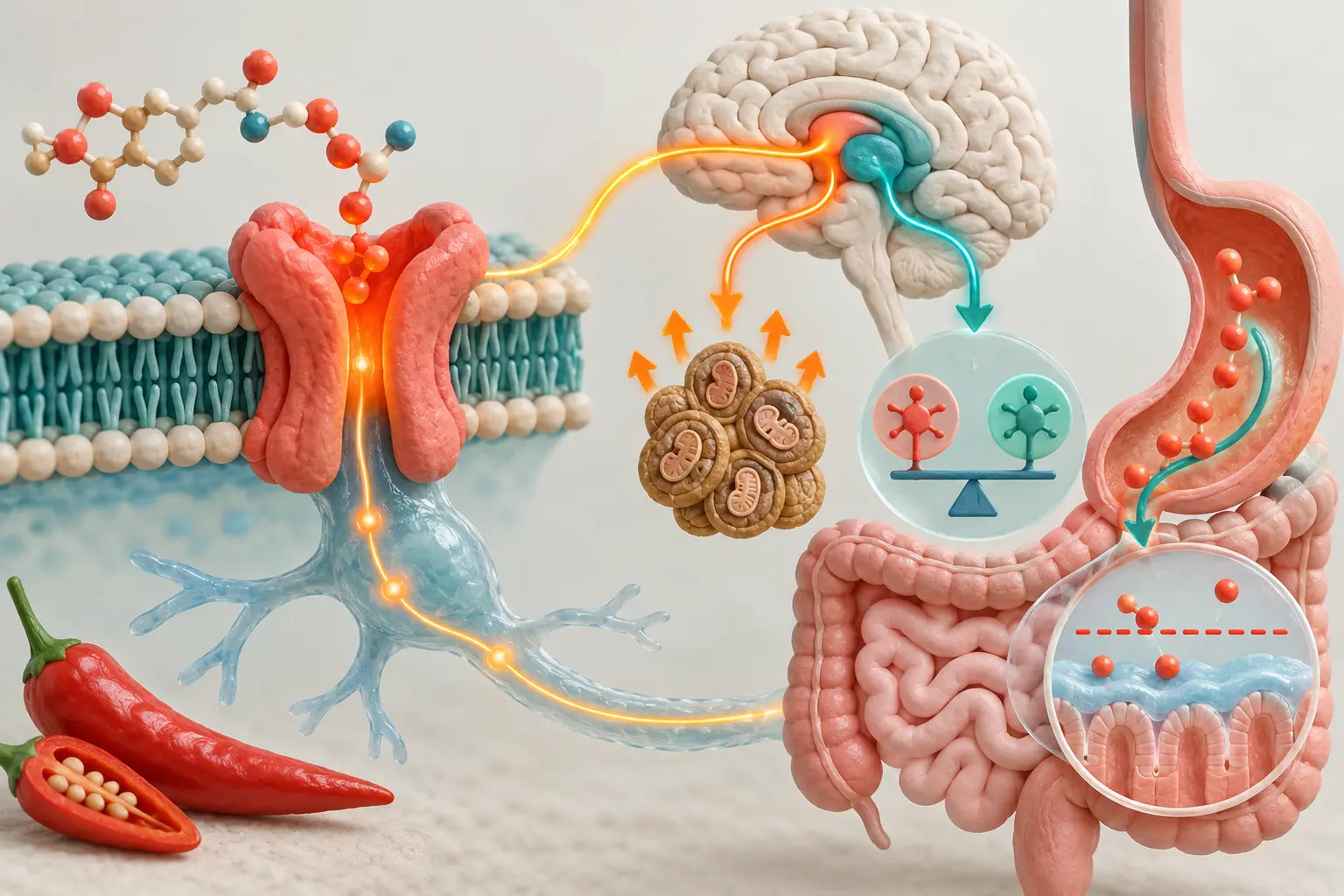
Tolerability can set the usable dose
Translate the label into a comparable dose
Do not compare the total weight of chili powder with milligrams of capsaicinoids. Record the extract mass, standardization percentage, actual capsaicinoid amount, servings per day, and delivery form. If the active amount cannot be calculated, neither a positive trial nor a tolerability report can be matched reliably.
Food tolerance also does not prove capsule tolerance. Concentrated exposure, timing, an empty stomach, and co-ingredients may change the experience. Start from the product directions, never use discomfort as a target, and stop rather than escalating through reflux or pain.
Example: warmth becomes a false score
A person takes a pepper-extract capsule and feels warm after breakfast. They increase the dose because warmth is treated as proof of calorie burn. The product has no matching long-term trial, and reflux worsens.
A sound decision uses the labeled capsaicinoid amount, comparable human studies, body-weight or intake outcomes, and adverse events. The person stops when the predefined tolerance rule is crossed. More sensation is not more success.
Where Fat Burn Active fits
If Fat Burn Active uses a pepper-derived ingredient, that ingredient must be matched by exact form and dose before capsaicin research is relevant. It cannot be assumed to explain the finished product's outcome.
Fat Burn Active is optional and is not required for fat loss. Its current information should be evaluated as one finished multi-ingredient formula: known amounts do not resolve every remaining exposure or evidence gap. Feeling warmer, stimulated, less hungry, or seeing a short-term water change does not demonstrate meaningful product-level fat loss.
The official Fat Burn Active page lists a multi-ingredient thermogenic formula, but the buying decision should follow the evidence check above. Compare our independent review, then, if the product remains a reasonable fit, check the current price and label on the official site. We may receive a commission at no additional cost.
Frequently asked questions
Does feeling hot mean more fat is burning?
No. Sensation and sweating do not quantify a meaningful change in stored body fat.
Are capsinoids the same as capsaicin?
They are related but not interchangeable; formulation and dose matching matter.
Can chili food replace a supplement?
Use chili for flavor if tolerated, but neither food nor capsules guarantee weight loss.
Sources
- NIH ODS: Dietary Supplements for Weight Loss
- Capsaicinoids in weight management: systematic review and meta-analysis
- Capsaicin and capsiate in energy balance: meta-analysis
- NCCIH: Using Dietary Supplements Wisely
Sources reviewed September 13, 2026. This article is general educational information, not medical advice, diagnosis, or treatment.