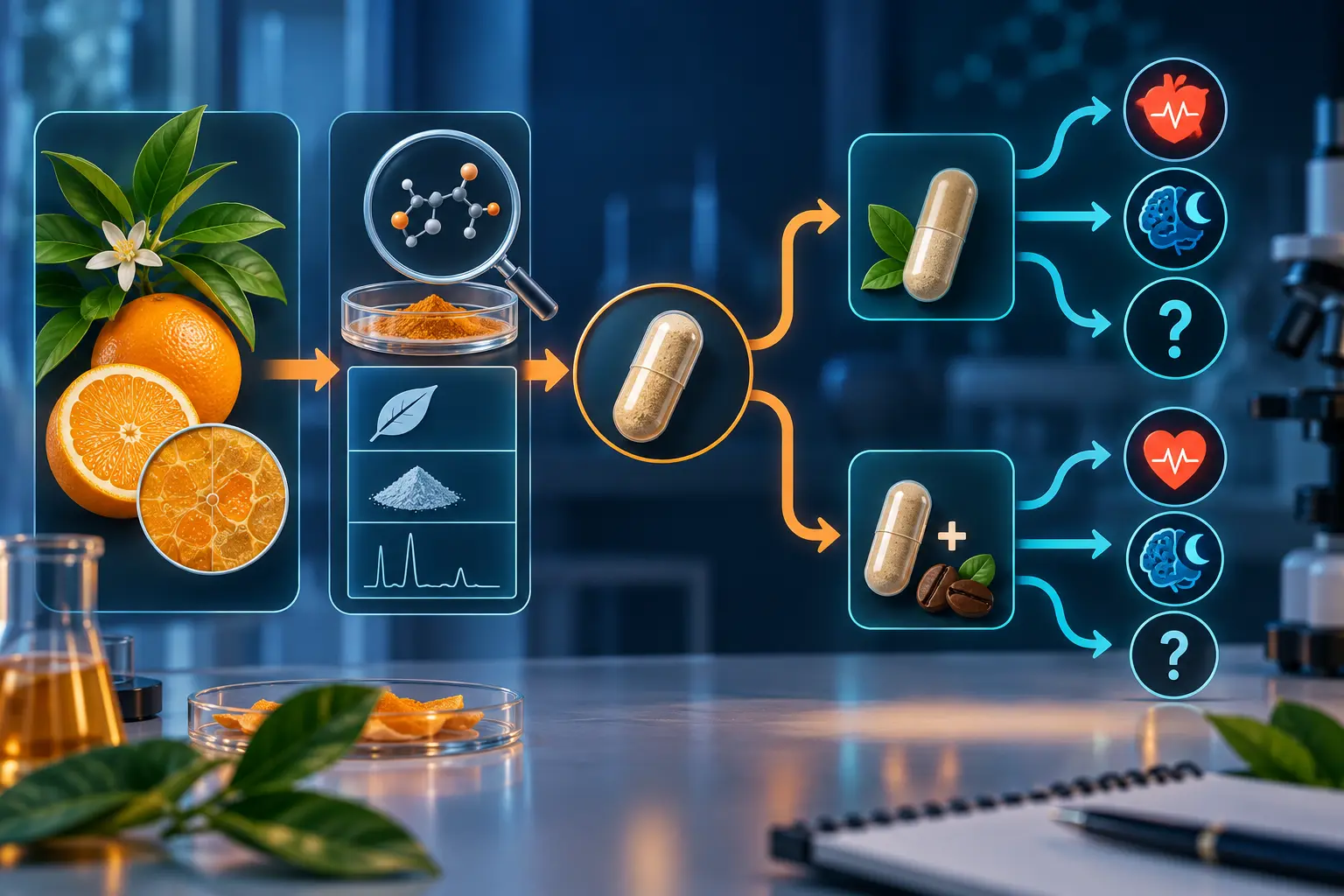
Identity comes before dose
Bitter orange, usually Citrus aurantium, may be standardized for p-synephrine. It should not be confused with m-synephrine, phenylephrine, ephedrine, or a generic “citrus complex.” Similar names do not establish identical pharmacology, evidence, or risk.
A usable label states botanical species, plant part, extract mass, standardization percentage or p-synephrine milligrams, serving size, and maximum servings. If 300 mg of extract is standardized to 6%, the arithmetic implies 18 mg p-synephrine per serving. That calculation still does not prove benefit.
Synephrine alone and stimulant stacks are different
A study of p-synephrine alone cannot validate p-synephrine plus caffeine, guarana, green tea, yohimbe, or pre-workout stimulants. Each combination changes exposure and may change both effectiveness and adverse effects. Count all caffeine separately rather than converting synephrine into “caffeine equivalents.”
Reviews disagree on the certainty of cardiovascular risk because studies are often small and short, while case reports may involve blends that prevent attribution. Small trials without serious events cannot rule out uncommon harm.
Risk changes with the setting
Predefine monitoring and stopping rules
Record resting symptoms, sleep, usual caffeine, training conditions, and blood pressure when a clinician recommends it. Do not interpret a temporary appetite change or energetic workout as proof of fat loss. Stop for palpitations, chest pain, faintness, severe headache, or a meaningful deterioration in sleep or anxiety, and seek appropriate medical care.
Example: disclosed synephrine, incomplete exposure
A label discloses 6 mg p-synephrine and 120 mg caffeine from two sources, but green tea extract may add unquantified caffeine. The synephrine number is useful, yet total stimulant exposure remains incomplete. A trial of synephrine alone would not validate the blend.
The buyer records coffee and pre-workout use, timing, health conditions, and medicines. If total caffeine cannot be verified or cardiovascular review is needed, the decision is deferred rather than filled with an estimate.
Where Fat Burn Active fits
Fat Burn Active's current information discloses 6 mg synephrine and at least 120 mg caffeine per serving, while green-tea caffeine keeps the complete stimulant total uncertain. That makes it a combination, not evidence for synephrine alone.
Fat Burn Active is optional and is not required for fat loss. Its current information should be evaluated as one finished multi-ingredient formula: known amounts do not resolve every remaining exposure or evidence gap. Feeling warmer, stimulated, less hungry, or seeing a short-term water change does not demonstrate meaningful product-level fat loss.
Use the criteria on this page to assess Fat Burn Active rather than relying on a headline claim. Our formula evidence analysis explains the remaining uncertainty. If the product fits your needs, see the current price on the official website. We may earn a commission at no extra cost.
Frequently asked questions
Is synephrine the same as ephedrine?
No. Similar marketing context does not make the compounds interchangeable.
Is bitter orange caffeine-free?
It is not a caffeine source by itself, but a finished formula may add caffeine elsewhere.
Does ephedra-free mean safe?
No. It says what is absent, not whether the remaining dose and combination suit you.
Sources
- NCCIH: Bitter Orange
- NIH ODS: Dietary Supplements for Weight Loss
- FDA: Tainted Weight Loss Products
- Systematic review of Citrus aurantium and p-synephrine
Sources reviewed September 13, 2026. This article is general educational information, not medical advice, diagnosis, or treatment.