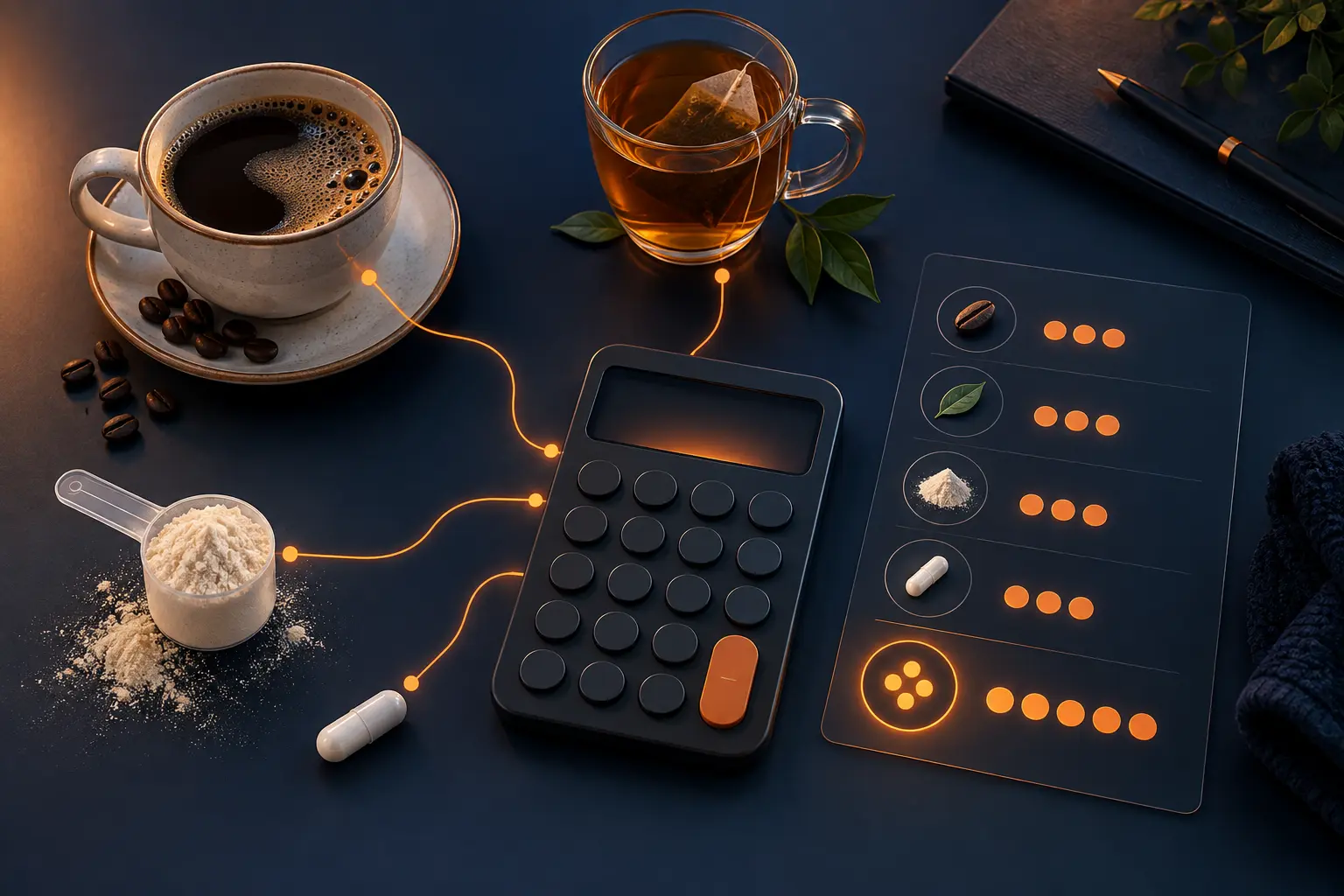
The calculation in one line
Use milligrams throughout. A 16-fluid-ounce drink is not automatically two label servings; check the container and what you actually consumed. If a product provides a range because preparation varies, record a low and high total instead of inventing precision. The goal is a safer decision, not a perfect laboratory measurement.
Build the inventory before doing arithmetic
Include partial servings. Half a can followed by the other half later is still one can. Include decaffeinated drinks when they materially contribute, since “decaf” does not necessarily mean zero.
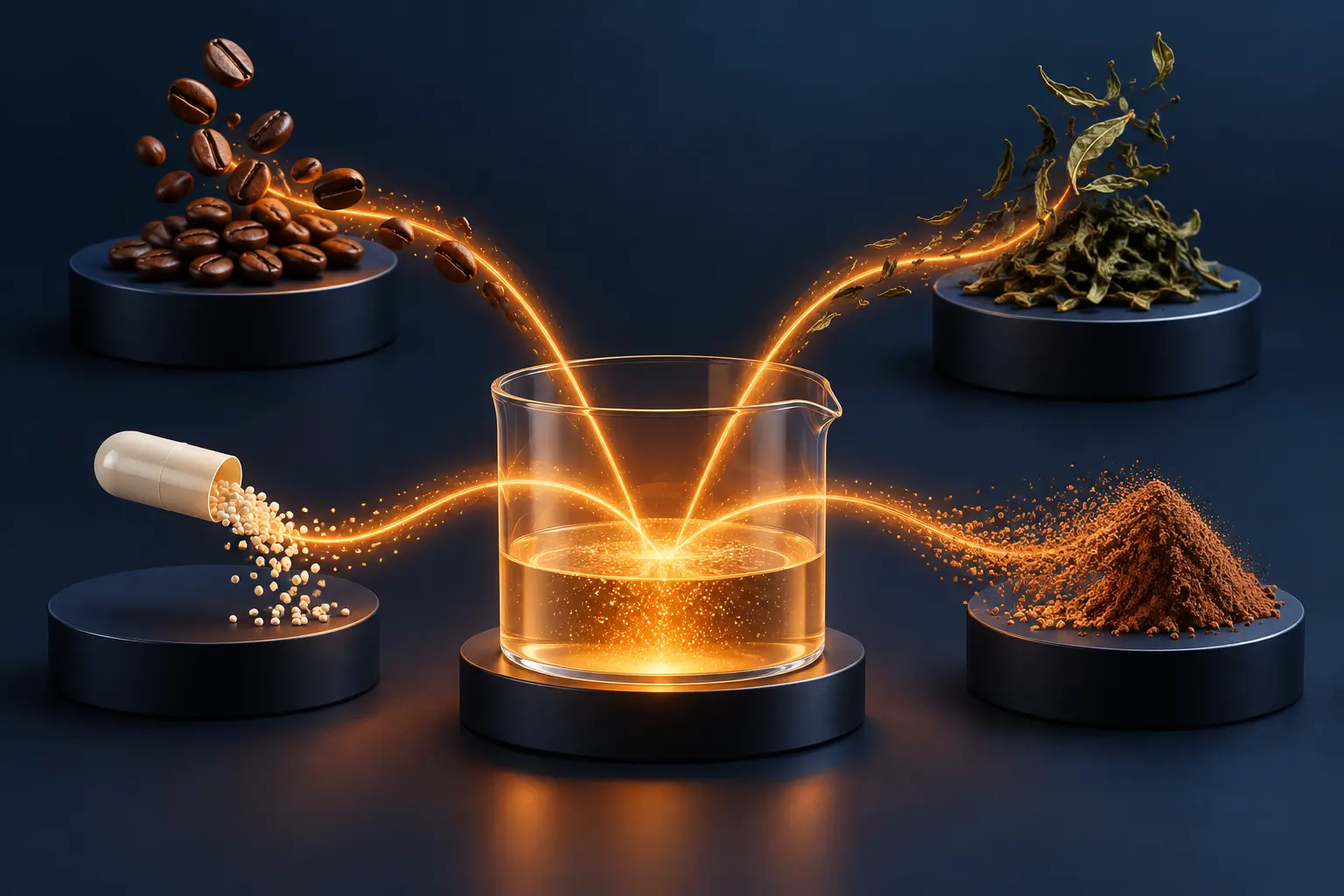
Worked example with five sources
Suppose a morning coffee label or reliable shop listing gives 145 mg. A fat burner lists 80 mg per capsule and two capsules are taken: 160 mg. A pre-workout half-serving supplies 100 mg. Green tea contributes 30 mg. A headache medicine lists 65 mg. The arithmetic is 145 + 160 + 100 + 30 + 65 = 500 mg.
The number is useful because it exposes the overlap; it is not a diagnosis of safety. Next record timing and the largest single dose. If the pre-workout and medicine were used close together, the short-window exposure deserves attention even if the daily total were lower. If the fat burner also lists guarana without disclosing caffeine, write “500 mg plus unknown guarana caffeine.”
Handle missing and variable values honestly
Coffee varies by bean, roast, brewing method, serving size, and retailer. Tea varies by plant material, amount, temperature, and steeping time. Use a manufacturer or retailer value for the exact product when available; otherwise use a credible range and calculate a range for the day.
A botanical amount cannot be counted as caffeine unless the caffeine fraction is disclosed. If 500 mg of guarana extract is standardized to 20% caffeine, the calculated contribution is 100 mg. If the percentage is absent, “500 mg guarana” is not “500 mg caffeine” and it is not zero. An opaque blend fails a complete exposure audit.
Add a second column for time
Daily total alone can hide why sleep or side effects changed. Record each dose time and intended bedtime. Caffeine half-life varies widely, so a calculator can illustrate persistence but cannot predict an individual blood level precisely. A simple experiment is more useful: keep the rest of the routine stable, move the last exposure earlier, and compare sleep onset, awakenings, duration, next-day fatigue, appetite, and training.
Do not use a nighttime supplement to cancel late caffeine. Remove or reduce the disturbance before adding another formula.
How this applies to Fat Burn Active
Add any disclosed caffeine from Fat Burn Active to the same ledger as coffee, tea, pre-workout, energy products, and medicines. If botanical caffeine or the maximum daily amount is unclear, the total remains incomplete.
Use the criteria on this page to assess Fat Burn Active rather than relying on a headline claim. Our formula evidence analysis explains the remaining uncertainty. If the product fits your needs, see the current price on the official website. We may earn a commission at no extra cost.
Frequently asked questions
Should I count only added caffeine?
No. The body does not exempt caffeine because it came from coffee, tea, or a plant extract.
Does 400 mg mean everyone can safely use that amount?
No. It is not an individual target or guarantee, and sensitivity varies.
What if a label does not disclose botanical caffeine?
Mark the total incomplete and ask the manufacturer; do not assume zero.
Sources
- FDA: Spilling the Beans on Caffeine
- Mayo Clinic: Caffeine Content for Coffee, Tea, Soda and More
- EFSA: Scientific Opinion on the Safety of Caffeine
- NIH ODS: Dietary Supplements for Weight Loss
Sources reviewed September 8, 2026. This article is general educational information, not medical advice, diagnosis, or treatment.