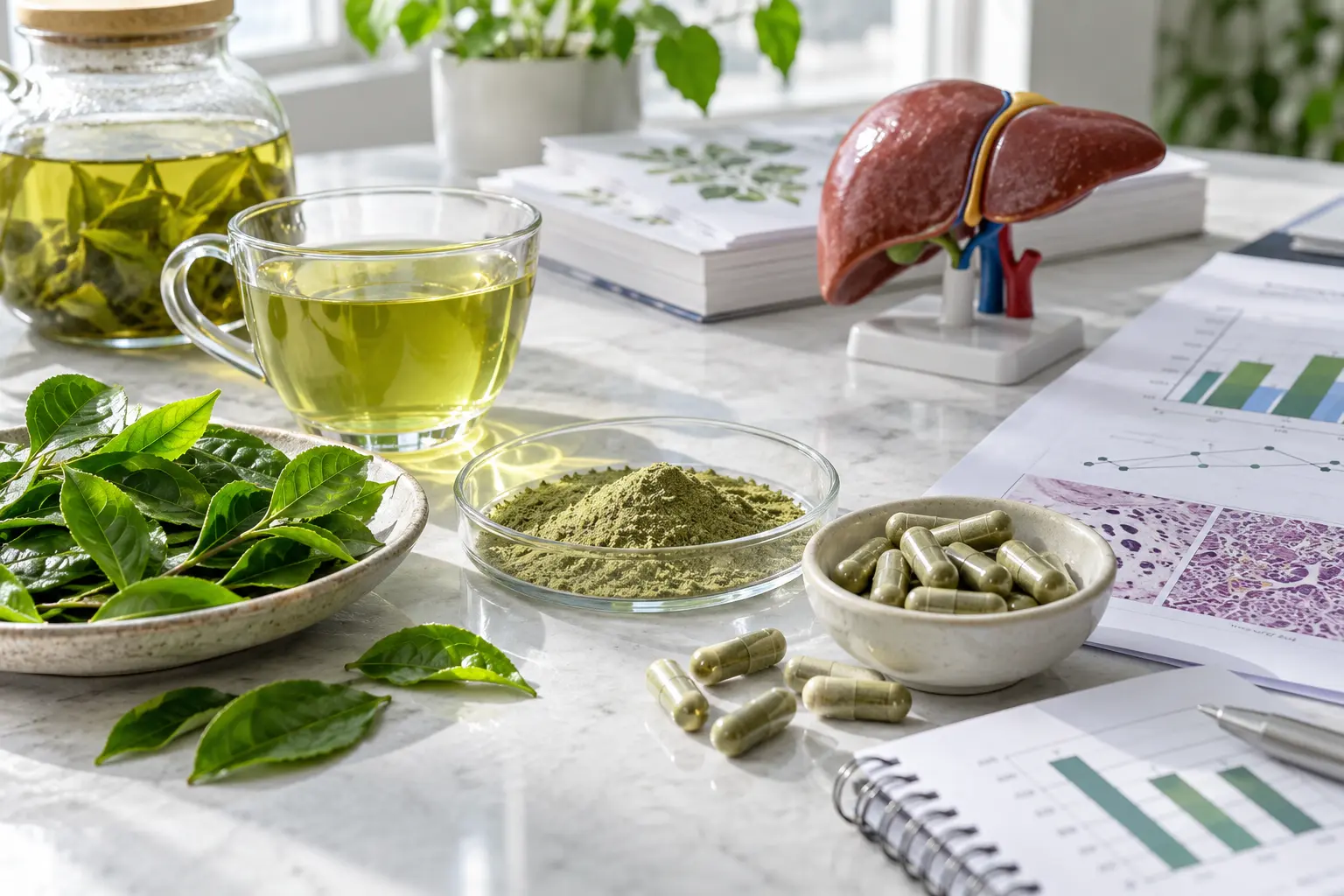
Brewed tea and extract are not interchangeable
Brewed green tea is a beverage with variable catechin and caffeine content. An extract concentrates selected compounds and can deliver a different exposure in a small serving. Labels may state extract milligrams, a catechin percentage, EGCG milligrams, caffeine, or only a plant name. Those descriptions do not answer the same question.
Record species, plant part, extraction details when available, extract mass, catechin or EGCG standardization, caffeine per serving, and maximum daily servings. A large extract number can still hide the amount of the compound used in research.
What weight research can support
Reviews of green-tea catechin and caffeine interventions have found modest, variable, or clinically uncertain average effects. Habitual caffeine use, ethnicity, formulation, diet, duration, and adherence may influence results. Acute changes in fat oxidation or expenditure are not the same as sustained fat-mass loss.
Ask whether the trial tested brewed tea, a defined extract, catechins with caffeine, catechins without caffeine, or a multi-ingredient blend. These are separate evidence objects. A statistically significant mean difference may still be too small to matter to an individual.
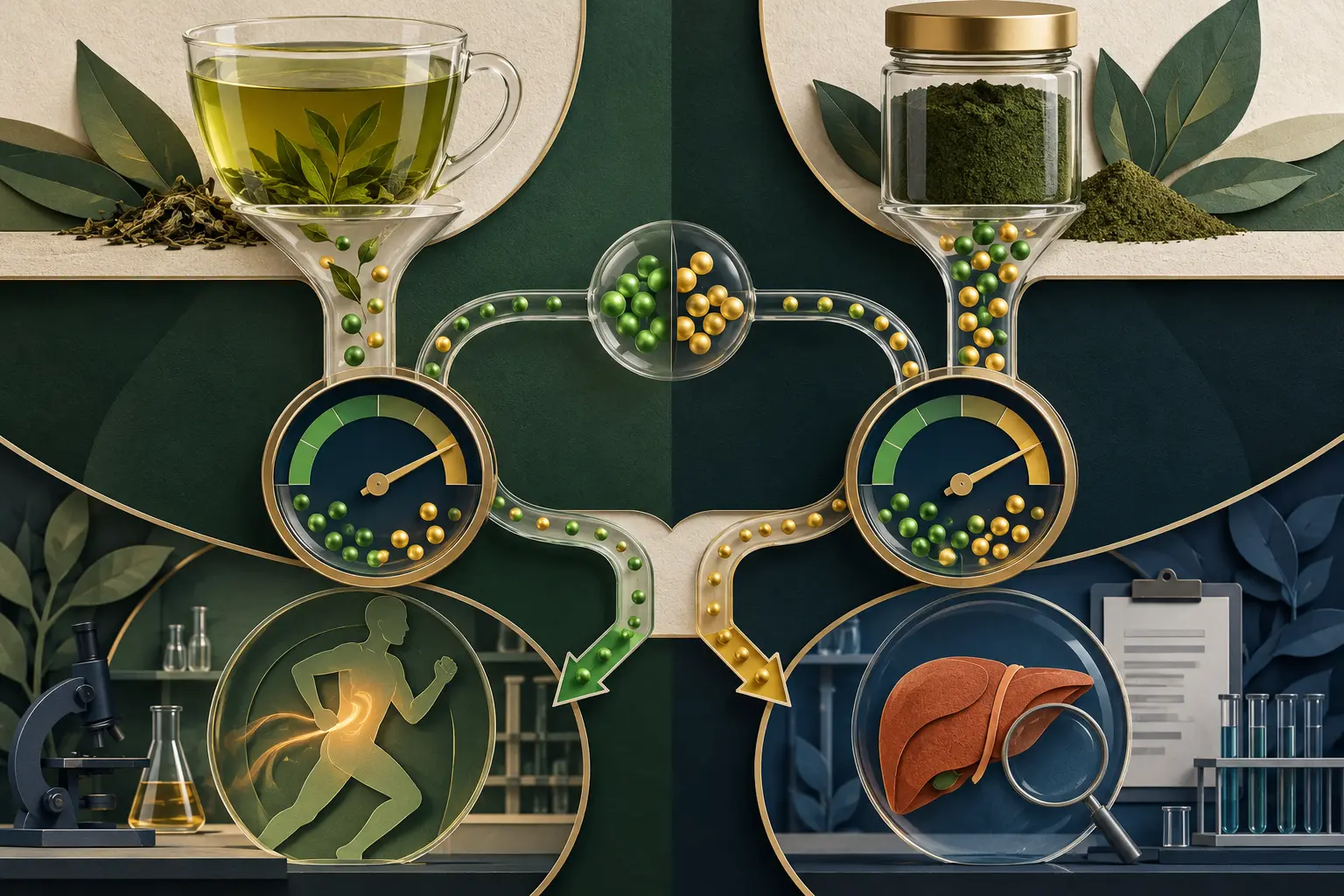
Concentration changes the safety question
Green tea as a beverage and concentrated extracts should not be treated as identical. Concentrated green tea extracts have been linked to liver injury in some people, and risk assessment considers dose and whether the product is taken with food. Product directions cannot replace evaluation of symptoms and medicines.
Stop and seek medical advice for jaundice, dark urine, unusual itching, severe abdominal pain, or persistent nausea. People with liver disease or medicines that affect the liver should obtain professional guidance before using concentrated extracts.
Example: a label that says only “green tea”
A thermogenic lists 500 mg green tea extract but gives no catechin, EGCG, or caffeine specification. A study used a standardized extract with defined exposures. The label cannot be matched simply because both say green tea.
The buyer asks for the missing specification and total caffeine. Without it, effectiveness and safety remain uncertain. Brewed tea may still be enjoyed as a beverage, but it should not be assigned the trial result or treated as a substitute for a prescribed treatment.
Where Fat Burn Active fits
Fat Burn Active includes green tea extract, but that ingredient's presence cannot validate the complete formula. The remaining total-caffeine and dose-matching gaps limit product-level conclusions.
Fat Burn Active is optional and is not required for fat loss. Its current information should be evaluated as one finished multi-ingredient formula: known amounts do not resolve every remaining exposure or evidence gap. Feeling warmer, stimulated, less hungry, or seeing a short-term water change does not demonstrate meaningful product-level fat loss.
Fat Burn Active is relevant here because its official listing identifies standardized plant extracts, caffeine sources, vitamins, and zinc in one formula. First read our independent review. If the formula, stimulant profile, evidence limits, and warnings fit your situation, check the current Fat Burn Active price on the official website. We may receive a commission at no additional cost.
Frequently asked questions
Is green tea extract the same as tea?
No. Extracts can concentrate compounds and create different dose and safety questions.
Does EGCG prove weight loss?
No. The exact dose, formulation, comparison, duration, and outcome determine what evidence supports.
Can green tea extract affect the liver?
Concentrated extracts have been associated with liver injury in some people.
Sources
- NIH ODS: Dietary Supplements for Weight Loss
- NCCIH: Green Tea
- EFSA: Safety of green tea catechins
- Cochrane review: Green tea for weight loss and maintenance
Sources reviewed September 13, 2026. This article is general educational information, not medical advice, diagnosis, or treatment.