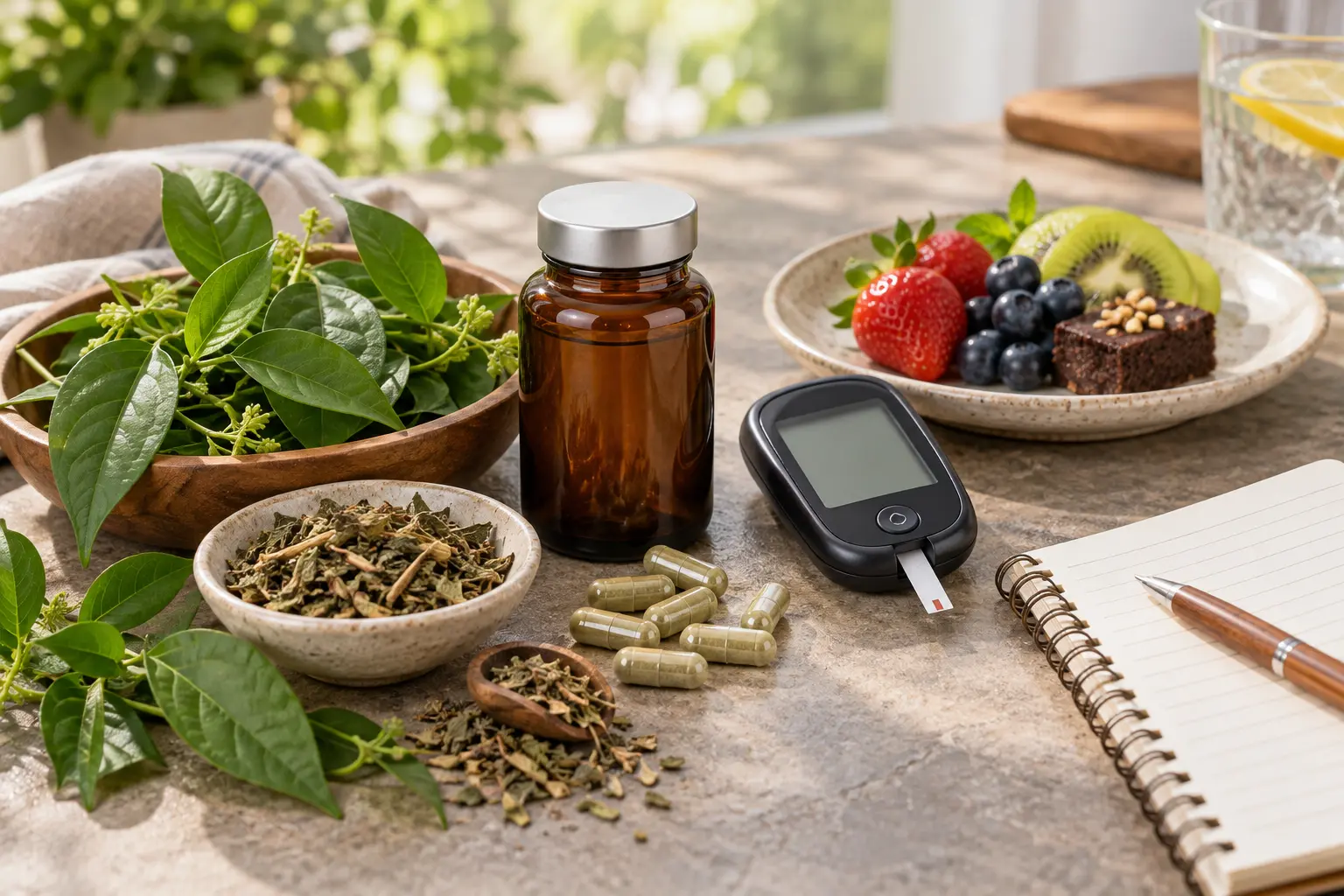
Taste suppression is local, temporary, and preparation-specific
Gymnemic acids from Gymnema leaves can interact with sweet-taste receptors when a suitable lozenge or liquid contacts the tongue. Sweet foods may taste less rewarding for a period, while other tastes are affected differently. A swallowed capsule that bypasses the mouth should not be assumed to reproduce a lozenge study.
Record whether the product is designed for oral contact or ingestion, the standardized gymnemic-acid amount, exposure time, and directions. Leaf powder, tea, extract capsules, and dissolving tablets are not interchangeable merely because they share the plant name.
Small experiments answer a narrow question
Controlled experiments have reported reduced selection or consumption of chocolate or other sweet foods after gymnemic-acid exposure. These designs can show an immediate taste-mediated effect. They do not establish that people compensate less at later meals, that cravings fall for months, or that body fat decreases.
Free-living studies are harder to interpret because food availability, expectations, dietary restraint, and self-report influence results. Look for adequate blinding, a credible placebo, total daily intake, adherence, adverse events, and independent replication. Do not convert a percentage change in one snack into a projected weight loss.
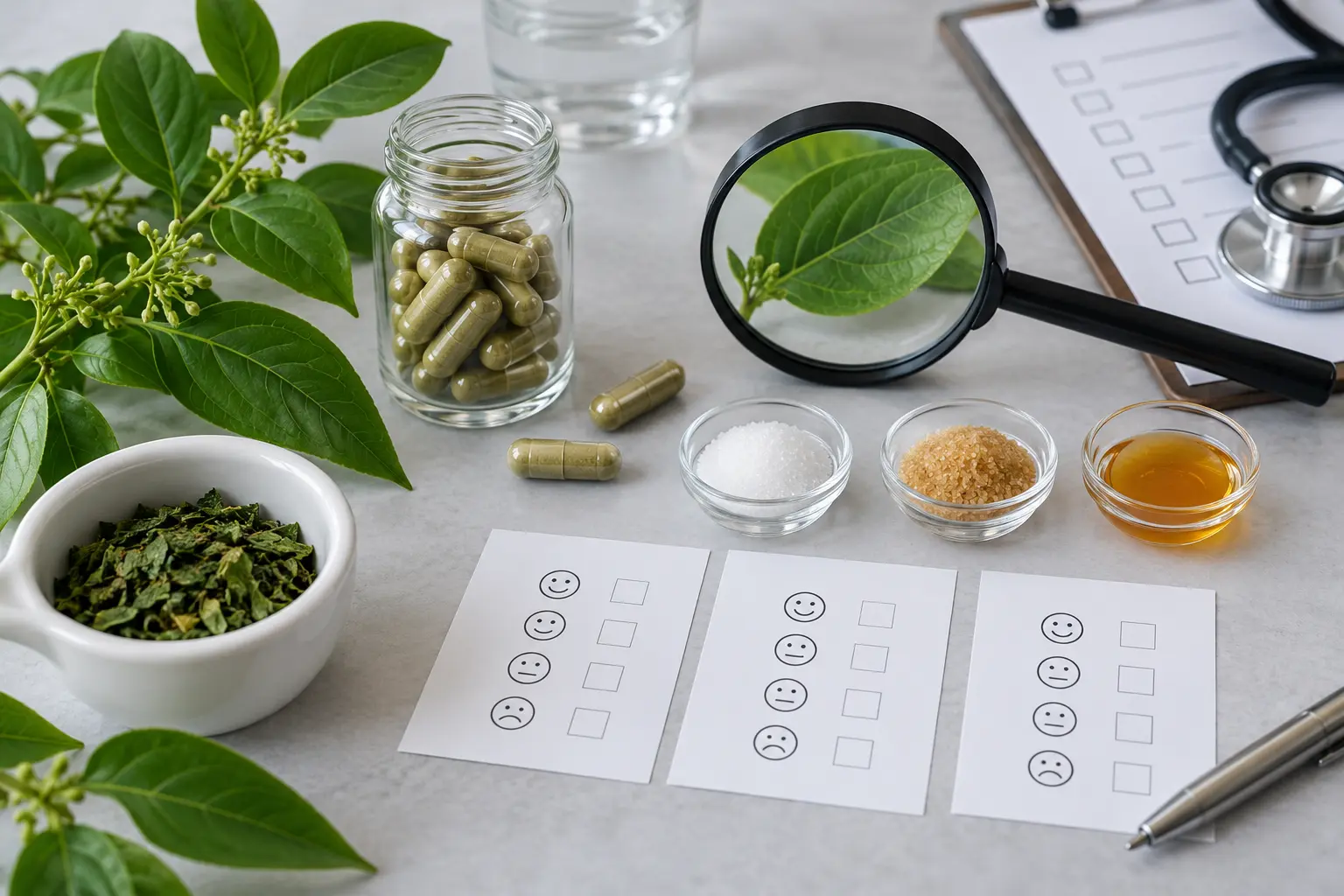
Gymnema is not a permission slip for sugar
Blunting sweetness does not remove carbohydrate or energy already eaten. Marketing language about “destroying sugar” can confuse taste, intestinal absorption, blood glucose, and fat loss—four different claims requiring different evidence.
If a less-sweet snack helps someone choose a smaller portion, the behavioral change may be useful. If the product is added while portions and total intake stay the same, there is no reason to assume a calorie deficit appears. Sugar also occurs within foods that differ in fiber, nutrients, and energy density, so a single “sugar” score oversimplifies diet quality.
Glucose-lowering claims increase the need for caution
Gymnema has been studied in glucose management, but evidence quality, preparations, and treatment contexts vary. A possible glucose effect is not automatically beneficial for someone using insulin or other glucose-lowering medicine; combined effects can make monitoring and dose management more complicated.
People with diabetes or recurrent low glucose symptoms should not start it without their treating clinician. Sweating, shaking, confusion, weakness, or unusual glucose readings require the existing clinical action plan and prompt review. A supplement should never replace prescribed treatment.
Use a trigger map before a taste modifier
For seven days, record when a craving occurs, hunger from zero to ten, sleep the previous night, the cue, and what was eaten. A craving after a small lunch needs a different solution from one triggered by seeing sweets, emotional distress, or a rigid rule forbidding dessert.
Test the simplest intervention first: a more substantial meal, a planned portion, removing visual cues, a pause routine, or better sleep timing. If a professionally reviewed Gymnema product is tested afterward, compare the number and size of sweet-food episodes plus total intake. The goal is a repeatable behavior, not making food taste unpleasant indefinitely.
Where Fat Burn Active fits
Gymnema evidence cannot be transferred to Fat Burn Active unless the current formula contains the same standardized material at a comparable daily exposure.
Fat Burn Active is optional and is not required for fat loss. Evidence for one fiber, botanical, or neurotransmitter pathway cannot establish that a finished multi-ingredient formula produces the same exposure or outcome. Read our independent Fat Burn Active review before deciding.
The official Fat Burn Active page lists a multi-ingredient thermogenic formula, but the buying decision should follow the evidence check above. Compare our independent review, then, if the product remains a reasonable fit, check the current price and label on the official site. We may receive a commission at no additional cost.
Sources
- Gymnemic acids and sweet-food consumption trial
- Gymnema sweet-taste review
- Gymnema pharmacology review
- NIH ODS: Dietary supplements for weight loss
- NCCIH: Diabetes and dietary supplements
- FDA: Dietary supplements overview
Sources reviewed September 16, 2026. This article is general educational information, not medical advice, diagnosis, or treatment.