
Map the trigger-to-eating loop
A useful chain has five parts: situation, body state, thought, action and short-term payoff. A difficult email may create shoulder tension and the thought “I cannot deal with this,” followed by a trip to the kitchen and ten minutes of relief. The food is not random; it is performing a job.
Write one recurring chain without judging it. Then choose the easiest point to modify. You might eat a planned afternoon snack before the high-risk meeting, close the laptop before dinner, move snack packages out of the workspace or call someone after a conflict.
Use a pause that does not forbid eating
A ten-minute pause creates choice, not punishment. Name the feeling, rate physical hunger, and choose one action that matches the need: breathe slowly, step outside, shower, stretch, send a message, make tea or plate a balanced snack. You may still eat afterward. Removing the ban reduces the urgency created by “I must not.”
If you are physically hungry, food is an appropriate response. Regular meals containing protein, fiber and adequate energy reduce the chance that emotional strain lands on top of biological deprivation.
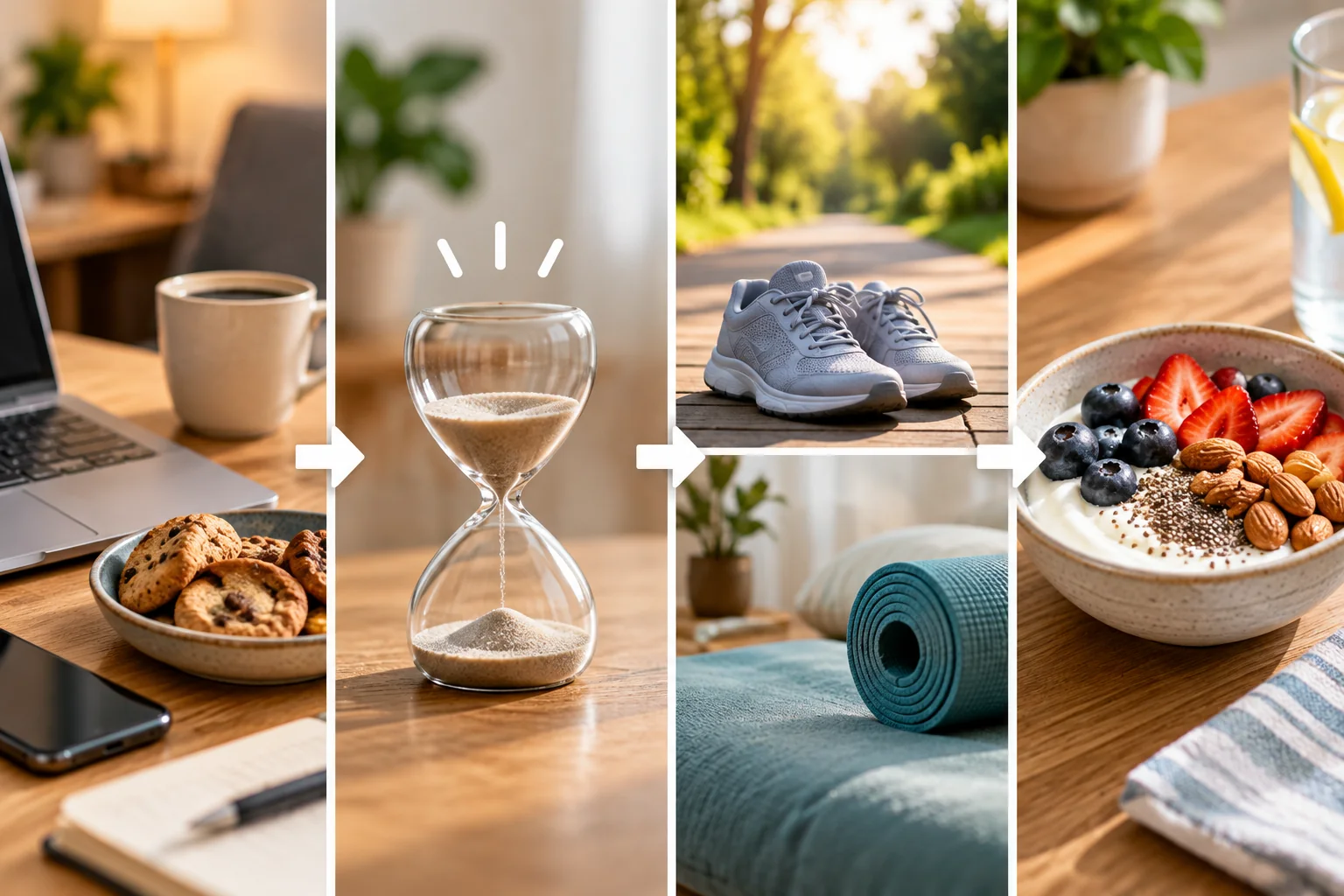
Change the environment before the stressful moment
- Identify the two places and times where automatic eating happens.
- Store trigger foods out of immediate sight rather than declaring them forbidden.
- Portion food onto a plate and sit down.
- Prepare one satisfying snack and one non-food coping option.
- Reduce work or screen cues during the eating occasion.
- Review what helped, without compensating the next day.
The aim is fewer automatic episodes and less distress, not flawless control.
Know when the pattern needs treatment
Stress eating is not the same as binge-eating disorder, but frequent large episodes with loss of control, marked distress, secrecy or compensatory behaviors warrant assessment. Therapy can address emotion regulation, beliefs, trauma, anxiety or depression; nutrition support can reduce the restrict–overeat cycle.
Do not respond to an episode by skipping meals or adding punishing exercise. That increases biological and emotional pressure for the next one.
How stress changes eating behavior
Stress may change eating through several routes at once: less time to prepare food, missed meals followed by intense hunger, greater attraction to convenient high-reward foods, distracted eating and using food for short-term relief. Some people eat less during acute stress and more later, so “stress always increases appetite” is too simple. Map the sequence—stressor, body sensations, thought, food availability, action and short-term payoff—then change the earliest workable link. This separates a behavior pattern from a character judgment.
Where a supplement fits
Stimulant supplements can increase anxiety and restlessness, which may make stress eating worse.
Stimulant-based appetite suppression is a poor match for emotional distress and can worsen anxiety or sleep in some people. Fat Burn Active is optional and cannot repair an eating environment, replace sleep or treat emotional eating. Its current official page lists at least 120 mg caffeine per serving from caffeine anhydrous and guarana, additional unquantified caffeine from green-tea extract, and bitter-orange extract standardized to 6 mg synephrine. Feeling more alert or less hungry for a short time is not proof of meaningful fat loss.
Treat Fat Burn Active as an optional addition, not a substitute for the steps in this guide. Review its listed ingredients and limitations in our product analysis. If the evidence, warnings, and cost fit your decision, check the current price and formula on the official site. We may earn a commission.
Frequently asked questions
Is stress eating a sign of weakness?
No. It is a common learned response to stress and can be changed with practice.
Should I keep comfort foods out of the house?
Reducing easy access helps many people, along with planned portions of foods you enjoy.
When should I get help?
If you often feel out of control, eat in secret or feel intense guilt, talk to a doctor or psychologist.
Sources
- Mayo Clinic: Emotional eating
- Johns Hopkins: Tips to manage stress eating
- NIMH: Eating disorders
- NIDDK: Binge eating disorder
Sources reviewed September 13, 2026. This article is general educational information, not medical advice, diagnosis, or treatment.