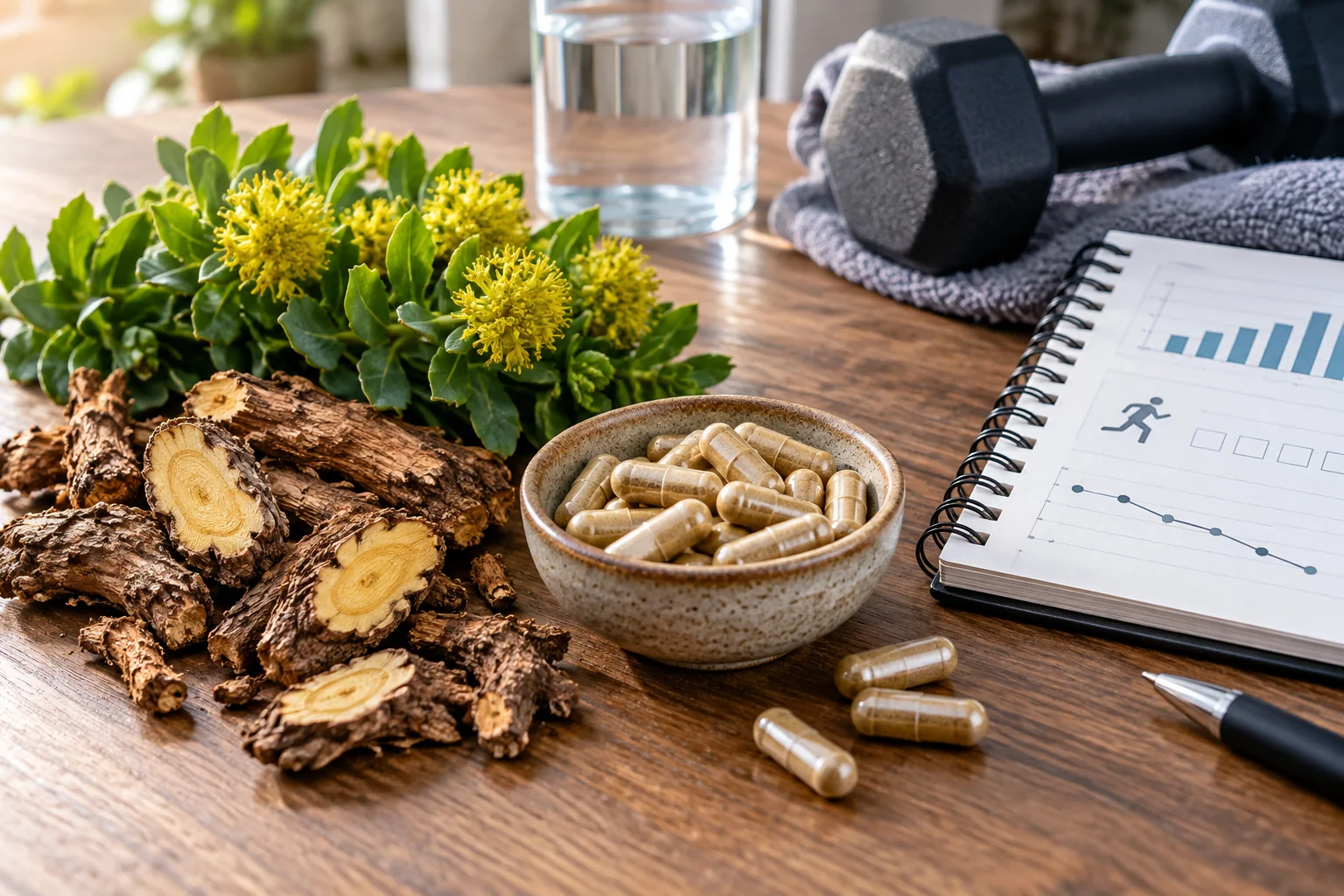
Can ashwagandha reduce stress eating?
Stress can influence appetite, cravings, sleep, and food choices, so a stress intervention could indirectly support some people. Ashwagandha trials report possible improvements in perceived stress or sleep, but the studies are often short and use different extracts. A calmer score does not prove fewer calories consumed or lasting fat loss.
Stress eating is also shaped by restriction, environment, trauma, medicines, schedule, and learned coping. One supplement cannot diagnose or solve all of these pathways.
Build the behavioral bridge explicitly
Track when eating episodes occur, physical hunger, emotion, location, available foods, and what happened beforehand. Use regular meals, protein and fiber, sleep protection, brief decompression routines, and easier access to planned snacks. These convert a stress insight into behavior.
If eating feels compulsive, secretive, distressing, or followed by compensation, seek qualified eating-disorder or mental-health support. Weight-loss pressure should not intensify harm.

Stress relief and weight loss are separate links
Ashwagandha is usually promoted for stress or sleep, while weight-management marketing adds another leap: less stress might mean fewer cravings, which might reduce intake, which might change weight. Each link needs its own evidence. A trial showing a questionnaire score improved does not establish that participants ate less or lost body fat. Look for the actual measured outcomes and whether a change versus placebo was large enough to matter in daily life.
Before buying, identify the eating pattern you want to address. Is it delayed meals followed by evening hunger, short sleep, predictable stress cues, or a persistent distressing relationship with food? The practical response differs. A more regular lunch or a sleep routine can be tested directly; an herb with uncertain downstream weight effects should not displace those steps. If stress eating is severe or linked with restriction and bingeing, professional support is more appropriate than a supplement experiment.
Ashwagandha products vary by plant part and extract standardization. Compare the exact extract and dose in a cited study with the current bottle, including combinations. Review warnings for pregnancy, thyroid or autoimmune conditions, liver concerns, and medicines with a qualified professional where relevant. “Natural” does not establish suitability. Keep any benefit claim narrow: possible stress-related outcomes in some research are not a finished-product fat-loss result.
If considering the product after these checks, define a stress or sleep outcome and a short review period, then monitor tolerability without changing several things at once. If the reason for use is specifically weight loss, ask for direct human weight evidence at a comparable dose; otherwise label the weight claim uncertain. Fat Burn Active is a different multi-ingredient thermogenic category and cannot inherit an ashwagandha result.
Keep the ingredient question separate from the behavioral question. A person who skips lunch and overeats at night can first test a reliable afternoon meal; someone whose sleep is disrupted may need a different response. When a study reports lower perceived stress, inspect whether eating episodes were even counted. An unmeasured link cannot be promoted as an established weight-loss pathway. If the product includes other sedating or stimulating compounds, evaluate the complete label rather than attributing a change to ashwagandha alone.
Where Fat Burn Active fits
Fat Burn Active is marketed as a multi-ingredient thermogenic with listed botanical extracts and caffeine sources. Research on this page’s single ingredient cannot prove that finished formula, particularly when the ingredient is absent or supplied in a different form. Likewise, thermogenic evidence cannot validate a separate adaptogen or seaweed product.
If comparing categories, decide whether you want a stimulant-based formula, a non-stimulant single ingredient, or no supplement. Then review total caffeine, exact doses, medicines, sleep, and finished-product evidence.
Frequently asked questions
Does lower cortisol guarantee weight loss?
No. A biomarker change does not determine food intake or body weight by itself.
Can ashwagandha make you sleepy?
Some people report drowsiness; timing and medicine interactions require care.
Is it safe with thyroid medicine?
Thyroid effects and interactions are a reason for clinician review.
Can it replace therapy?
No. Persistent stress or disordered eating deserves appropriate professional care.
Sources
- NIH ODS: Ashwagandha Fact Sheet
- NCCIH: Ashwagandha
- PubMed: Ashwagandha Stress Trial
- NIMH: Eating Disorders
- FDA: Dietary Supplement Questions and Answers
Sources reviewed September 18, 2026. Educational information only.