The name creates the first misunderstanding
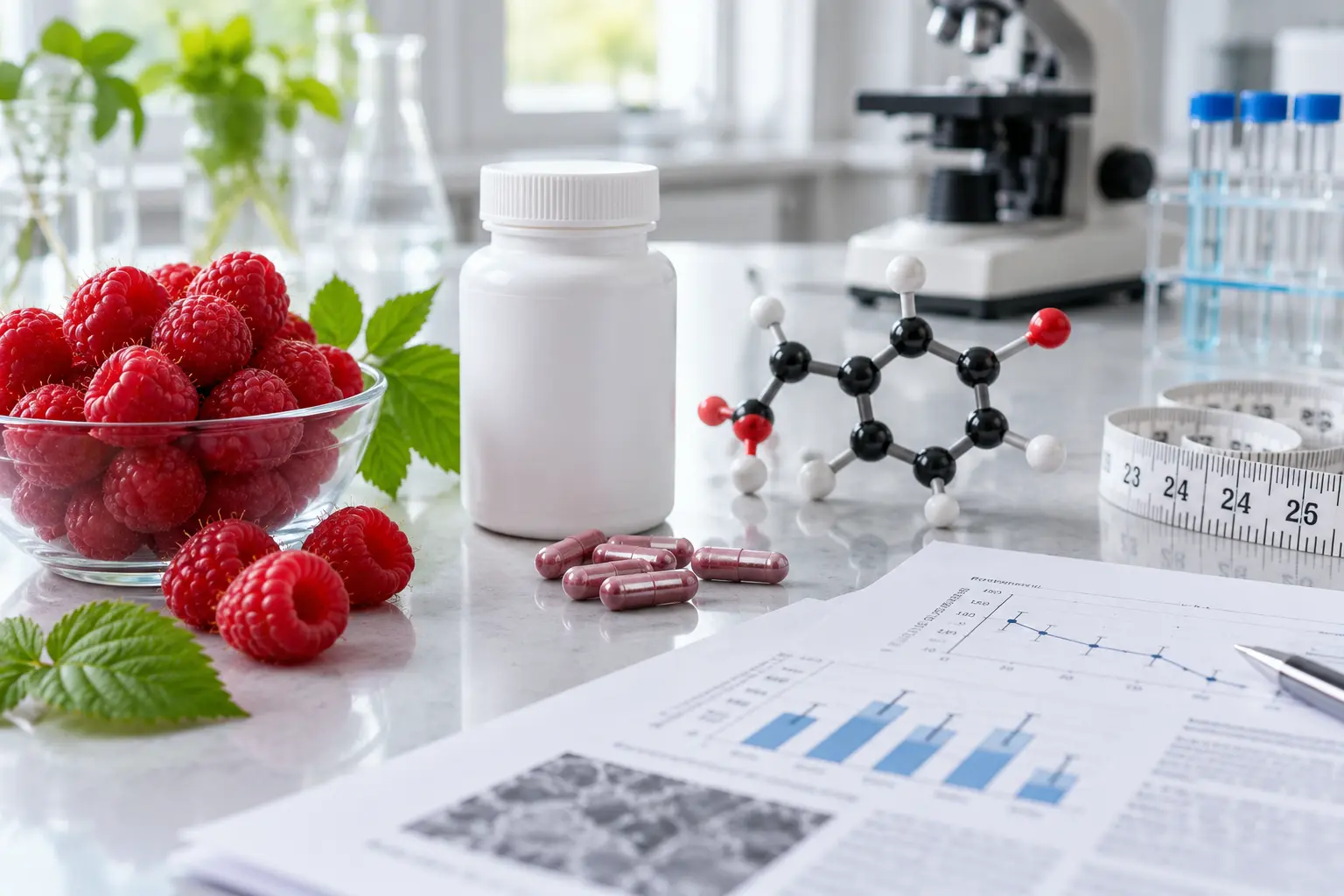
Raspberry ketone is an aroma compound, 4-(4-hydroxyphenyl)butan-2-one, found naturally in raspberries in small amounts and also manufactured for flavoring and supplements. It is not a ketone body produced during fasting or a ketogenic diet. Taking it does not place someone in ketosis.
Supplement exposure can be far above food-flavor exposure, so culinary familiarity cannot establish concentrated-dose safety. A raspberry fruit also provides water, fiber, micronutrients, and polyphenols; it is not a dose substitute for an isolated capsule.
What the research actually measures
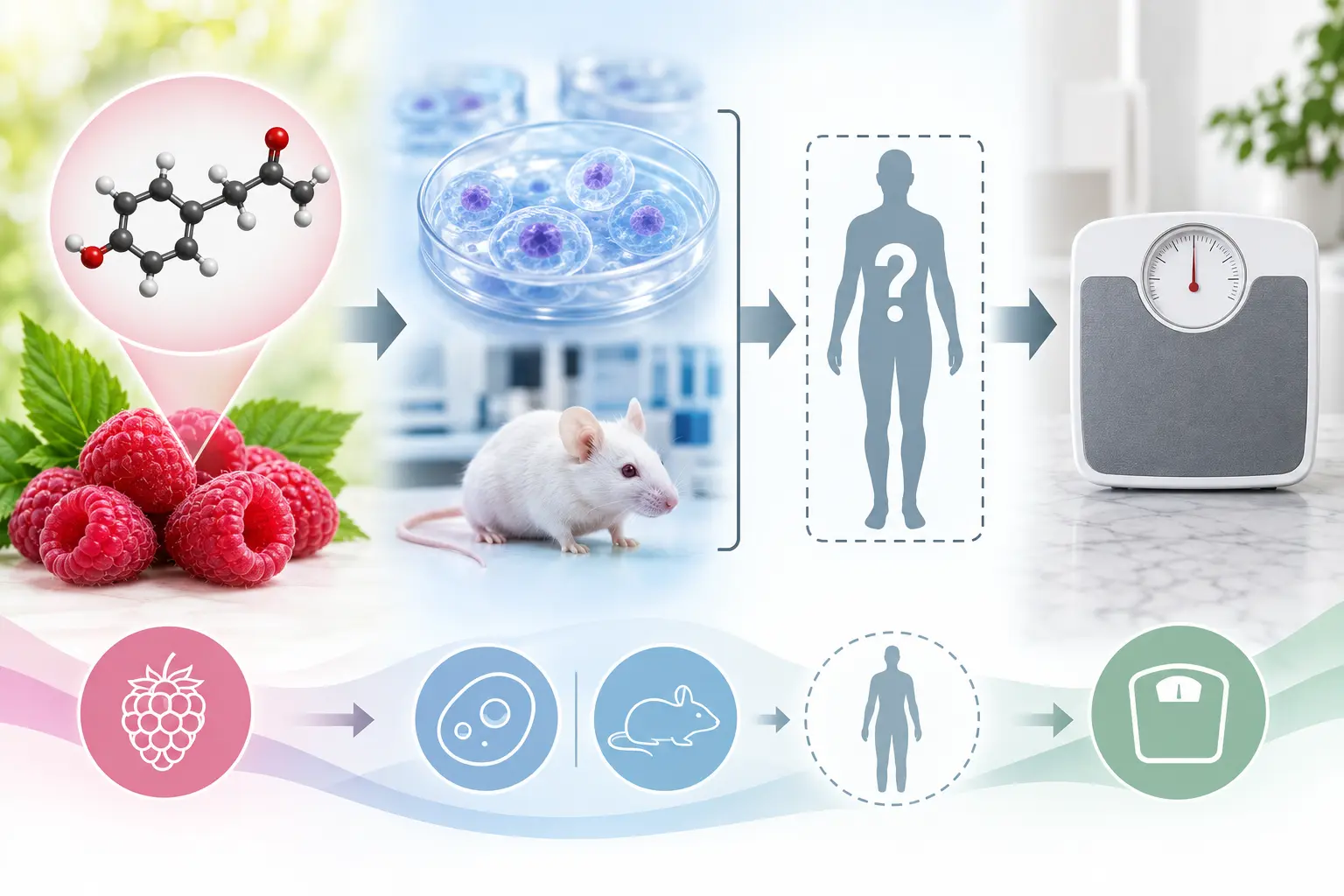
Cell and rodent studies explore adiponectin, fat accumulation, lipolysis, or weight gain under controlled conditions. These findings are hypotheses for human research. Species, dose per kilogram, route, diet, and metabolism prevent direct conversion into a human weight-loss promise.
The limited human publication commonly cited used raspberry ketone inside a combination containing stimulants and other ingredients while participants followed calorie restriction and exercise. Even if the combination group changed, the design cannot isolate raspberry ketone.
The honest buying conclusion
Do not infer effectiveness from “natural,” celebrity attention, before-and-after images, or a dose copied from animals. Require randomized trials of the isolated ingredient reporting weight, waist, fat mass, adverse events, and clinically relevant duration. Until those exist, the reasonable expected contribution is unknown.
Safety data at high supplemental exposure are also limited. Check every co-ingredient, especially caffeine or synephrine, because a reaction to a blend may have little to do with raspberry ketone.
Why animal doses do not translate
The rodent studies that started the raspberry ketone trend used doses that would correspond to many grams a day for an adult, far above amounts in typical capsules. Even if those effects occurred in people, a 100–500 mg capsule could not reproduce the same exposure. This gap between animal dose and product dose is a common reason ingredient claims fail in practice.
What to do instead
If you are tempted by a raspberry ketone product, compare its cost with options that have stronger evidence, such as meal changes that increase protein and fiber, regular activity, or a discussion with a doctor about medical treatment if you meet the criteria.
Where a supplement fits
Raspberry ketone is not identified in Fat Burn Active, and research on it cannot be transferred to the product.
Raspberry ketone is not identified in the currently available Fat Burn Active information. Research on it cannot be transferred to the product.
The official Fat Burn Active page lists a multi-ingredient thermogenic formula, but the buying decision should follow the evidence check above. Compare our independent review, then, if the product remains a reasonable fit, check the current price and label on the official site. We may receive a commission at no additional cost.
Frequently asked questions
Are raspberry ketones related to ketosis?
No. The name describes chemical structure, not nutritional ketosis.
Do raspberries provide a supplement dose?
No. Fruit and concentrated isolated compounds are different exposures.
Is raspberry ketone clinically proven?
No robust isolated-ingredient human evidence establishes meaningful weight loss.
Sources
- NIH ODS: Dietary Supplements for Weight Loss
- Raspberry ketone human multi-ingredient trial
- Raspberry ketone safety review
- US eCFR: Natural flavoring substances
Sources reviewed September 14, 2026. This article is general educational information, not medical advice, diagnosis, or treatment.