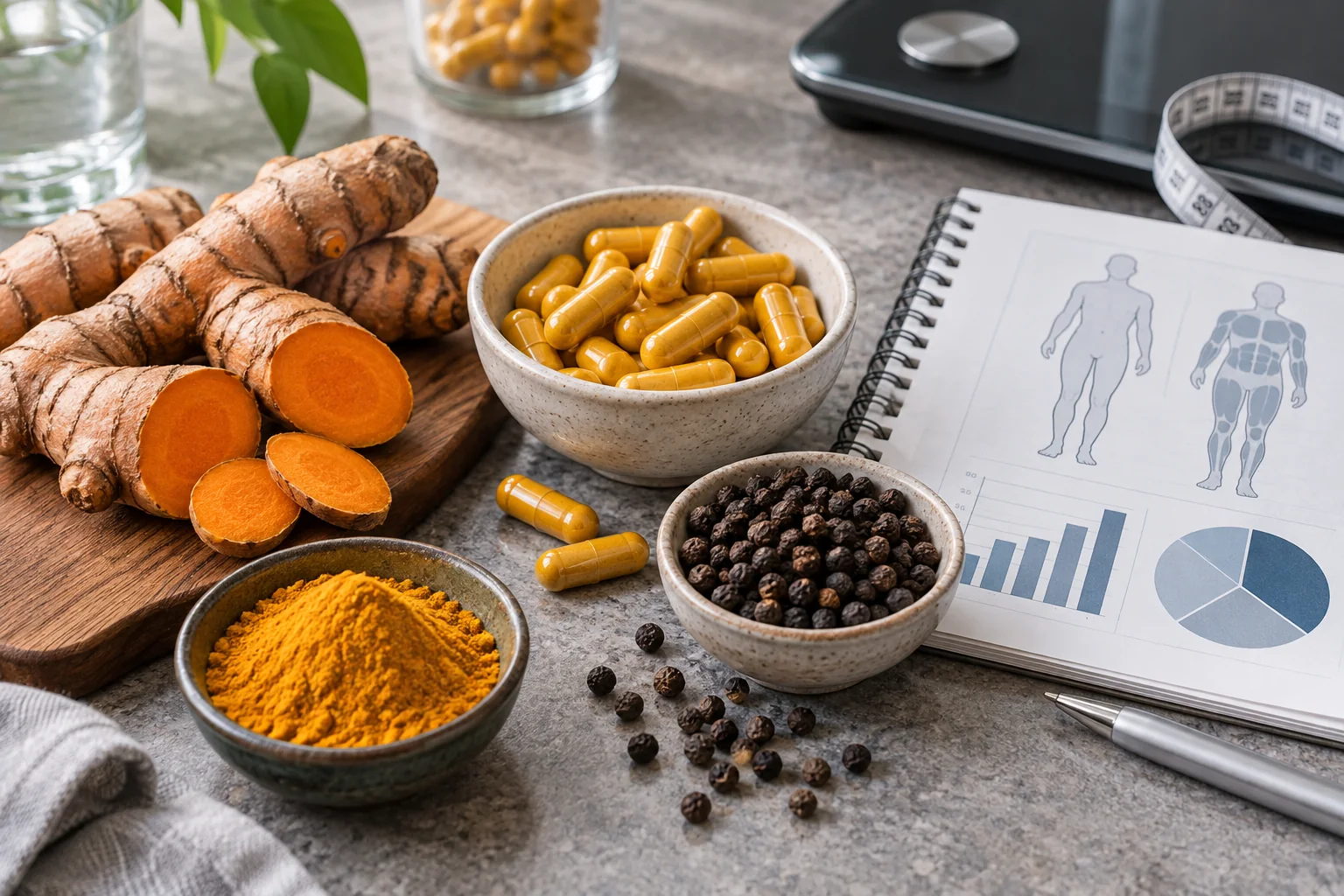
Can curcumin help with weight loss?
Systematic reviews have reported modest average changes in weight, BMI, or waist in selected trials, often among people with metabolic conditions. Heterogeneity and publication bias can limit confidence. Anti-inflammatory mechanisms do not automatically produce clinically meaningful fat loss.
Turmeric food, curcumin extract, phospholipid complexes, nanoparticles, and formulas containing piperine produce different exposure. A positive study must match the commercial form before supporting its claim.
Bioavailability is not the same as effectiveness
Curcumin is poorly absorbed in many conventional preparations. Sellers use piperine or specialized delivery systems to increase exposure, but higher absorption can also change interaction questions. Piperine may affect drug metabolism, and concentrated products differ from turmeric used in meals.
Ask whether the finished formulation—not merely generic curcumin—was tested for the claimed outcome. Increased blood levels do not themselves prove greater weight loss.
Doses used in trials
Weight-related trials have commonly used curcumin preparations providing roughly 500 mg to 1,500 mg a day for 8–12 weeks, often in people with metabolic syndrome, fatty liver or type 2 diabetes. Results from one formulation cannot be assumed for another, because absorption differs widely between plain turmeric powder, standardized extracts and enhanced formulations.
Safety and interactions
Curcumin is usually well tolerated at studied doses, but it can cause stomach upset. Cases of liver injury have been reported with turmeric and curcumin supplements, particularly high-absorption products, some containing piperine. It may interact with blood thinners and some diabetes medicines, and people with gallstones should ask a doctor first.

Practical decision checkpoint
When considering curcumin, separate a general interest in the ingredient from a promise of fat loss. Record the exact formulation, amount, and study duration from any cited trial before comparing it with a retail capsule. Check the rest of the label for additional ingredients and interactions; a “natural” description does not replace that review. If the goal is a sustainable weight trend, decide first which food, activity, or sleep behavior is being tested and how progress will be measured. A supplement should not stand in for that plan.
Where a supplement fits
Curcumin is not part of Fat Burn Active. Research on curcumin does not apply to the product.
Frequently asked questions
Is turmeric the same as curcumin?
Turmeric contains curcuminoids, while supplements may provide concentrated standardized extracts.
Does piperine make it a better fat burner?
It can increase exposure but does not by itself prove greater weight loss and may affect interactions.
Can curcumin replace anti-obesity treatment?
No. It should not replace evidence-based clinical care.
Who should ask a clinician first?
People with medicines, gallbladder issues, bleeding concerns, pregnancy, liver disease, or planned surgery.
Sources
- NCCIH: Turmeric
- PubMed: Curcumin and Anthropometric Measures Meta-analysis
- NIH ODS: Weight-Loss Supplements
- FDA: Dietary Supplement Questions and Answers
- NCCIH: Using Dietary Supplements Wisely
Sources reviewed September 18, 2026. Educational information only.