Four questions one number can answer
Milligrams alone do not solve form, bioavailability, quality, or individual response. They make those next questions possible.
Dose is more than the number beside a name
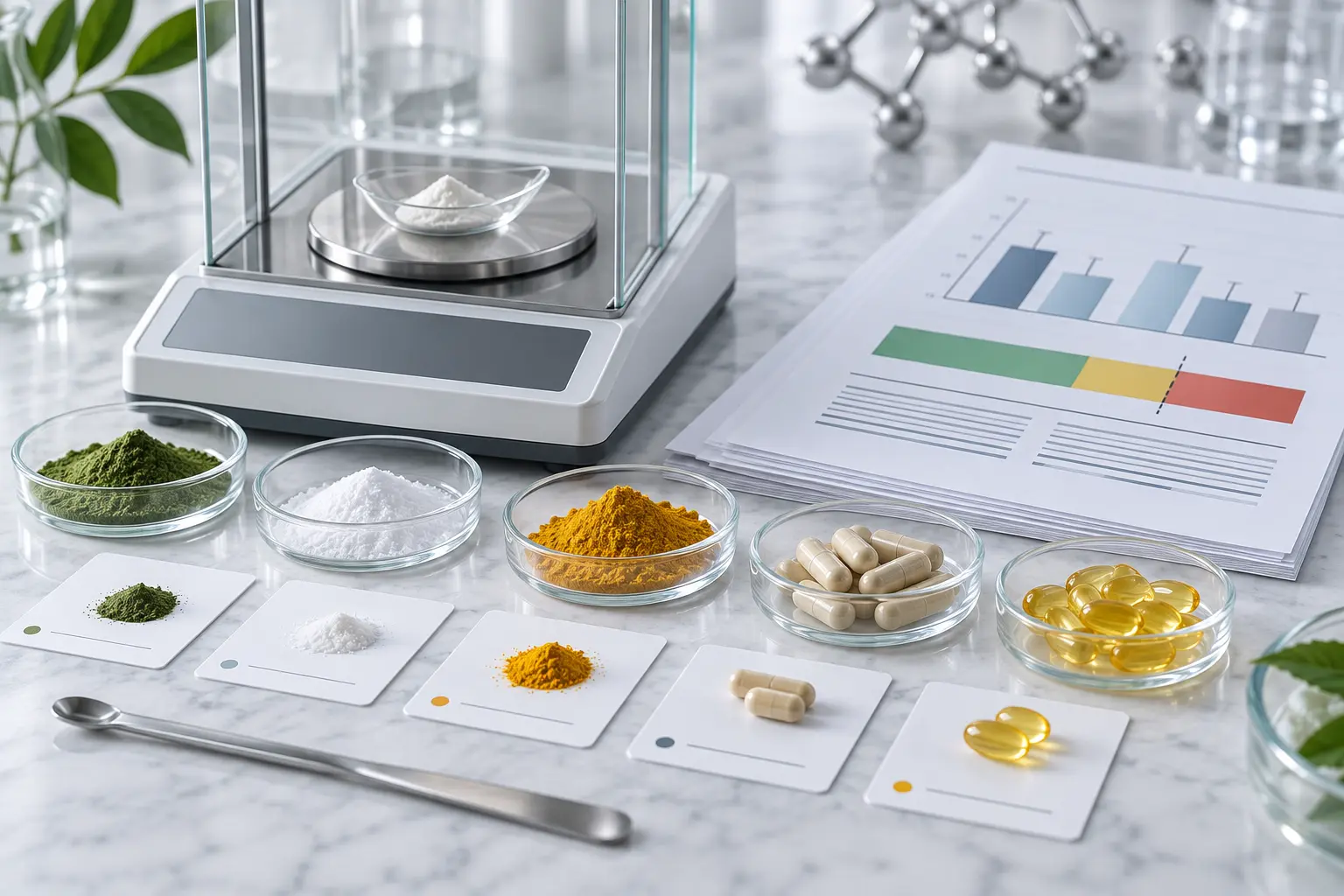
Record the chemical or botanical form, ingredient mass, active percentage, serving count, and maximum day. “Magnesium 200 mg” may refer to elemental magnesium, while a botanical may state extract mass and a constituent percentage. A salt, carrier, plant part, or extraction method can change what a mass represents.
A 100 mg line is not automatically weaker than a 500 mg line when the ingredients or preparations differ. Compare like with like and calculate the active yield only when the label supplies the necessary inputs.
Study matching fails when the dose is hidden
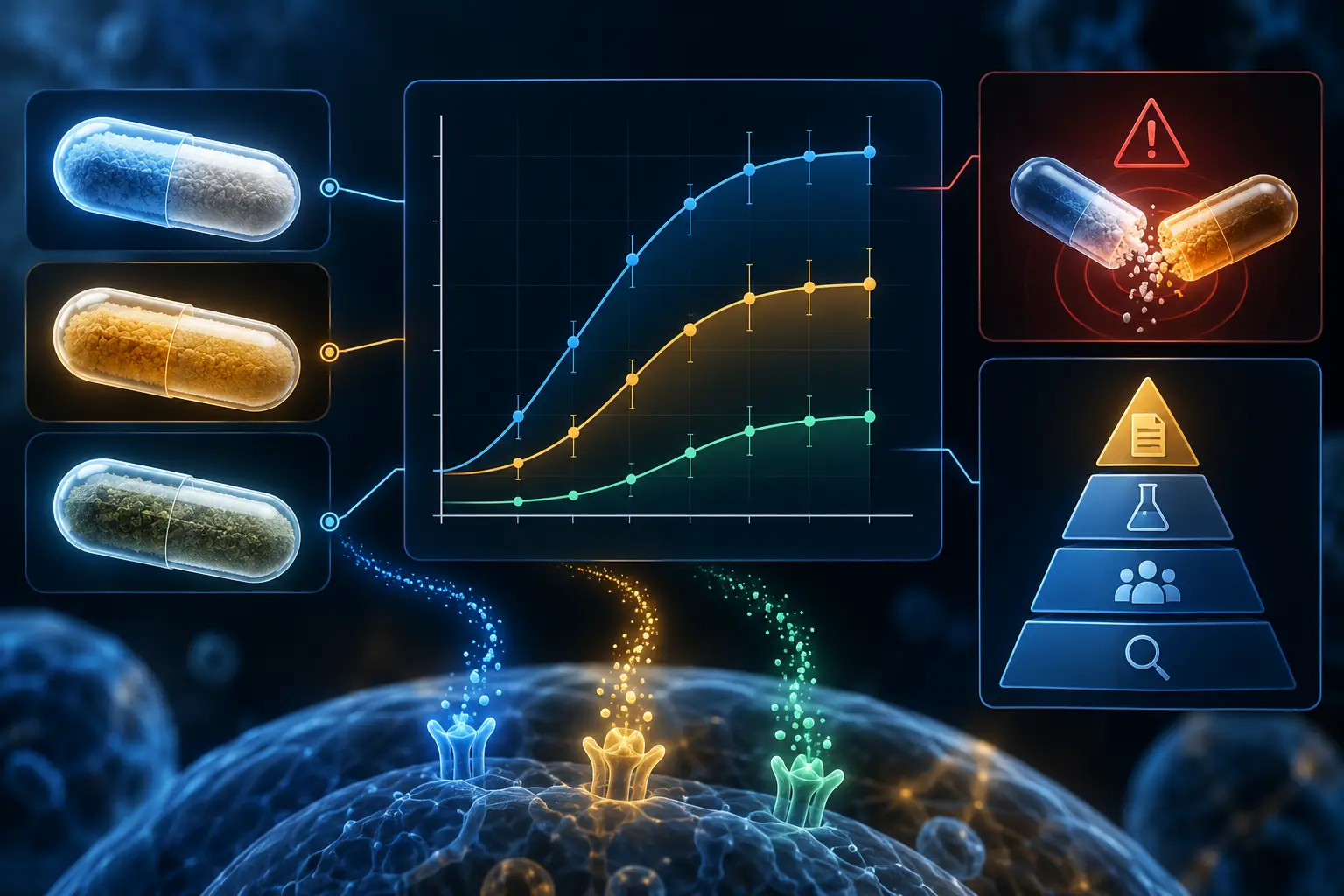
If a trial used 300 mg daily of an extract standardized to 50% of a constituent, its exposure was 150 mg of that constituent. A bottle listing the plant name without extract milligrams cannot be matched. Citing the study beside that bottle creates the appearance of proof without establishing equivalence.
The same problem affects finished formulas. Ingredient studies can explain plausibility, but only a trial of the complete sold formulation can directly support a product outcome.
Why “effective dose” is not one universal threshold
Search results often present a single effective dose. Real trials use ranges, different populations, outcomes, schedules, and durations. The lowest amount producing one laboratory change is not necessarily a weight-loss dose, and a higher amount is not automatically better.
Use the study's form and outcome, examine uncertainty and adverse events, then consider individual conditions and medicines. Never extrapolate above studied exposure to chase a stronger sensation.
Proprietary blends and hidden amounts
Labels with proprietary blends show only the total blend weight, so the amount of each ingredient is unknown. Two products with the same ingredient list can therefore differ tenfold in the dose that matters. This also prevents you from checking stimulant totals or comparing products fairly.
Standardization percentages
Many botanical extracts are labeled with a standardization, such as "green tea extract, 50% EGCG". Multiply the extract weight by the percentage to find the active compound: 400 mg at 50% provides about 200 mg of EGCG. Without a stated percentage, the extract weight alone says little about the active content.
How this applies to Fat Burn Active
The public Fat Burn Active page identifies multiple ingredients and some standardizations, but without each ingredient's mass those percentages cannot be converted into active-compound doses.
Fat Burn Active is relevant here because its official listing identifies standardized plant extracts, caffeine sources, vitamins, and zinc in one formula. First read our independent review. If the formula, stimulant profile, evidence limits, and warnings fit your situation, check the current Fat Burn Active price on the official website. We may receive a commission at no additional cost.
Frequently asked questions
Does an exact amount prove the ingredient works?
No. It enables evidence matching; it does not create favorable evidence.
Is a larger milligram number better?
No. Forms, potency, outcomes, and safety differ.
Can a clinically studied ingredient validate a blend?
Only if the form and dose match—and it still does not prove the finished formula.
Sources
- FDA Dietary Supplement Labeling Guide
- 21 CFR 101.36: Supplement Facts
- NIH ODS: Weight-Loss Supplements
- NIH Dietary Supplement Label Database
Sources reviewed September 8, 2026. This article is general educational information, not medical advice, diagnosis, or treatment.