Separate four different claims
Calculate and interpret percentage loss
Percentage weight loss equals starting weight minus current weight, divided by starting weight, multiplied by 100. A person moving from 100 kg to 95 kg has lost 5% of starting weight. The calculation does not reveal body composition or guarantee the same health effect for everyone.
In a trial, also inspect the difference between groups. If the treatment group loses 5% and placebo loses 4%, the treatment-attributable difference is about one percentage point, not five. Check confidence intervals, dropout, adverse events, adherence, and follow-up.

Why 5% is the usual benchmark
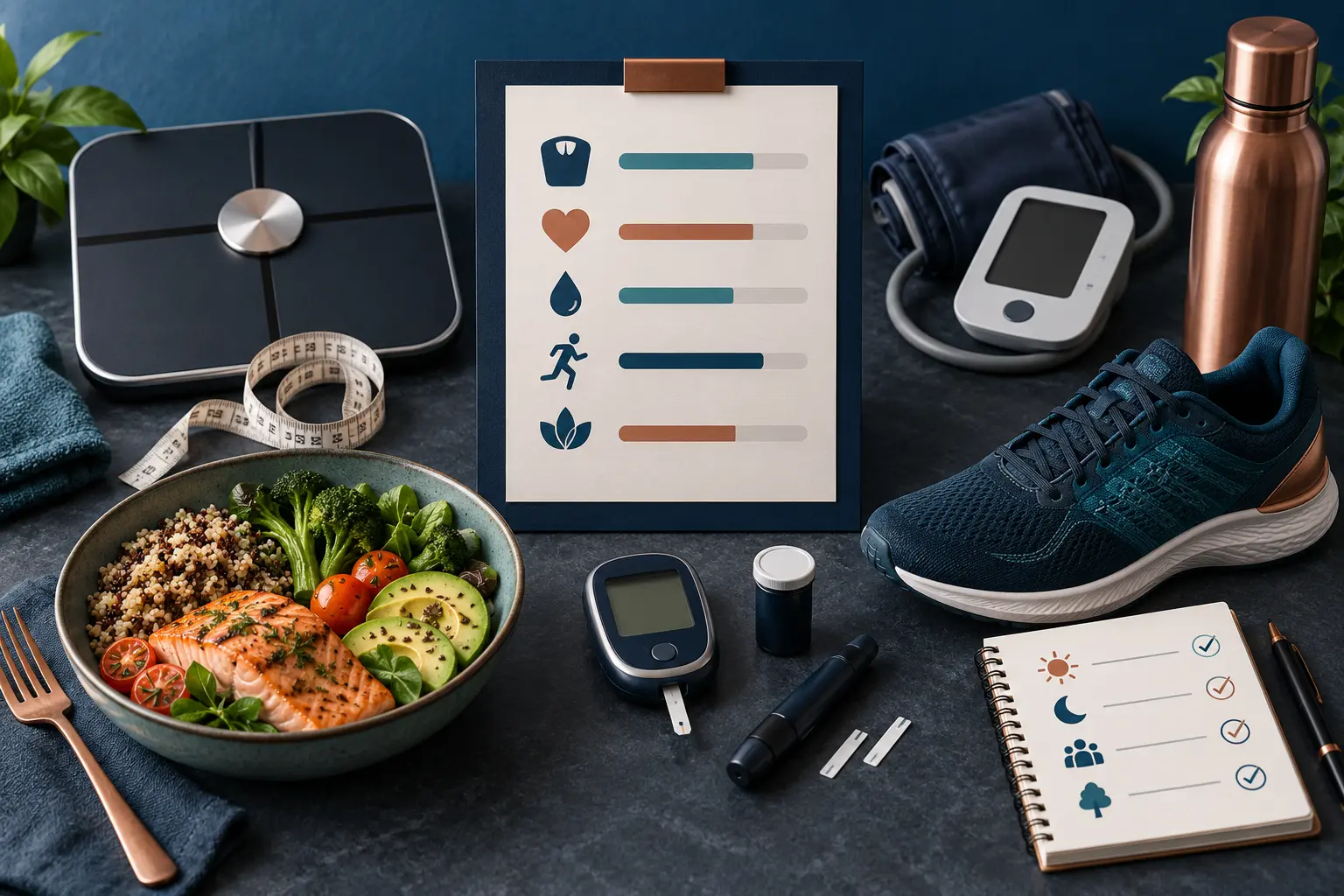
Losing around 5% of starting body weight is linked with measurable improvements in blood pressure, blood sugar and triglycerides in many people with overweight or obesity. In the Diabetes Prevention Program, participants who aimed for 7% weight loss with activity reduced their risk of developing type 2 diabetes by more than half over about three years. Larger losses of 10–15% bring further benefits, such as improvements in sleep apnea and fatty liver.
How regulators judge weight-loss medicines
US draft guidance for weight-management drugs has used two benchmarks at one year: an average weight loss at least 5% greater than placebo, or a significantly larger share of participants losing at least 5% compared with placebo. Most supplement trials are far shorter, smaller and less rigorous, and few report results in a way that can be compared with these thresholds.
Where a supplement fits
No trial of Fat Burn Active has reported weight loss, so it cannot be judged against a clinically meaningful threshold.
Use the criteria on this page to assess Fat Burn Active rather than relying on a headline claim. Our formula evidence analysis explains the remaining uncertainty. If the product fits your needs, see the current price on the official website. We may earn a commission at no extra cost.
Frequently asked questions
Is 5% always the goal?
No. It is a common benchmark; personal goals depend on health, treatment, safety, and preferences.
Does statistical significance mean useful?
No. Effect size, uncertainty, duration, harms, cost, and relevant outcomes determine usefulness.
Should supplements meet drug-trial standards?
Claims still need product-matched human evidence; ingredient mechanisms cannot establish the finished product's meaningful effect.
Sources
- CDC: Steps for Losing Weight
- NIDDK: Choosing a Safe and Successful Weight-loss Program
- FDA guidance on developing products for weight management
- Benefits of modest weight loss in Look AHEAD
- NHLBI Managing Overweight and Obesity in Adults
- CONSORT harms reporting extension
Sources reviewed September 17, 2026. This article is general educational information, not medical advice, diagnosis, or treatment.