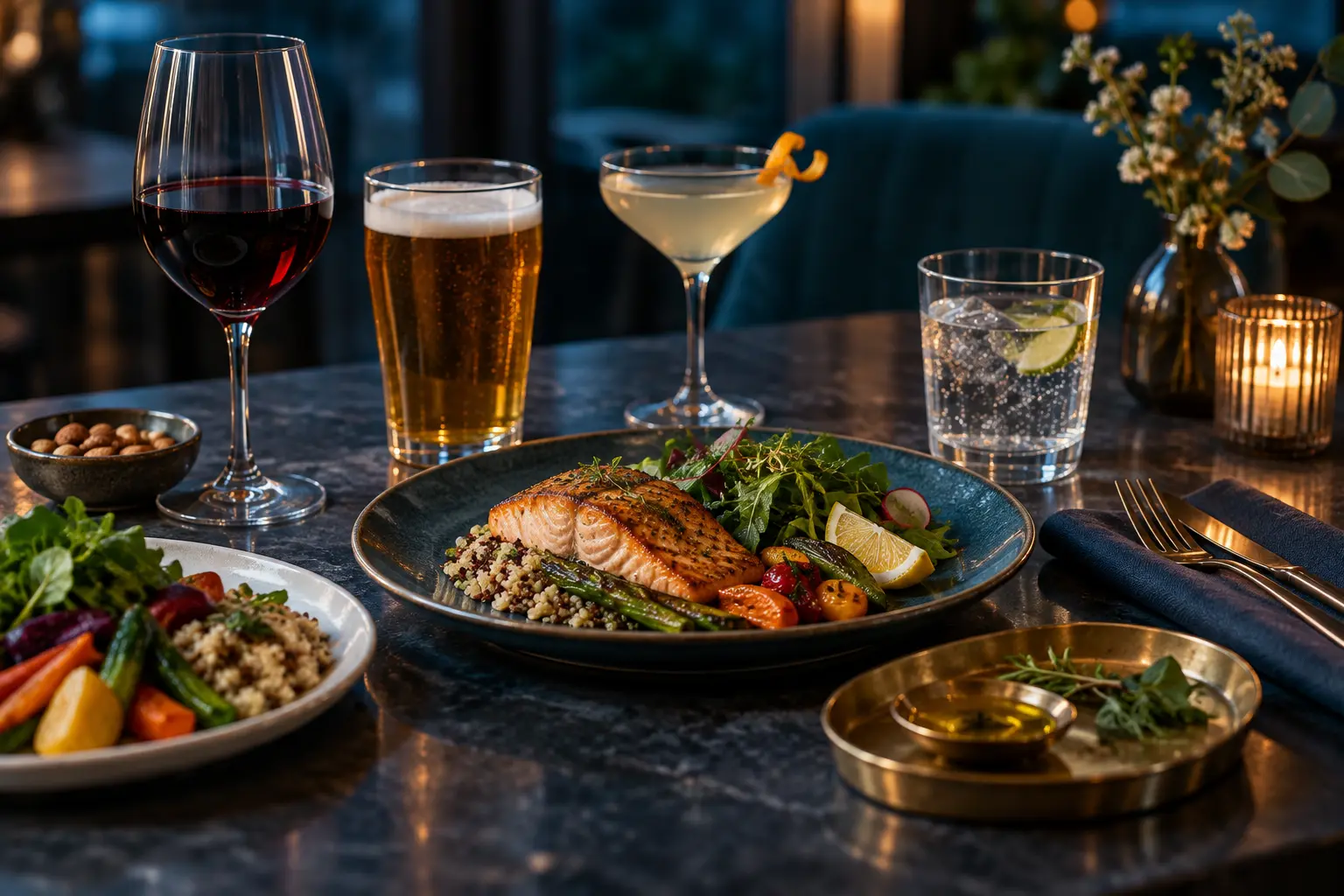
Count the drink that was actually served
Alcohol provides energy, and beer, wine, cocktails, liqueurs, and mixed drinks vary widely by serving size and ingredients. A home pour may exceed a standard drink. Juice, syrup, cream, and repeated rounds add energy without the fullness of a meal.
The useful question is not whether alcohol is uniquely fattening; it is how the complete occasion changes average intake and behavior.
The indirect chain often matters more
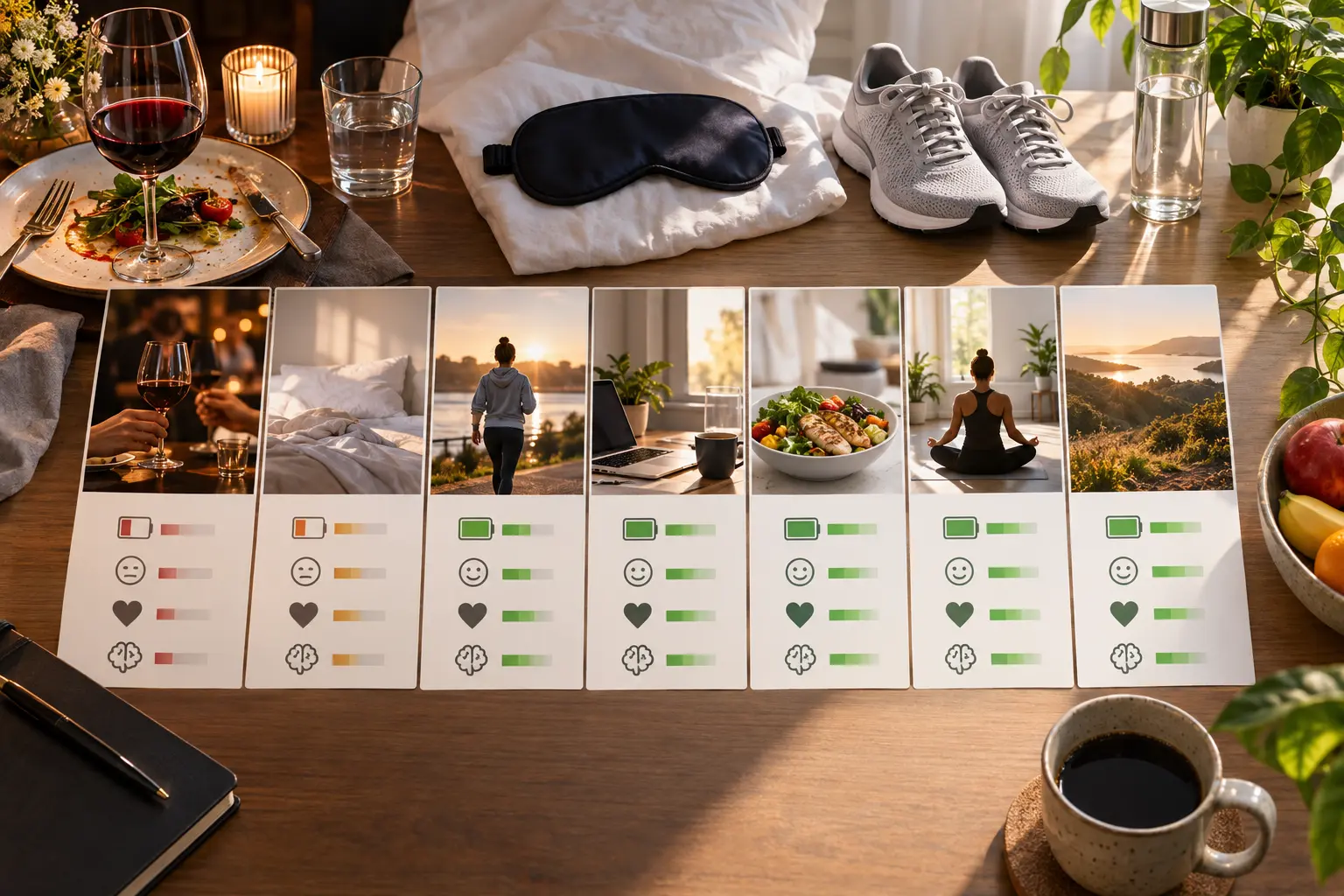
Example: the drink is not the whole event
Sam budgets two drinks but does not account for a large pour, mixer, shared appetizer, late takeaway, and a missed morning walk. The solution is not punishment fasting. Sam defines the number and type of drinks, alternates water, orders a real meal, arranges transport, and resumes the normal next meal.
Practical ways to drink less without quitting
- Decide the number of drinks before the event and stick to it.
- Alternate every alcoholic drink with water or a zero-calorie drink.
- Choose smaller servings and lower-alcohol options.
- Eat a normal meal beforehand so you are not drinking on an empty stomach.
- Plan the late-night food in advance, because that is where many extra calories come from.
Alcohol, sleep and next-day appetite
Alcohol can help you fall asleep but tends to fragment sleep later in the night. Poor sleep is linked with stronger hunger and a preference for energy-dense food the next day, and with skipped workouts. Counting only the drinks misses this knock-on effect. The Dietary Guidelines advise adults who drink to limit intake to two drinks or fewer a day for men and one or fewer for women.
Planning for social occasions
Most alcohol calories come from a few predictable situations: weekends, dinners out, celebrations and work events. Decide in advance which of these will include drinking and how much. On other days, default to no alcohol at home, so drinking stays a planned choice rather than a habit.
When you do drink, pick drinks you enjoy most and skip the ones you drink out of routine. Spirits with a zero-calorie mixer, a small glass of wine or a light beer usually carry fewer calories than cocktails, ciders or strong craft beers.
Do not skip meals to "save" calories for drinking. Drinking on an empty stomach raises blood alcohol faster and makes overeating later more likely.
Where a supplement fits
No supplement cancels the calories or sleep disruption from alcohol, and combining alcohol with stimulants can make you feel less impaired than you are.
Once the practical steps in this guide are working, decide whether an optional supplement adds enough value. Start with the Fat Burn Active review; if the formula and limitations are acceptable, see the current price on the official site. We may receive a commission.
Frequently asked questions
Can I drink and still lose fat?
Possibly, if the complete weekly pattern maintains a deficit and alcohol is safe for you.
Should I skip food to save calories?
No. Drinking without food can increase risk and destabilize the evening.
Should I weigh the next morning?
Do not interpret that reading as direct fat change.
Sources
- NIAAA: What Is a Standard Drink?
- Dietary Guidelines: Alcohol
- Alcohol and Obesity Review
- Alcohol and Sleep Review
- CDC: Alcohol Use and Health
Sources reviewed September 17, 2026. This article is general educational information, not medical advice, diagnosis, or treatment.