What the scale actually measures
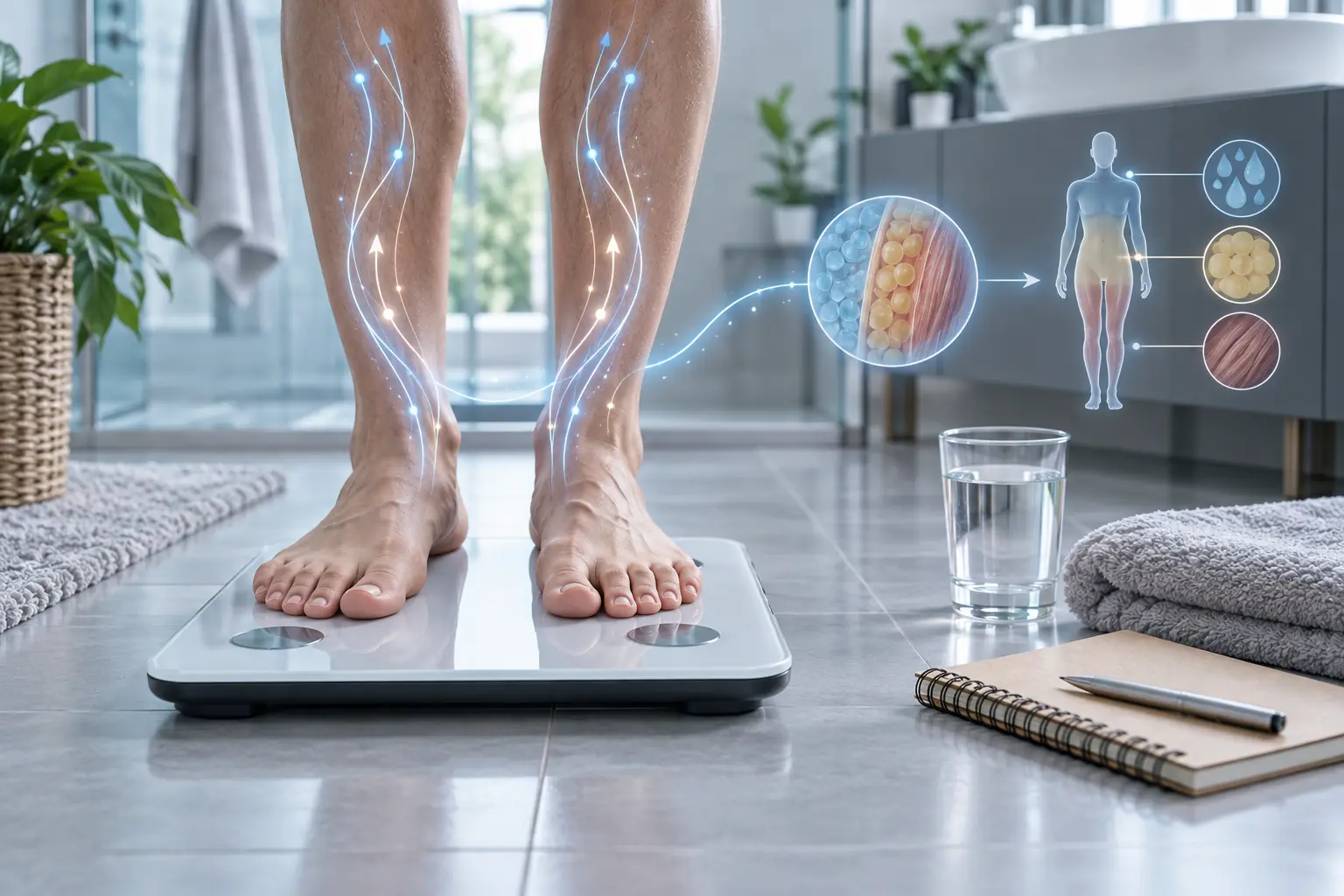
Foot-to-foot bioelectrical impedance analysis sends a small electrical current through the body and measures opposition to that current. Water-rich lean tissue and less-conductive fat tissue influence the pathway differently. The device combines impedance with body weight and profile inputs such as height, age, and sex, then applies a proprietary prediction equation.
The screen therefore contains measured inputs plus model assumptions. Two brands can turn similar electrical data into different percentages. A device may be consistent while still being inaccurate for an individual whose body shape, hydration, ethnicity, training status, age, or health differs from the populations used to build its equation.
Why the percentage moves
Accuracy is not the same as repeatability
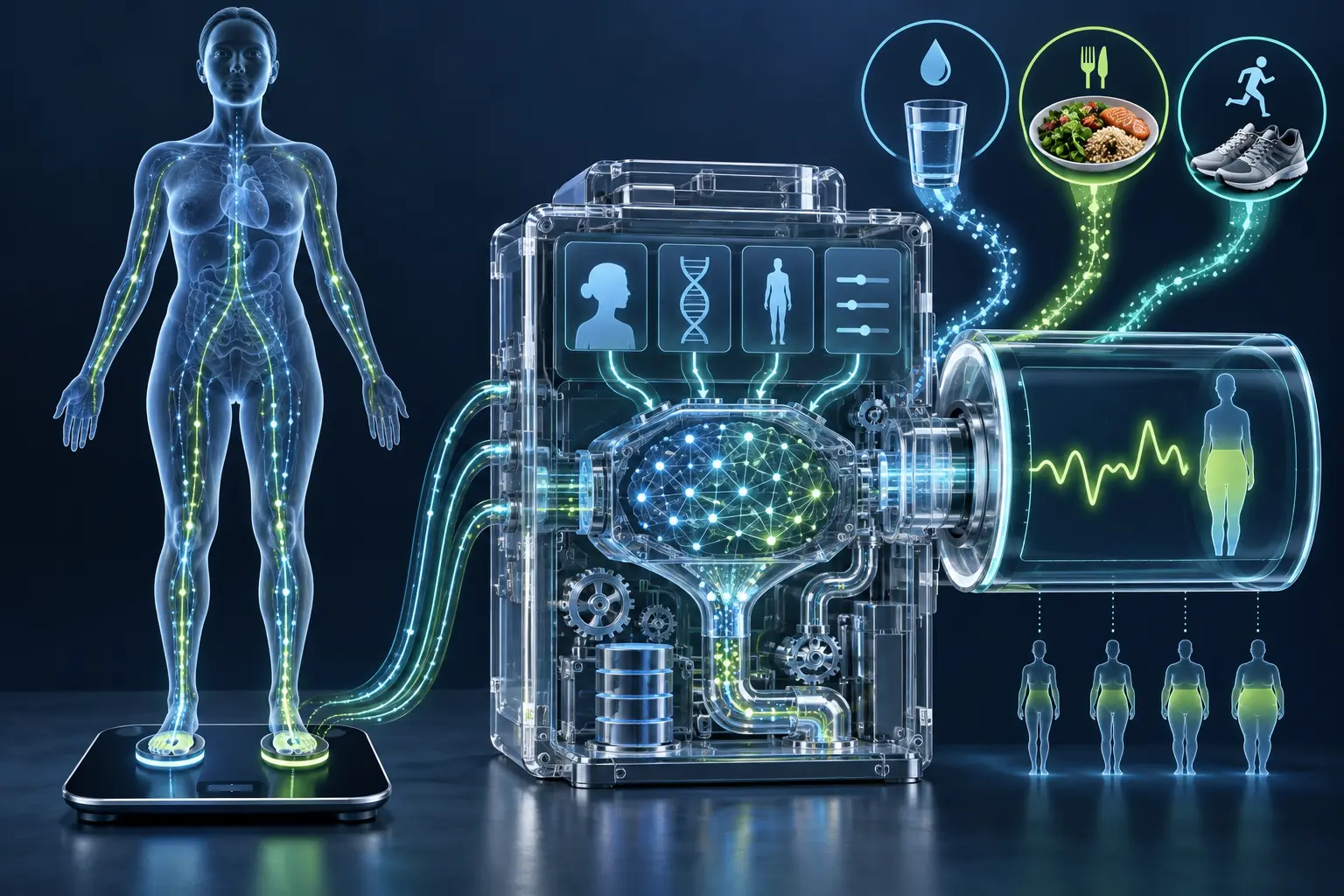
In a study comparing three commercially available smart scales with dual-energy X-ray absorptiometry, scale weight was accurate, but body-composition estimates were not. That distinction is crucial. A device can display many decimal places and reproduce similar numbers without being close to a reference measure of fat mass.
Reference methods also have assumptions and error. DXA, air-displacement plethysmography, isotope dilution, imaging, and multi-compartment models answer somewhat different questions and differ in access and cost. No home scale becomes a clinical reference simply because its app draws a smooth graph.
Use a home scale as a standardized trend tool
- Use the same device on the same hard, level surface.
- Measure at a similar time, ideally after using the bathroom and before food, drink, or exercise.
- Keep feet clean and positioned consistently according to the instructions.
- Avoid interpreting a reading after unusual dehydration, a large meal, alcohol, or hard training.
- Review a rolling trend over weeks and pair it with waist, weight, clothing fit, and strength.
- Ignore tiny changes that are smaller than ordinary biological and device variability.
Example: apparent muscle loss after a workout
A person weighs after a long, sweaty session and the app reports less body fat and more lean mass. Two days later, after a salty meal and different hydration, the direction reverses. Neither reading proves rapid tissue remodeling. The inputs to the impedance estimate changed.
They switch to comparable morning conditions and view monthly rather than daily composition trends. Decisions about food and training are based on performance, waist, weekly average weight, and a sufficiently long pattern. If accurate composition matters clinically, they discuss an appropriate validated method with a professional.
More accurate options
DEXA scans, air displacement plethysmography and underwater weighing are more accurate methods, but they are more expensive and still have a margin of error of a few percentage points. For most people, waist measurements, progress photos and strength tracking give useful information at home.
Where Fat Burn Active fits—and where it does not
Do not attribute a one-day body-fat percentage change to Fat Burn Active. The product and the scale cannot validate each other; both require independent evidence and controlled interpretation.
Fat Burn Active is optional and is not required for fat loss. It cannot identify water retention, clear constipation, validate a tape measurement, or turn a body-fat estimate into a direct measurement. A short-term change after taking any product does not establish that body fat changed.
Once the practical steps in this guide are working, decide whether an optional supplement adds enough value. Start with the Fat Burn Active review; if the formula and limitations are acceptable, see the current price on the official site. We may receive a commission.
Frequently asked questions
Are body-fat scales useless?
No. Weight can be useful, and standardized composition trends may add context, but the percentage is an estimate.
Can they measure muscle gain?
They estimate lean mass rather than directly measuring muscle. Hydration can mimic rapid change.
Which reading should I trust?
Trust comparable long-term patterns more than one reading or extra decimal places.
Sources
- Accuracy of smart scales on weight and body composition
- NIH: Bioelectrical impedance analysis in body composition measurement
- European Society for Clinical Nutrition guidance on bioelectrical impedance
- Review of body-composition assessment methods
Sources reviewed September 13, 2026. This article is general educational information, not medical advice, diagnosis, or treatment.