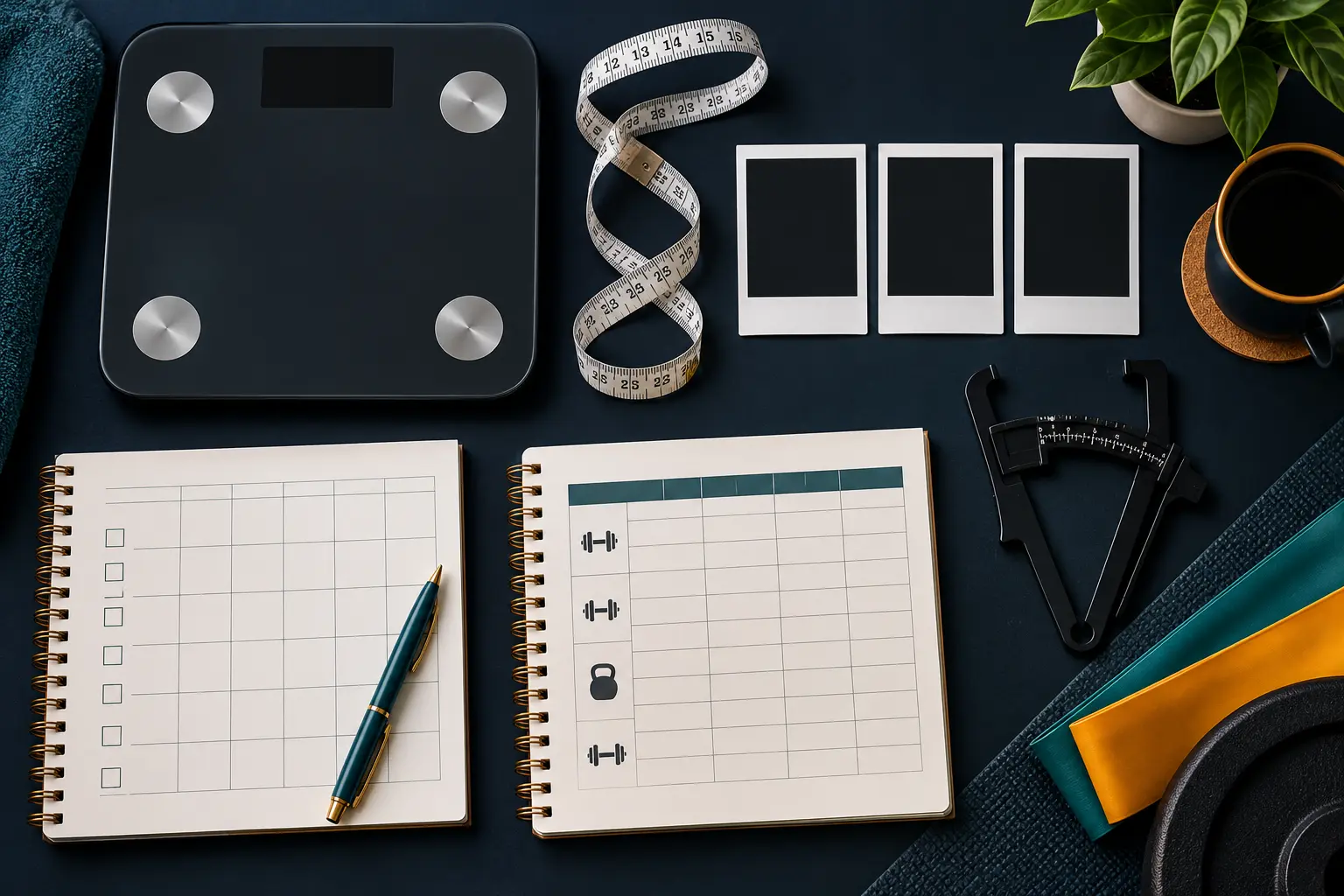
Why one metric creates bad decisions
Daily weight is noisy, smart-scale body-fat percentages are hydration-sensitive, photographs change with lighting, and tape placement can drift. Choosing whichever result feels best—or worst—creates confirmation bias.
The five-part measurement dashboard
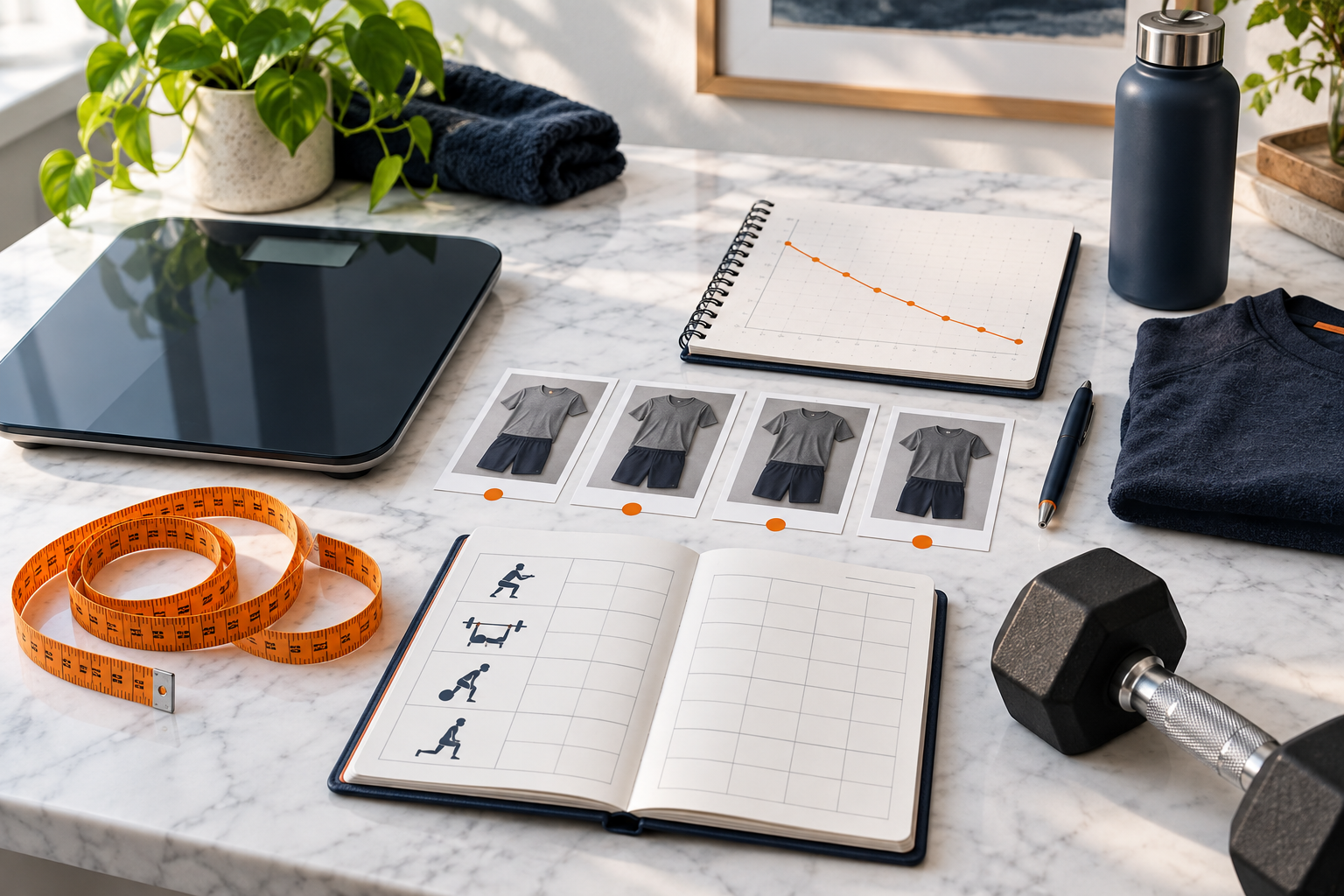
A repeatable protocol
- Weigh in the morning under similar conditions.
- Calculate seven-day averages.
- Measure waist at the same landmark every two to four weeks.
- Take front, side, and back photos with matched light, distance, and clothing.
- Record key exercises, steps or activity, sleep, and adherence.
- Review all signals on a scheduled date.
How to interpret conflicting signals
If weight is flat but waist falls and strength is stable, recomposition or water masking may be plausible. If weight falls rapidly while strength and function deteriorate, the plan may be too aggressive. If nothing changes and adherence is high, reassess energy intake and activity.
What body-fat tools add
Bioelectrical impedance, skinfolds, DXA, air displacement, and imaging use different assumptions. More advanced does not mean error-free. Repeat the same method under similar conditions and avoid comparing percentages from unrelated devices.
Know what tracking cannot diagnose
Unexpected rapid change, swelling, weakness, disordered-eating behaviors, or concerning symptoms need qualified medical assessment. Progress data do not replace health care.
How to test supplement claims
Establish a baseline before adding a product and change one variable at a time where practical. Stimulation, appetite change, or water loss is not proof of fat loss. Compare claims with our Fat Burn Active review.
Use a four-week measurement protocol
Define the method before looking at the result. Weigh under similar morning conditions and calculate weekly averages. Measure the waist at the same landmark every two to four weeks. Take photographs with matched light, distance, clothing, and posture. Select a few repeatable strength or function markers and record whether the intended nutrition and activity behaviours actually happened.
Rules for conflicting signals
Home tools do not diagnose exact tissue change. Compare like with like and avoid switching devices whenever a result is disappointing. Unexpected rapid change, swelling, weakness, fainting, breathing difficulty, or disordered-eating behaviour requires qualified assessment rather than more aggressive tracking.