
Why progress can be happening before you see it
Fat loss is gradual, while the mirror is viewed every day and water can hide change. Expectations shaped by edited photographs and aggressive advertising make normal progress feel too slow.
What may change first
These are observation windows, not promises. Smaller people or those seeking modest changes may see slower scale movement than people with larger starting energy needs.
What controls the timeline
- Starting fat mass and distribution.
- The real size and consistency of the energy deficit.
- Water and menstrual-cycle variation.
- Training history and muscle changes.
- Sleep, stress, medicines, and medical conditions.
- Accuracy of food and progress measurements.
When slow progress is not a plateau
A few flat days are not a plateau. Compare at least several weeks, standardize measurements, and check adherence. If waist and average weight both remain unchanged, reassess portions, liquid calories, weekends, movement, and recovery.
A realistic review schedule
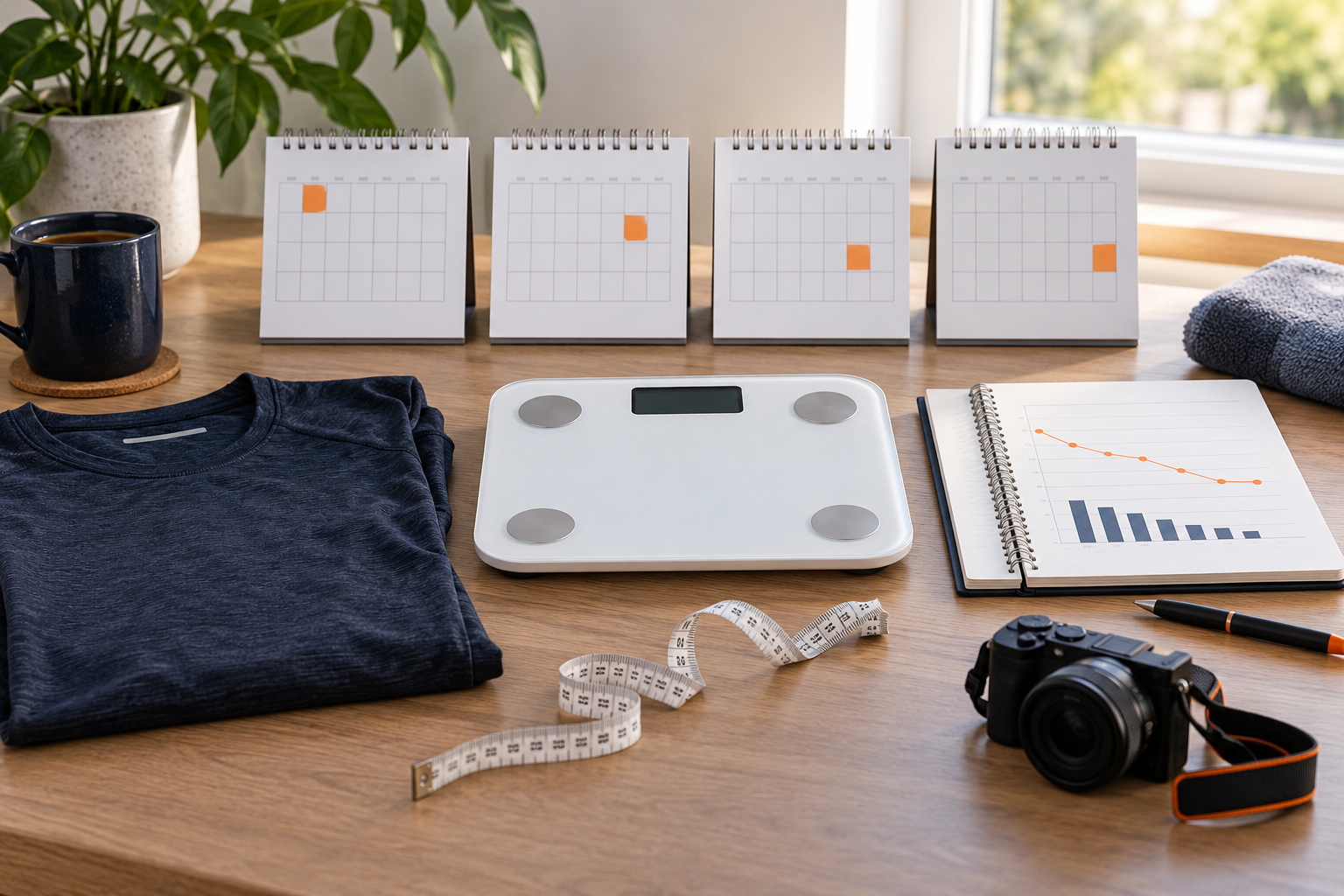
Record weight under similar conditions, average it weekly, measure waist every two to four weeks, and take standardized photos monthly if helpful. Review strength, energy, hunger, and plan adherence at the same time.
Do fat burners make results visible faster?
Product claims often highlight rapid scale change without separating water from fat. Require body-composition evidence on the finished formula before assuming faster fat loss. Start with our evidence review.
Use a four-week observation window
Choose consistent conditions before looking for a visible change. Record morning weight and calculate a weekly average; measure the waist at the same landmark every two to four weeks; use the same clothing, camera distance, posture, and lighting for photographs. Also record adherence, training performance, hunger, sleep, and major changes in sodium, carbohydrate, travel, illness, or menstrual cycle.
What the combined signals mean
Set a decision date, not an appearance deadline. Rapid loss, weakness, swelling, fainting, breathing difficulty, or other concerning symptoms should be assessed medically rather than celebrated as unusually fast progress.
Use milestones instead of a deadline
Visibility depends on starting size, fat distribution, the size of the change, clothing, lighting, water retention, and who is looking. The scale may detect a trend before the mirror; waist measurements may change before other people notice. Set process milestones for two weeks, trend-review milestones for four weeks, and broader visual reviews less often. This reduces the temptation to intensify a working plan because daily appearance seems unchanged.