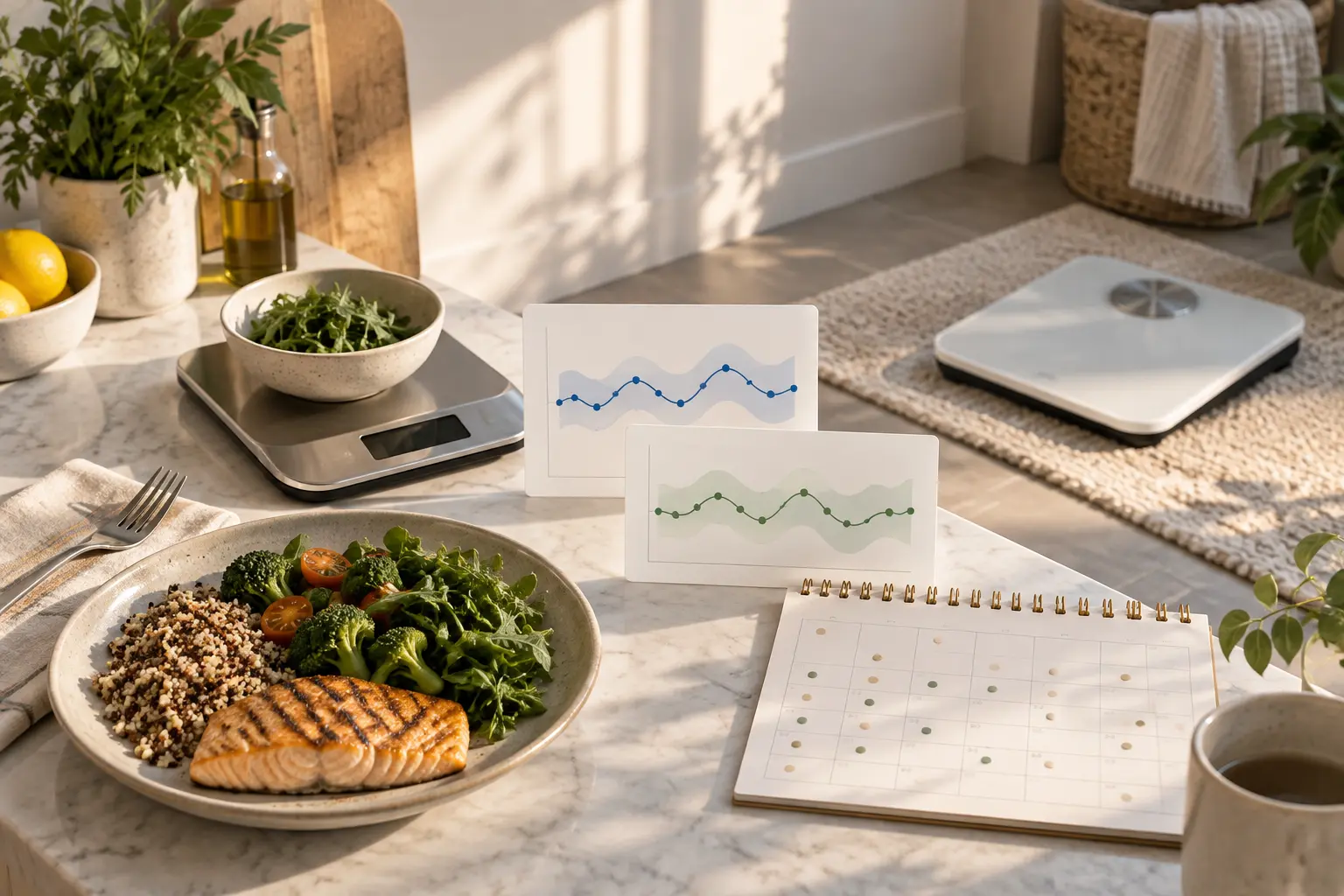
Signal can be smaller than noise
A theoretical 100–200 kcal daily gap predicts a slow average change, not a smooth daily decline. Sodium, carbohydrate, menstruation, inflammation after exercise, travel, alcohol, constipation, and later meals can move scale weight in either direction. The smaller the signal, the longer the observation usually needs to be.
This also means a scale cannot validate the exact calorie gap. Weight may fall faster at first through water or stay level while tissue changes slowly.
Where estimates go wrong
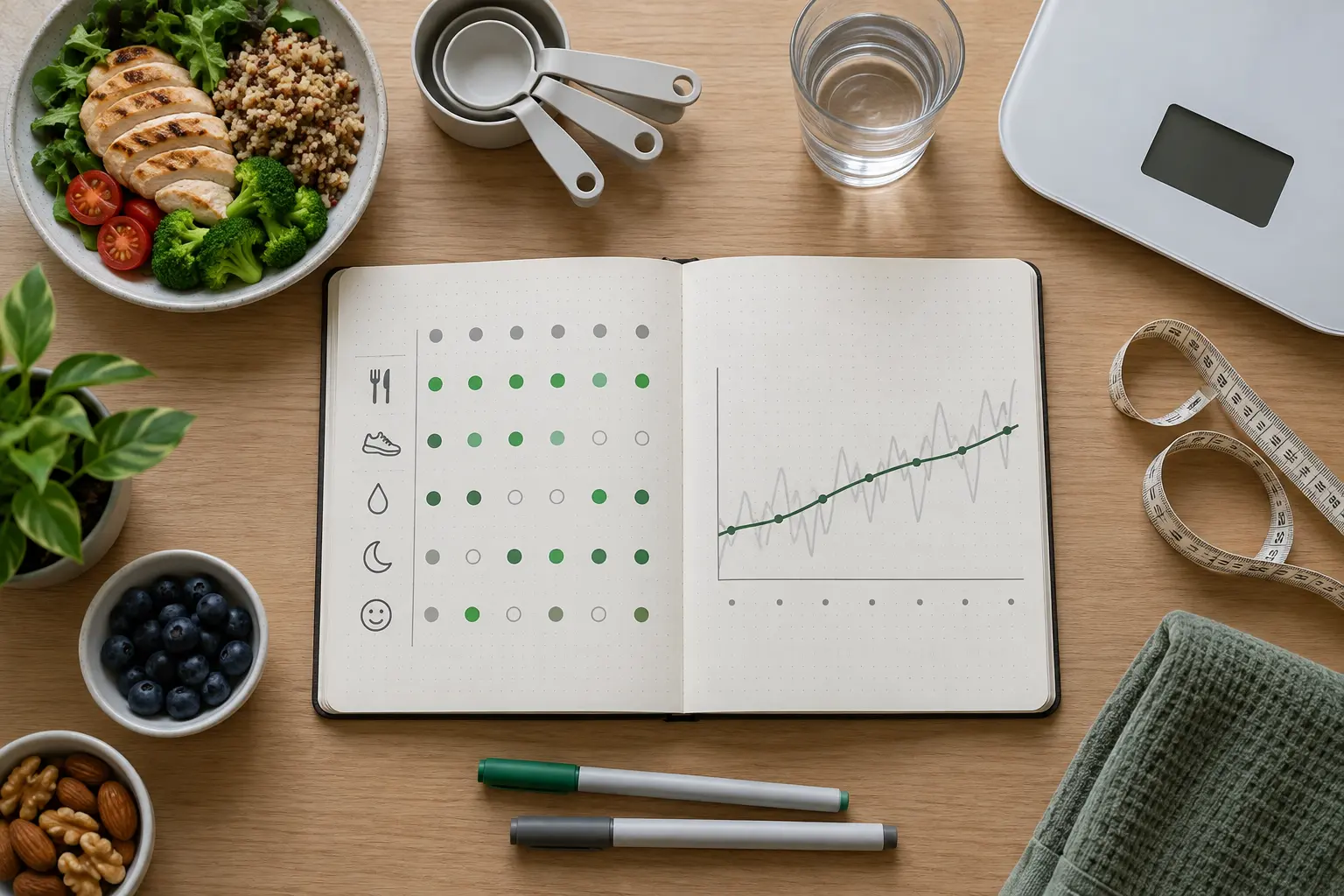
Example: an invisible two-week trend
Maya expects a slow loss but weighs after two salty dinners and an unfamiliar strength program. Her two-week average is flat. She keeps meals and movement stable, standardizes morning measurements, and waits two more weeks. The four-week average and waist now show a modest change. The initial data were insufficient, not proof that only severe restriction works.
The math of small deficits
A 100–200 calorie daily deficit produces roughly 0.1–0.2 kg of fat loss a week, smaller than normal daily weight fluctuations of 0.5–2 kg. Over a month this may be only 0.4–0.8 kg, easily hidden by water shifts. It takes six to eight weeks of consistent data to see such a slow trend clearly.
When a small deficit makes sense
Small deficits suit people near their goal, those who want to preserve muscle while training hard, and anyone who found larger deficits unsustainable. Combine weekly weight averages with waist measurements every few weeks to confirm progress.
A slow trend needs a longer observation window
A theoretical 100-kcal daily gap would imply slow tissue change under ideal arithmetic. Ordinary day-to-day weight variation can be much larger, and food and expenditure estimates are uncertain. That makes a two-week flat-looking chart compatible with several possibilities: a real small deficit hidden by water, no deficit at all, or a shifting activity pattern. It is not a reason to make a large immediate cut. First ask whether the question can be answered with the available time and measurement consistency.
Pick a repeatable weigh-in routine if weighing is appropriate, then compare weekly averages across several weeks rather than single mornings. Log material changes such as travel, a salty meal, hard exercise, menstruation, illness, or constipation. These notes do not “correct” the scale mathematically, but they explain why one week can be noisy. A waist measurement or how a consistent garment fits may add context without claiming exact body-fat change.
Before changing the target, inspect the inputs with the greatest practical uncertainty. Cooking oil, drinks, weekends, portion estimates, and a drop in ordinary steps can erase a small planned gap. An experiment with one measurable adjustment is easier to interpret than simultaneously cutting food, adding workouts, and buying a supplement. Keep the trial long enough to observe a trend and retain adequate nutrition.
If weight remains stable after a credible observation period and the goal still calls for loss, make a modest change in intake or movement that you can sustain. If fatigue, excessive hunger, or distress rises, the proposed deficit may be a poor fit even when the math suggests it is small. A clinician or dietitian can help where medical conditions or medicines affect the plan. The measurement problem is not solved by a fat burner; it is solved by clearer inputs, time, and a decision rule.
Where a supplement fits
A supplement will not make a small deficit visible faster. Patience and consistent measurement are needed.
A supplement is not required to benefit from this guide. If your foundations are already in place, use the independent Fat Burn Active review to judge whether the formula has a useful optional role. If it fits your expectations and stimulant tolerance, check the current price on the official site. We may receive a commission.
Frequently asked questions
Is a 100-calorie deficit useless?
No, but it is easy to estimate incorrectly and slow to distinguish from noise.
Should I weigh daily?
Only if it is psychologically appropriate; consistent weekly measurements can also work.
When should I adjust?
After several consistent weeks and an audit of execution, not after one reading.
Sources
- NIDDK Body Weight Planner
- NIDDK: Choosing a Safe Program
- Dynamic Energy Balance Model
- CDC: Losing Weight
- Weight Variability Review
Sources reviewed September 17, 2026. This article is general educational information, not medical advice, diagnosis, or treatment.