
Three ways dessert can fit
No schedule is universally superior. Choose the one that reduces automatic eating and supports enjoyment.
Avoid the save-and-rebound pattern
Skipping breakfast and lunch to “save calories” can produce intense hunger before dessert. Eating sweets directly from a package while distracted also makes the portion hard to perceive. Serve dessert, sit down, eat it after an adequate meal, and decide whether additional bites still add enjoyment.
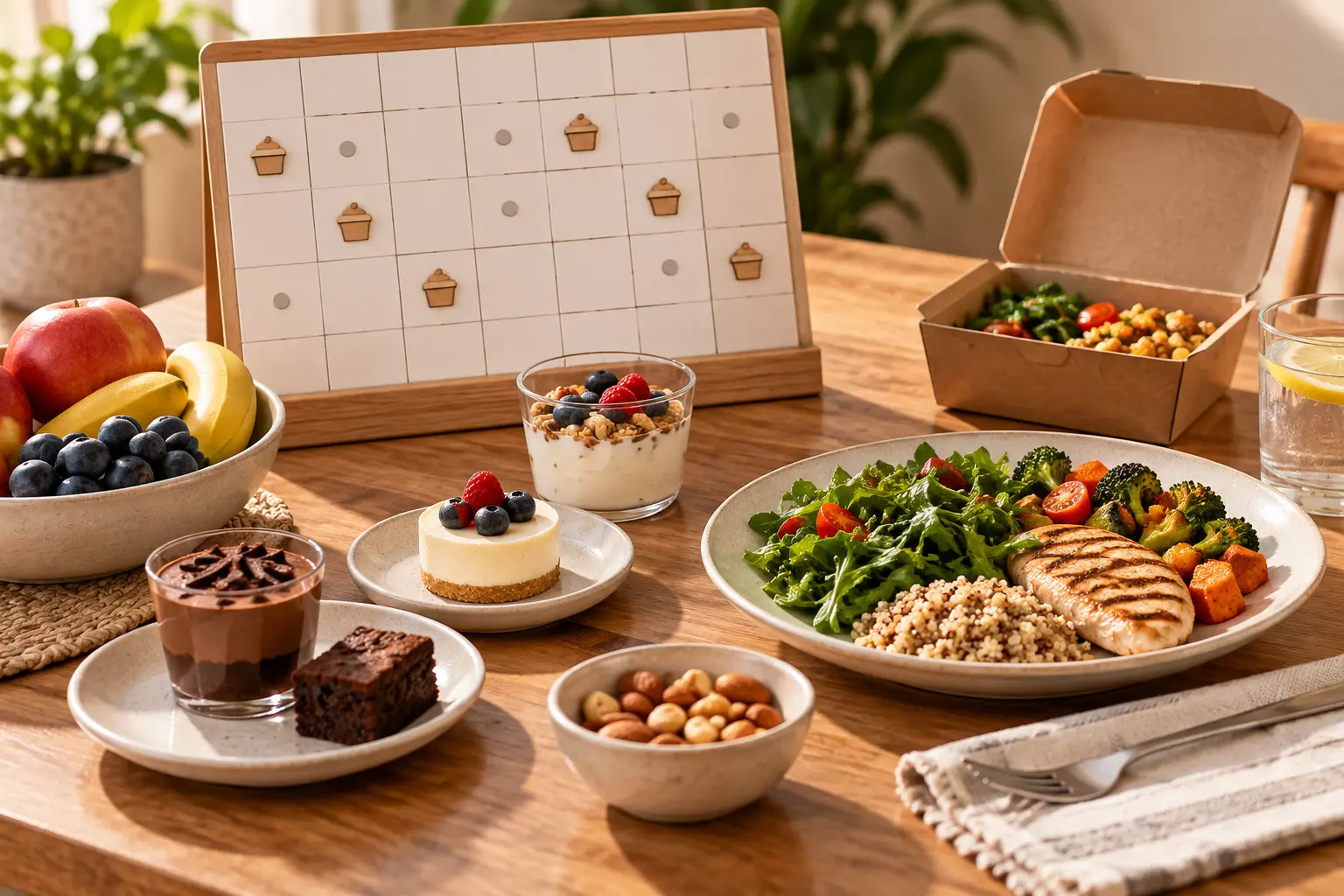
Example: planned flexibility
Leah repeatedly starts a no-dessert diet Monday and overeats sweets Friday. She plans a modest dessert after two dinners and chooses one restaurant dessert on the weekend. Meals remain adequate, and she returns to normal eating afterward. The weekly intake becomes more predictable because the plan no longer depends on perfection.
Portion ideas that keep dessert satisfying
- A single-serve ice cream or a measured scoop instead of eating from the tub.
- A small square of dark chocolate after dinner.
- Fruit with yogurt and a little honey or granola.
- Sharing a restaurant dessert instead of skipping it or eating it all.
Choosing a dessert you actually enjoy, in a portion decided in advance, tends to work better than a low-calorie version you do not like and then follow with something else.
When dessert rules stop helping
If you regularly lose control around sweets, feel guilty after eating them or alternate between strict bans and binges, a stricter plan is unlikely to help. These patterns can be signs of binge eating, which is treatable, and are worth discussing with a doctor or dietitian.
Where a supplement fits
A fat burner does not offset dessert calories. Planning the portion is the step that actually changes the weekly total.
Once the practical steps in this guide are working, decide whether an optional supplement adds enough value. Start with the Fat Burn Active review; if the formula and limitations are acceptable, see the current price on the official site. We may receive a commission.
Frequently asked questions
Can dessert be eaten every day?
Potentially, if the portion and whole pattern fit your needs and do not increase preoccupation.
Is fruit the only acceptable dessert?
No. Fruit is nutritious, but planned conventional dessert can also fit.
Should I exercise to earn dessert?
No. Punishment framing can destabilize eating and movement.
Sources
- Dietary Guidelines for Americans
- Harvard Nutrition Source: Cravings
- Food deprivation and cravings review
- NIDDK: Binge-Eating Disorder
- NIDDK: Safe Weight-Loss Programs
Sources reviewed September 17, 2026. This article is general educational information, not medical advice, diagnosis, or treatment.