Separate four different questions
Beyond the calorie-only slogan
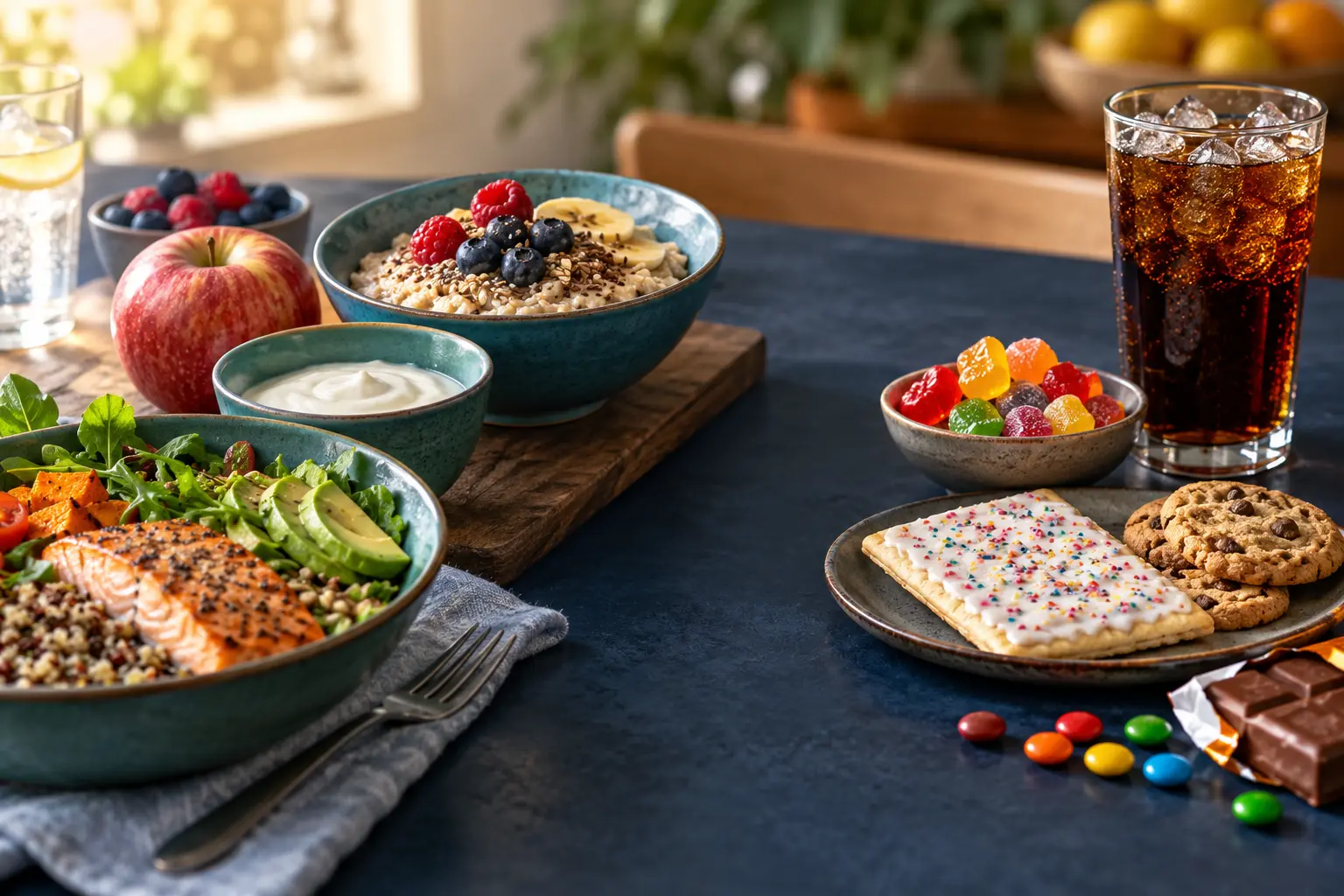
Energy explains weight direction, but food form affects how easily energy is consumed. Sweetened beverages, large desserts, and frequent snacks may raise intake without deliberate planning. Conversely, fruit brings water, fiber, chewing, and nutrients. The solution is not to claim calories are irrelevant or that every sugar behaves identically in real life.

Example: target the largest source
Omar worries about the sugar in berries but drinks two sweetened beverages daily. He keeps fruit, replaces one drink with water and chooses a smaller second serving. That change addresses a large repeatable source without turning all carbohydrates into a problem.
Why sugary drinks matter most
Sugar in drinks is the clearest link between sugar and weight gain. Liquid calories do not produce the same fullness as solid food, so people rarely eat less later to compensate. Meta-analyses of prospective studies and trials link sugar-sweetened beverages with greater weight gain in adults and children. Replacing a daily soda, sweet coffee drink or juice with water, unsweetened tea or milk is usually the highest-value sugar change.
How much added sugar is reasonable
The Dietary Guidelines for Americans recommend keeping added sugars below 10% of daily calories, which is about 50 g on a 2,000-calorie diet. The Nutrition Facts label now lists added sugars separately, so you can see how much comes from sweeteners rather than from fruit or milk. You do not need zero; a planned dessert can fit a calorie deficit if the rest of the week supports it.
A practical sugar plan
- List your sweet drinks and snacks for one ordinary week.
- Pick the item that is most frequent, not the one you feel worst about.
- Replace or shrink that one item and keep it changed for two weeks.
- Keep fruit and plain dairy; they bring fiber, water and protein with their sugar.
- Plan desserts after a satisfying meal instead of banning them until you overeat.
Where a supplement fits
No supplement offsets regular sugary drinks. Cutting liquid sugar will usually do more for weight than any fat burner.
A supplement is not required to benefit from this guide. If your foundations are already in place, use the independent Fat Burn Active review to judge whether the formula has a useful optional role. If it fits your expectations and stimulant tolerance, check the current price on the official site. We may receive a commission.
Frequently asked questions
Does fruit sugar cause weight gain?
Whole fruit has a different food matrix from sugary drinks and can fit weight management.
Is honey metabolically free?
No. Honey is an added sugar and contributes energy.
Must added sugar be zero?
No universal zero target exists; follow relevant guidelines and the complete pattern.
Sources
- Dietary Guidelines for Americans
- CDC: Be Smart About Sugar
- FDA: Added Sugars on the Nutrition Facts Label
- Dietary sugars and body weight meta-analysis
- Sugar-sweetened beverages and weight gain meta-analysis
Sources reviewed September 17, 2026. This article is general educational information, not medical advice, diagnosis, or treatment.