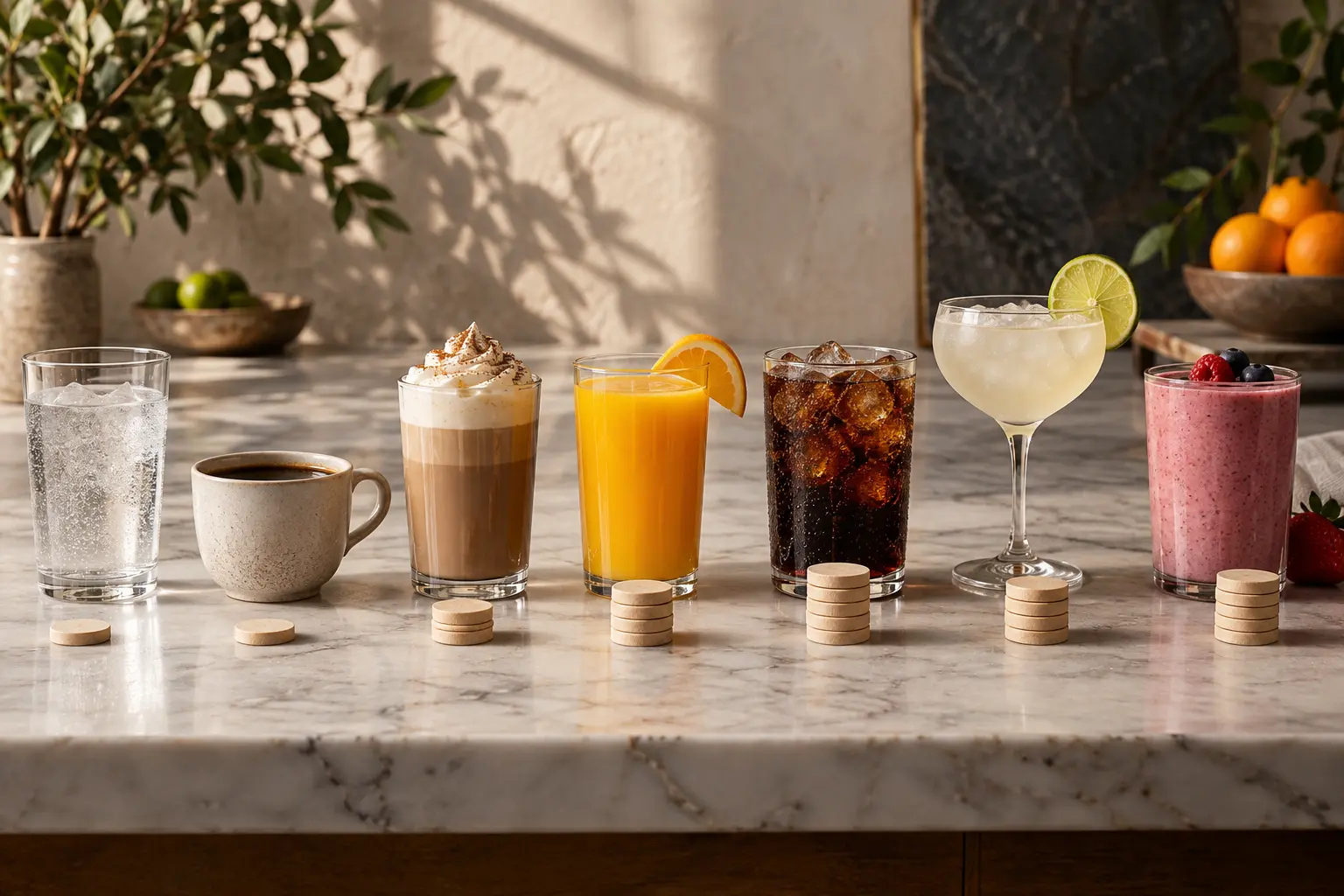
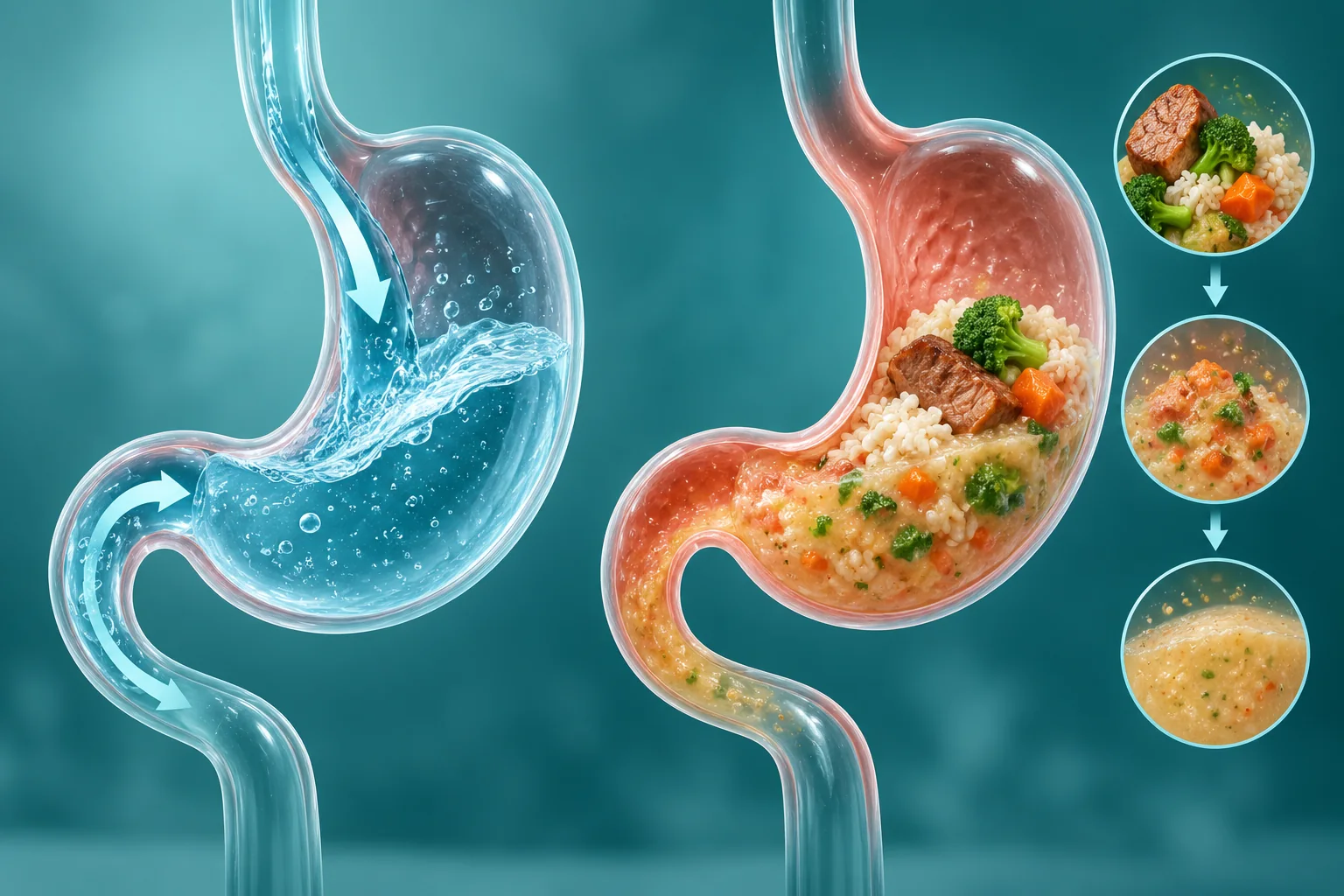
Why drinks can produce weaker satiety
Solid foods usually involve chewing, longer oral exposure and a slower eating rate. Texture and viscosity can alter gastric handling and expectations. People also learn to treat drinks as hydration rather than food, so calories may not register as a reason to reduce the next portion.
No single hormone explains the entire effect, and liquid calories do not bypass digestion. They still contain energy and nutrients. The evidence is better summarized as weaker or more variable compensation after many beverages than as a claim that the body cannot detect them.
Not all caloric drinks are equivalent
Run a beverage-role audit
- Log every drink, addition, refill and weekend serving for seven days.
- Mark each as hydration, nutrition, pleasure, caffeine or habit.
- Keep the drinks that serve a chosen purpose.
- Measure the highest-frequency caloric drink once.
- Change one automatic exposure: size, sweetness, frequency or default.
- Review hunger and total intake; do not compensate by undereating meals.
Replacing one routine drink is often more sustainable than banning every enjoyable beverage.
Choose the solid-food comparison carefully
An orange is not simply orange juice with chewing. The intact fruit has a different structure and fiber context. Coffee with syrup and cream is not nutritionally interchangeable with plain coffee plus a balanced breakfast. Compare realistic alternatives that fulfill the same need.
If the drink is replacing a meal, ask whether it supplies adequate protein, fiber and nutrients. If it is added between meals, ask whether it changes later intake. Those two situations require different decisions.
Common drinks and their calories
Approximate values for typical servings:
- A 355 ml (12 oz) can of regular soda: about 140–150 calories.
- A large flavored latte with whole milk and syrup: often 300–400 calories.
- A 250 ml glass of orange juice: about 110 calories.
- A pint of regular beer: about 180–250 calories.
- A large smoothie from a café: often 400 calories or more.
Two or three such drinks a day can add as much as a full meal without reducing hunger.
Easy swaps
Replace sugary drinks with water, sparkling water, unsweetened tea or black coffee. Choose smaller sizes and skimmed or plant milks in coffee drinks, and ask for less syrup. Eat whole fruit instead of drinking juice. If you like smoothies, treat them as a meal and include protein.
Where a supplement fits
No supplement offsets the calories in regular sweet drinks. Cutting them is often the simplest effective change.
An appetite-related supplement does not erase drink calories or prove that later food intake will fall. Fat Burn Active is optional and cannot repair an eating environment, replace sleep or treat emotional eating. Its current official page lists at least 120 mg caffeine per serving from caffeine anhydrous and guarana, additional unquantified caffeine from green-tea extract, and bitter-orange extract standardized to 6 mg synephrine. Feeling more alert or less hungry for a short time is not proof of meaningful fat loss.
Once the practical steps in this guide are working, decide whether an optional supplement adds enough value. Start with the Fat Burn Active review; if the formula and limitations are acceptable, see the current price on the official site. We may receive a commission.
Frequently asked questions
Are fruit juices healthy for weight loss?
Juice provides vitamins but little fullness; whole fruit is usually a better choice.
Do diet drinks help?
Replacing sugary drinks with diet versions can cut calories; water is better still in the long run.
Do milky coffees count?
Yes. Large milky and syrupy coffees can add several hundred calories a day.
Sources
- Liquid calories and satiety review
- Why liquid energy may promote overconsumption
- CDC: Rethink Your Drink
- NIDDK: Weight-management treatment
Sources reviewed September 13, 2026. This article is general educational information, not medical advice, diagnosis, or treatment.