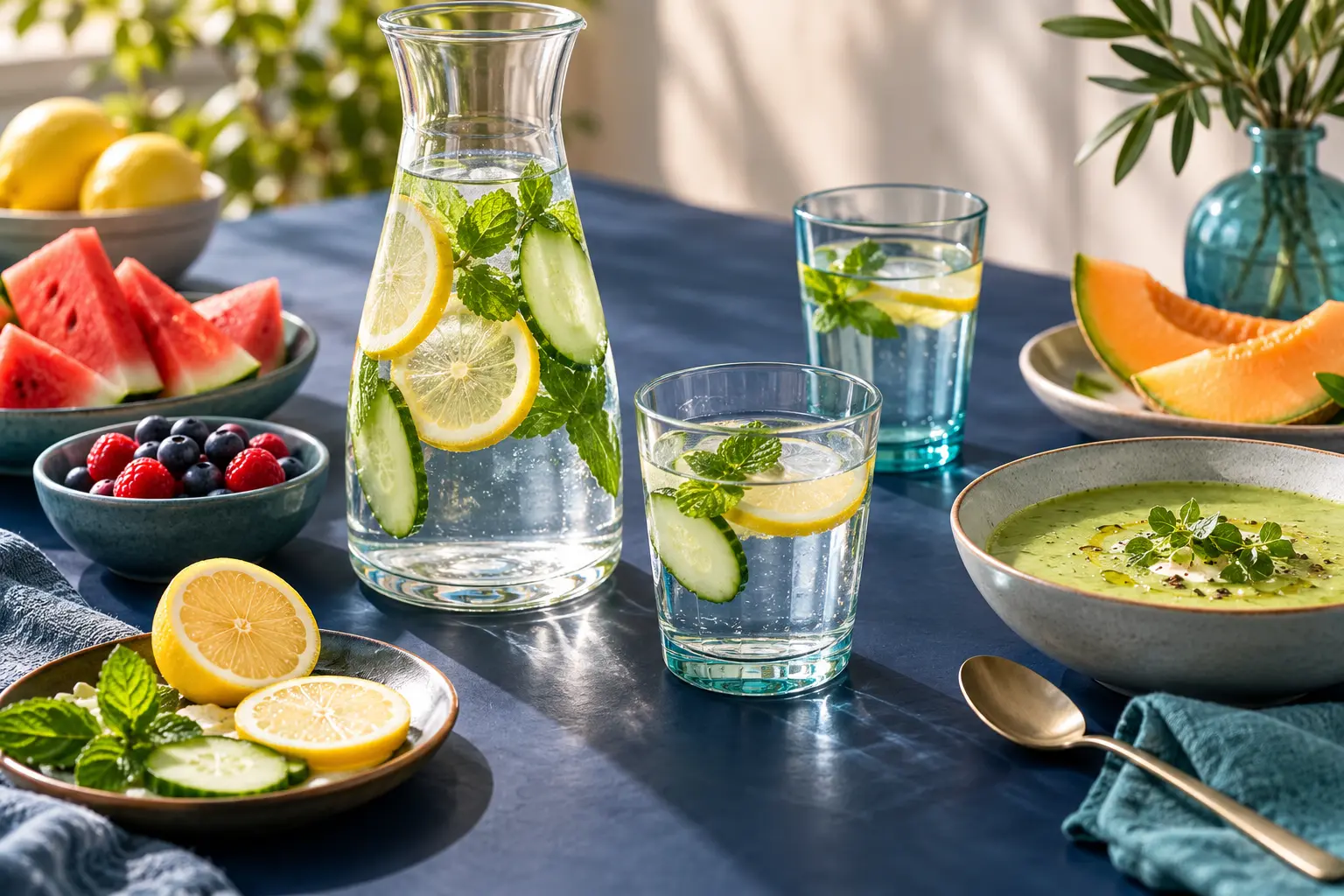
Why water-weight changes look like fat loss
A dehydrated person can weigh less within hours, then regain that mass after drinking. Sodium, carbohydrate, heat, exercise, illness, and hormones also shift body water. A rapid drop after sweating or a rapid rise after rehydration says little about fat tissue.
Chasing the lowest dehydrated number can impair concentration, exercise, kidney function, and cardiovascular stability.
What water does in the body
Water supports circulation, temperature regulation, digestion, nutrient transport, waste removal, and exercise performance. Needs vary with body size, climate, activity, diet, pregnancy, illness, and medicines. Food—including soup, fruit, and vegetables—also contributes fluid.
Does drinking water cause weight loss?
Some studies suggest that water before meals or replacing sweetened drinks may help certain people reduce intake. This is a behavioral pathway, not evidence that water directly burns fat. If water is added without replacing calories or changing appetite, a large weight effect should not be expected.
Practical hydration signals
A practical water routine
- Keep water accessible during the hours you usually forget it.
- Drink with meals and around activity according to thirst and conditions.
- Replace one repeat sugary drink before forcing extra plain water.
- Use fruit, herbs, tea, or sparkling water if variety improves adherence.
- Increase gradually in hot weather and long exercise.
Can you drink too much water?
Yes. Rapid excessive intake can dilute blood sodium and cause hyponatremia, a medical emergency. Headache, confusion, vomiting, seizures, or severe symptoms during prolonged exercise require urgent care. Do not use a universal gallon target when medical conditions or small body size change needs.
Water and stimulant products
Do not assume caffeine automatically causes dangerous dehydration, but stimulant products can affect heart rate, sleep, appetite, and perceived effort. Hydration does not neutralize those risks. Read our Fat Burn Active review before considering the product.
Run a hydration-and-beverage test
For seven days, record thirst, drinks, activity, heat exposure, urine pattern, headaches, and the situations in which a caloric drink replaces water. Do not force a fixed volume. Use the record to identify one repeated problem: arriving at training already thirsty, relying on sweetened drinks at work, forgetting fluid in hot weather, or drinking so much that discomfort interrupts meals and sleep.
Judge the experiment by comfort, thirst, exercise tolerance, beverage calories, and multi-week weight trends. A rapid scale drop after sweating is fluid loss, not evidence that extra water or dehydration accelerated fat loss.
Separate hydration from scale manipulation
Record morning weight together with heat exposure, exercise, sodium, carbohydrate intake, illness, and unusual thirst. The purpose is to explain noise, not earn a lower reading by drinking less. During ordinary days, make water convenient and use thirst plus context. During prolonged heat or exercise, fluid and electrolyte needs may change substantially. If a clinician has prescribed a fluid restriction or you have heart, kidney, liver, or endocrine disease, follow individualized advice rather than a generic online target.
Where Fat Burn Active fits
Hydration does not neutralize stimulant effects or turn temporary water-weight changes into body-fat loss. Fat Burn Active is optional and cannot replace nutrition, activity, sleep, hydration, or medical care. Evidence about an isolated ingredient does not prove that the finished formula produces the same outcome at the amount sold.
Once the practical steps in this guide are working, decide whether an optional supplement adds enough value. Start with the Fat Burn Active review; if the formula and limitations are acceptable, see the current price on the official site. We may receive a commission.
Frequently asked questions
Does warm water burn belly fat?
No. Temperature does not selectively remove abdominal fat.
Should I drink before meals?
It may help some people, but it is optional and should not create discomfort.
How much water do I need?
There is no single target for everyone; climate, activity, food, health, and medicines matter.
Sources
- NASEM dietary reference intakes for water
- CDC: water and healthier drinks
- Exercise-associated hyponatremia consensus
- NIDDK: Healthy eating and physical activity
Evidence reviewed September 8, 2026. Educational information only; not medical advice.